

The Power of Belief and the Ripple It Creates, Braxton Kilgo on And That Changed Everything
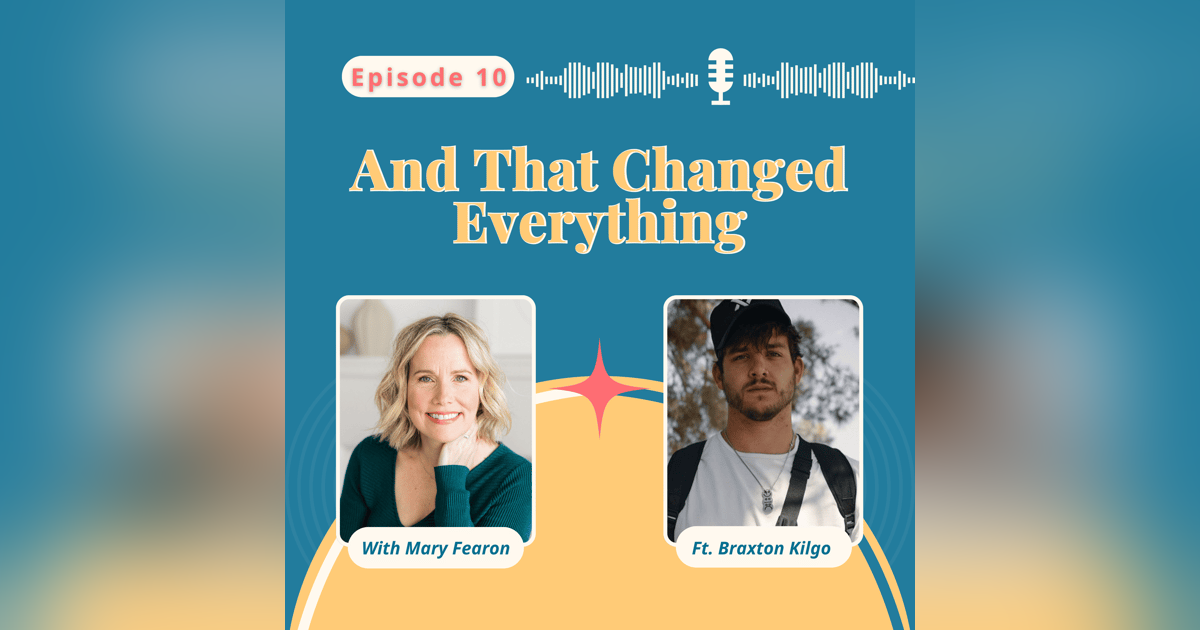
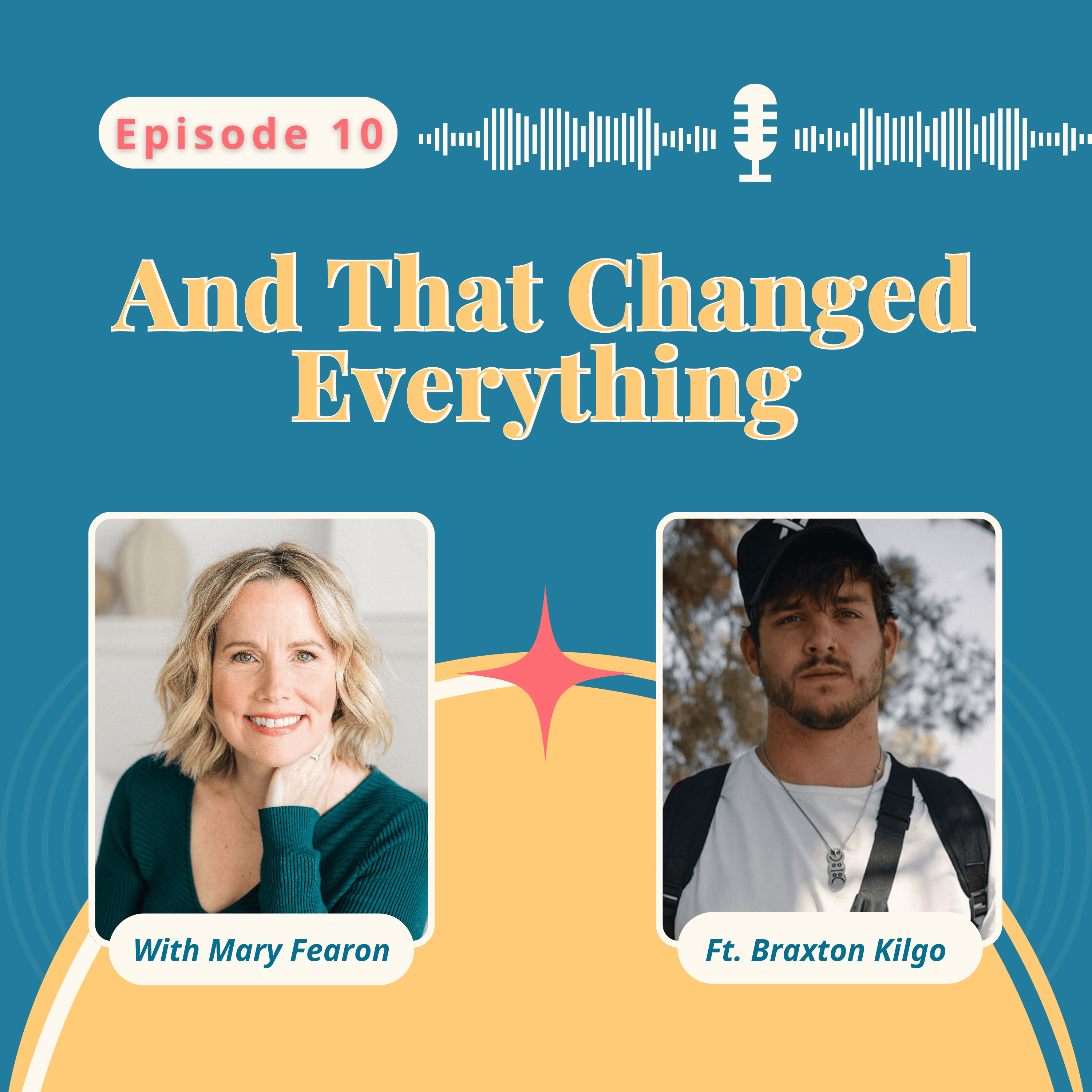


Some moments remind us that belief is one of the most powerful forces we have. Braxton Kilgo’s story shows what becomes possible when we choose to believe in ourselves and in each other.
Braxton grew up in a small Texas town where football shaped identity, community, and dreams of a bigger future. When a major injury changed his path, he stepped into a season of rediscovery that led him to entrepreneurship, creativity, and ultimately the movement he’s now known for: I Believe In You (IBIY).
This conversation explores the defining moments that shaped Braxton’s purpose. From learning discipline on the field to building his first businesses out of nothing, to the day a middle school assembly sparked an idea that would grow into a global ripple of kindness and connection. Braxton shares openly, humbly, and with a deep sense of calling.
What You’ll Hear About
- Growing up in a community built on belief and belonging
- The injury that changed the trajectory of his life
- What happens when identity is wiped out overnight
- Discovering entrepreneurship and creating opportunity from scratch
- The school speech that unexpectedly birthed I Believe In You
- How a simple bracelet became a catalyst for connection
- Why belief is a skill, a gift, and a responsibility
- The future of IBIY and what keeps Braxton moving forward
About Braxton
Braxton Kilgo is the founder of I Believe In You, a movement built to spread kindness, connection, and belief through meaningful interactions and a tech-enabled bracelet experience. His journey spans football, fitness, digital marketing, brand building, and now leading a global community rooted in purpose and human connection.
Where to Find Braxton
Instagram (personal): @braxtonkilgo
Instagram (IBIY): @ibelieveinyou.co
Website: https://www.ibelieveinyou.io
LinkedIn: Braxton Kilgo
If this conversation inspired you, share it with someone who might need a reminder that you believe in them. Follow And That Changed Everything for more stories about purpose, meaning, and the moments that shape us.
Follow Us on Instagram and LinkedIn.
Listen to the episode on our Website, Spotify, Apple podcast and Amazon Music.
[00:00:00] Mary: Hello, wonderful, curious people. Thank you for tuning in. One of my favorite things about what I get to do is learn about people. And understand the stories of their lives that kind of made them who they are and doing the, the work that they wanna do in the world. So this week, my conversation with Braxton Kilgo will not disappoint.
[00:00:18] Mary: He is such a fascinating person, such a kind human being who has channeled all of the challenges and hurdles and steps in life into a business that is all about belief. I won't go into it, he can tell you himself, but tune in. It's a good one.
Podcast Intro:
Welcome to and that changed everything. I'm your host, Mary Farrin, and this is a show where some of the world's most interesting and successful people unpack three pivotal moments that shaped who they are and how they show up. I've been working with business leaders for decades, and it's clear, it's the stories, not the titles that shape us.
These moments change how we lead, how we live, and what we make possible. I learned so much from each of these conversations, and I hope you do too. Let's jump in.
Podcast Starts:
[00:01:05] Mary: Let's start with, why don't you tell me what's bringing you joy right now?
[00:01:13] Braxton: Well, amidst the craziness that is my, my schedule, I have just been really enjoying spending time at the beach or in my backyard with a fire with my dog and my girlfriend and doing absolutely nothing.
[00:01:31] Braxton: Just hanging out, sitting, being, still relaxing. And yeah, that's been kind of my, my go-to lately. 'cause my, you know, professional schedule is, looks like Legoland on my calendar. So I've been really just enjoying those moments of peace and quiet with no phone and just.
[00:01:51] Mary: That's
[00:01:52] Mary: beautiful
[00:01:53] Braxton: people.
[00:01:54] Mary: I love it.
[00:01:54] Mary: So now we need to talk about your calendar because I, as I know a little bit about your calendar and I'm wondering when do you sit in the backyard with a fire? Like when do you have time for this? Because it feels like you're in meetings 12 hours a day.
[00:02:06] Braxton: Yeah, it is pretty crazy. But You know, every once in a while I'll get to do this on a Saturday or a Sunday.
[00:02:14] Braxton: I usually work one of those days. so occasionally it'll be, you know, a weekend sometime. But one thing, you know, my girlfriend is a trauma ICU nurse going back to school for CNA school and everything. So her schedule is also crazy. And, amidst all of our craziness, we make sure that at least every single night, whether we get done at eight or nine or whatever, we come sit in the backyard and listen to music and talk and hang out.
[00:02:43] Braxton: So, might not always be that long, you know, full out, kind of recharge, but we make sure that every night we make space to just sit and be together and hang out. So it feels like I kind of get to do it every day, but on the weekends, I love when it's a whole day.
[00:03:00] Mary: Yeah, I think that's so important to be able to recharge and then like completely divorce yourself of all of your commitments for a period of time.
[00:03:08] Mary: Like that was a real practice. It is continues to be a practice for me. Like if I'm gonna be somewhere doing something that isn't work related, like don't muddy it up with thinking and planning and all of the things. 'cause there's an endless number of commitments you could take on in that time. So that's a good practice.
[00:03:27] Braxton: Yes ma'am.
[00:03:28] Mary: Amazing. Well, thank you for that everybody. I am talking to Braxton Kilgo. He is a new friend of mine, new-ish, born and raised in a small town in Texas who ha and you had, dreams of a football career and then a major injury change that for you. which, you know, an ama it's amazing for the rest of the world because since then you have started a number of companies and you've worked with thousands of clients, and that has all propelled you into the business that you're running now, which you'll tell us all about a bit.
[00:03:59] Mary: But that's really a, you know, deeply, deeply personal purpose driven business in the end. So, I'm super excited for you to be here and to hear more about your story and all the lessons you've had along the way.
[00:04:12] Braxton: Yes, ma'am. Well, I'm happy to be here, Mary, you're, you know, a new friend as you'd say, but you've quickly became one of my favorite people to talk to, so I'm glad.
[00:04:21] Mary: This is so fun. We should just have this go on forever 'cause it is such a good time.
[00:04:25] Mary: All
[00:04:25] Mary: right. So let's, why don't you tell us a little bit more, I know you've got, you've got some moments that, that, you know, were pivotal for you, but you could, you know, give us a little background about you and then we can dive into, and you can just decide which moments you wanna talk about first, second, third, that kind of thing.
[00:04:41] Braxton: Yeah. Do you want me to give just like a little bit of like the high level story first? Just kind of high level?
[00:04:47] Mary: Yeah, yeah. Like who are you?
[00:04:49] Braxton: Yeah. So, okay. kinda as you mentioned, I grew up in a town called May in Texas is, you know, I think there's maybe 200 people there now. I'd have been 180 or something when, when I was there.
[00:05:03] Braxton: It de, it depends how many people you invite to town. If you break 200. But it was a, a really awesome place to grow up. And, my whole family lives on one farm. my parents divorced when I was one, so my mom lived like at the lake, you know, 20 minutes away. And then our farm was over here. And so, you know, I kind of got to have, you know, with my mom's side, I was more like in town and around school and all the friends, and then had another group of friends at the farm, and that was a little more, you know, wild and, and fun and, and really like no rules.
[00:05:36] Braxton: Mm-hmm. So it was a really awesome place to grow up. And yeah, it was a place where, you know, I, I think change, things have changed a lot now with the internet and stuff, but I feel like my age group was on the cusp of before that really turned to what it is today. And you know, when we were growing up, it kind of seemed like, you know, especially if you didn't have a family with a lot of money, it was kind of like, you know, you can work on a farm, work in the factory, go to the oil field, or maybe.
[00:06:03] Braxton: You're lucky enough to be one of the people that makes it to the NFL or the MLB and, I drove about 45 minutes, depending on the day, 30 minutes to go to school, at a bigger school. We had a school in May, but there's only six to eight people per grade kind of thing. And I really, really wanted to play football.
[00:06:21] Braxton: And so I went to a school called Brownwood that was in town. And, yeah, just so many people that I got to watch go through there and change their life by making it, you know, into the, really, the NFL. And, you know, we had one of those towns where like the town shuts down for a football game. We, we, it's very, you know, Texas school football kind of thing.
[00:06:43] Braxton: It's
[00:06:43] Mary: like you live Friday, night lives. Friday night lights just like live and in person.
[00:06:48] Braxton: The team they made that movie about is like, I don't think they are now, but during that timeframe. They were on our calendar, like they're like team played our team in that era. so that's pretty cool. So it's very similar.
[00:07:03] Braxton: Yeah. Okay. But yeah, so that, that's kinda what I was chasing and things were going really awesome. It seemed like it was moving in the right direction. But then, the last game that I ever played in our first playoff game my senior year, got a knee injury that
[00:07:22] Mary: Oh,
[00:07:22] Braxton: basically just completely, you know, took me out and, that really changed the trajectory of everything.
[00:07:28] Braxton: I did still have a school that, you know, paid for my, my school and, and my rehab and still brought me into their program. And that was really awesome. I learned so much, so exciting, and, and it was all going in the right direction. But, you know, I was still. Limping off the field every day, you know, and this is one of those sports, for one, it's dangerous in general, but when you get a serious injury like that, and especially, you know, only being 18, 19 years old, you got three, four years left of college and then you gotta get up there where they're even bigger, you know, it's, it's healthy wise.
[00:08:04] Braxton: And So,
[00:08:05] Mary: can we stop here for a sec? Yeah, yeah. Because I wanna like, I wanna like dig in on football and Yeah. So my first question was, growing up in a town like that where football is amazing. Yeah. Can be. There's a good and bad to it. So I grew up in the US I live in Canada now and school and sports and stuff like that is just vastly different in Canada.
[00:08:24] Mary: And I love growing up in the US and going to a US high school where there are pep rallies and school spirit and all the fun things. Now I was in Washington state, not Texas, so I'm sure like I could turn up the volume on the intensity quite a bit for what you experienced. So do you think it's a good thing.
[00:08:43] Mary: That you had that or was there a downside to it?
[00:08:48] Braxton: If there's a downside? I can't think of any. oh really? I mean, you know, to this day I don't know that there's really ever been anything or anybody that has shaped me more than the players, the coaches, the community around that. from, from discipline to hard work to, you know, chasing a goal and, and having to work really hard for it and show up early and stay late and do extra and, and all again, in Texas, I mean, one of our off seasons, they literally.
[00:09:27] Braxton: Brought in like a bunch of like military type of things. Like we were like marching on cadences and like, so, so they taught us like real discipline.
[00:09:36] Mary: Yeah. Yeah.
[00:09:37] Braxton: They really got us motivated and they believed in us like crazy. And I think like that's something, unfortunately not everybody gets to experience, but mm-hmm.
[00:09:46] Braxton: I feel like so much of who I am today is still framed from doing that and having that experience. And, and I mean it, you know, when it's good, it's good, and if you're doing bad, it can be bad from the community side of things, thankfully that never really happened to me, but, you know, having an entire community that's like truly rooting for you
[00:10:11] Mary: mm-hmm.
[00:10:12] Braxton: Is a pretty cool feeling.
[00:10:14] Mary: Oh, it's amazing. I, when you talked about, the. The coaches, the community, everybody believing in you and the power of what that belief does. Like expectation. I mean, they've studied expectation in like the world of psychology and all of that. And you know, people live up to expectations whether they know them or not, like they're even unstated expectations.
[00:10:37] Mary: And so, unfortunately around the world, how many people are living up to really meager expectations or negative expectations. And so to be in a place where people believe and they care a lot and there's enthusiasm and energy for the thing you're doing, and then the responsibility that comes with that, like, that's powerful.
[00:10:59] Mary: Like think if every organization just think what would be possible if every organization out there in the world had that level of intensity, energy, expectation. Like what, what the world, what people could do.
[00:11:13] Braxton: It would change everything,
[00:11:15] Mary: everything. Yeah. That's really cool. What position did you play
[00:11:21] Braxton: running back?
[00:11:22] Mary: Oh, so fun. My favorite running back
[00:11:26] Braxton: everything
[00:11:26] Mary: Marsh, running backs
[00:11:29] Mary: Marshawn Lynch, because I'm a Seattle Seahawks fan. Yeah. And I started, I started really nerding out of football like way back when he was like, you know, super Bowl, well, two Super Bowls, one very good one and one really bad one. Yeah, right.
[00:11:42] Braxton: Yeah, he's, he's awesome.
[00:11:45] Mary: And he could just like have like six bodies hanging on him and he would still make it through. You're like, how does he do that?
[00:11:52] Braxton: Yeah. It was a fun position. It was my favorite position, and that was thankfully the one that I worked really hard to be good at. But, again, we, we were still kind of a small school, so you don't just play one position, they kinda Oh, you everywhere.
[00:12:08] Braxton: So I was also the deep snapper, I was the nose guard, the D end, the linebacker, like whatever they needed on defense, I was there, but on offense, I was always the running back.
[00:12:19] Mary: Oh, that's so fun. I love that. It's, it speaks to versatility, right?
[00:12:23] Mary: Mm-hmm.
[00:12:24] Mary: Just using whatever skills you have to help out, pitch in.
[00:12:26] Mary: That's right. Okay. So let's talk about what happens in, you know, sort of your mind and your heart when you get the injury. Because again, like there's, the positive is the town is all for you. Everybody loves the sport. There's high expectations. You've got dreams about where that's gonna take you. So what happens in, what happens when you can't play?
[00:12:48] Braxton: So, you know, like right when it happened. I was on the other team's sideline, and their doctor was actually the one that ran over and got to me first. And their coach came over to me as well while I was laying on the ground. And, he was like, Hey, you know, hey kid, I'm, I'm sorry that this happened. He was like, our, our game plan for this game was to stop you.
[00:13:17] Braxton: And, you know, and, and he apologized, you know, he wasn't like being mean.
[00:13:22] Mary: Yeah, yeah, yeah, yeah. It's part of the game in
[00:13:24] Braxton: that moment, you know, we didn't know, you know, we didn't know exactly what had happened. And so, kind of similar to the Friday Night Lights thing, it was around halftime. We went back to the locker room and they told me, they're like, Hey, you know, if it's just your meniscus, like maybe it's just your meniscus.
[00:13:43] Braxton: that's the case. People play. Still, and you know, in that timeframe of sports, I'm like, yeah, cut it off. Like whatever. You know, that's what you're, that's what you think. Yeah. And so they, you know, put a few like shots in my leg and, and basically were like, Hey, when we get back to the field, you try it, see what happens.
[00:14:06] Braxton: And I took one jog step onto the field and it just like moved. And that's, that's when I actually knew like it's not just one thing, you know, like something's actually really wrong. And so, you know, I didn't know all the implications at that point and, and definitely, you know, ended up losing some offers to places because the not gonna give you a full ride to come be an all star when you just tore your leg.
[00:14:36] Braxton: So that changed some things for sure. But it still didn't like kill the dream completely. Right. You know, I still got an offer and I took it and was able to go to school. That was great. But, when, when I got further into that program, I, I pretty much surgery, rehab, kind of got back to about where I was in high school, maybe getting a little stronger, a little faster.
[00:14:59] Braxton: Not by a ton, but I, I was getting better and I was back and could kind of do all the things still with a big brace, strapped on there, but could do the things. And, you know, I do pretty good for practice and everything, but then when it was over, I'm kind of limping off the field every day. And we had this strength conditioning coach, her name was Coach Ramey, who's a woman, and she was the head of the strength and conditioning.
[00:15:22] Braxton: And this program Amazing. she's pretty hardcore. If you can imagine. A, a woman being this Oh, yeah. Listening coach for a bunch of knucklehead. You know, young youth. but we had a good relationship and I think it had a lot to do with, I grew up somewhere where you're gonna be in trouble if you don't put ma'am or sir after, yes or no.
[00:15:40] Braxton: And so we, yes. You know, towards the end of that first season that I was there, she just came up to me one day after practice and was like, look, Braxton, you're one of my favorite athletes I've ever coached. You're, you're so good, you're so talented. She's like, I know why you're here. I know what your dream is.
[00:15:58] Braxton: 'cause everybody there has the same dream. You're, you're in a room with everybody trying to do the same thing. And she told me, she said, I just think that you were made for something bigger than this, and I think you want to be able to run around with your kids in the yard one day and just all these different examples.
[00:16:15] Braxton: And she kind of mentioned like, you know, you're, you're limping every single day, now you've got another three years here. And then it goes up more. And she's like, you just need to be careful. She's like, you might be limping for the rest of your life if, if you don't. You know, maybe let off the gas. Mm-hmm.
[00:16:32] Braxton: In that moment it was more of like a, hey, you know, thanks, but no thanks. Like, I don't even know who I am without football next to my name. Like without that dream. 'cause it was such a big dream for me that like, there was nothing, I wasn't concerned about anything. It helps. Yeah. No plan B. Yeah. But, mm-hmm.
[00:16:51] Braxton: After she had said that to me for the rest of the season, I thought about it every single day, especially limping off the field and doing ice baths and going to rehab and spending, you know, an extra two, three hours after practice every day. I was finally at some point, like, maybe she's right, you know, and I didn't want her to be necessarily, but I left after that season, I went and told her, I said, okay, like, I trust you.
[00:17:20] Braxton: I, I think you're right. And I don't know what's next. And when I leave I won't have a scholarship, so I can't stay in school, but. I'm gonna figure it out. And I left and that was definitely, wow. Who am I now stage.
[00:17:37] Mary: So did you leave after the season midyear or did you leave at the end? Like did you play over the first semester?
[00:17:44] Mary: Okay. Okay. Yeah.
[00:17:45] Braxton: But after, and then you
[00:17:46] Mary: go home. Where was, where was, where was school?
[00:17:49] Braxton: It was at West Texas a and m. It's called wt. It's in Canyon, Texas. It's right by Amarillo, like North Texas. Okay.
[00:17:56] Mary: Okay. And so you had to like move, you had to go back home?
[00:17:59] Braxton: Yeah, it was like six hours from home.
[00:18:01] Mary: Okay. Yeah.
[00:18:02] Mary: Texas is large. Yeah. Yeah. Me with the hot take. okay. So you go home and then what happens? Do you work?
[00:18:15] Braxton: Yeah, so I started working with my dad. My dad's a carpenter builds like mm-hmm. Cabins and cabinets and houses, all kinds of stuff. So I was working with him and I. Converted one of our old hay hauling trailers into, like a portable gym with like monkey bars, squat bench, like a peg wall and like elevated monkey bars and a rope climb and a salmon ladder and all this stuff.
[00:18:41] Braxton: And I started just like taking it around and doing workouts with people because,
[00:18:46] Mary: and they would
[00:18:47] Mary: pay you like they'd, they'd pay you for. That's so cool.
[00:18:50] Braxton: I
[00:18:50] Braxton: would start some people to do it. Like, and then I would also just do it for fun in places. But at, at that time in life too, I was living at home, so it was kind of like mm-hmm.
[00:18:59] Braxton: 50 bucks, a hundred bucks. Like it was good, you know? 'cause I didn't really have a bunch of expenses. Very different than now. That wouldn't have been a good business for me to run currently, unless I went all in, but yeah. Yeah. That'd be hard to pay the bills. Yeah. So I was doing that. I was working with my dad and, in the midst of all that, I, one of my best friends that I grew up with.
[00:19:23] Braxton: He was working out in the oil field and I had a bunch of people in my family that work in the oil field and you know, it's a great job. You make a lot of money, but it's definitely dangerous. And the quality of the people, especially at the ground level, is not always the best. And main thing was it was dangerous and I just really didn't want my friend out there.
[00:19:43] Braxton: I just thought he could do more. And I wanted him to do more and be more, I couldn't convince him to quit so I could, no way. I convinced him to get me hired at the same place, got hired you get rid of, and then I convinced him to quit.
[00:19:59] Mary: Really? So you're like, I'm gonna do this from the inside out if I can't just get him to, so you put yourself in danger.
[00:20:05] Mary: Are you still friends with this person?
[00:20:07] Braxton: Oh, he is my best friend. He is my brother.
[00:20:09] Mary: Oh really?
[00:20:09] Braxton: Yeah. He's amazing. and I got him to quit it. It probably took about six, seven months, but we worked some long, crazy hours and some really dangerous places. One day we were, you may not know what this is, but there on a, on a rig, there's something called the blowout preventer, the BOP, it's just this giant cylinder that protects it from exploding, basically.
[00:20:34] Mary: Hmm. And, I did not know that.
[00:20:36] Braxton: Yeah, everywhere you go, you have to like, reall everything and like build the rig. And we were down in the hole where that BOP is at it. We hitting, you know, nuts with giant wrenches that you have to hit with a sledgehammer while the other person holds the end of it with a rope so that you don't hit their hand.
[00:20:53] Braxton: And because you're standing in water, like up to your stomach. So if it drops, it's down. In the bottom. It was this whole crazy thing. We were already frustrated about 10 other dangerous things they made us do. And they were just, we had a great crew actually, but there was just multiple things that were frustrating every day.
[00:21:11] Braxton: And we were down in this hole and I think I hit it and he ended up dropping the wrench and he gets the wrench and he comes back up and he is like, we're quitting. It's today. I was talking to him about it every day, and we'd work for like, you know, 28 days on. And when we're in the middle of nowhere, no phone service, we sleep right next to this loud rig that's drilling all the time.
[00:21:33] Braxton: And there was just a moment where he goes, all right, it's today. Crawl outta the hole. Walked straight to the the pusher and was like, Hey, we're out. Or he, no. He said, I'm out. Like this is my two weeks. And the guy goes, well, I'm assuming if you're leaving, that means Braxton's going too. He goes,
[00:21:55] Braxton: so I got him to quit.
[00:21:57] Mary: So that's so good. You know, like we talk about with kids 'cause my kids are now 20 and 18 and like wanting them to have the experience doing the bad thing as a motivator to not like, you know, to do the things they need to do to do a job that they love doing. So it feel feels like that six months was probably worth it because you knew that was never gonna be your plan B again.
[00:22:18] Mary: Yeah.
[00:22:19] Mary: Okay. So where's your friend now? What's he doing now that he's not working on?
[00:22:23] Braxton: Yeah. In oil fields. So he lives up in Wisconsin. we lived together from like age 16 to like 27, 28, like we've been Oh wow. Everywhere together. But I moved him up to Wisconsin maybe two years ago now and he has a wife and a son and he is about to have a daughter and he works for a big HVAC company that goes all around Chicago and everywhere.
[00:22:48] Braxton: But he's also like a very high level welder. So he does a little bit of everything.
[00:22:54] Mary: Oh, that's so cool. What a different life.
[00:22:57] Braxton: Yeah, very different.
[00:22:58] Mary: Oh, that's amazing. Okay, so you quit the oil field, where do you go next?
[00:23:04] Braxton: So we bounced around from a few things. The one good thing about the oil field, which now that I'm thinking about this, this period extended a little bit longer.
[00:23:17] Braxton: And I had actually went back to school 'cause I was able to make a little bit of money. But while I was there I started a clothing company called Vision. So basically when that got like big enough that I was kind of having to do like school and work and try to run this brand, that I decided I was gonna drop outta school again.
[00:23:39] Braxton: and that's where while we were in the oil field, me and him built this whole trailer out that was an entire like, clothing store inside of it. And wherever our rig was, we would just. When we had like a 24 hour session off, or 12 hours or whatever, we would just drive to the nearest post office and ship bracelet or ship shirts and hoodies and hats around.
[00:24:01] Braxton: but then when we finally left, we had made some money, but we didn't want to go back home, so we just moved back up to the area where I was in school and me and him got an apartment and we did some odd jobs. We, we did some like canvassing, like knocking on doors for like a roofing company that didn't last very long.
[00:24:20] Braxton: I was pretty good at it. He hated it, so he got me to quit that one. Yeah,
[00:24:25] Mary: because you could knock on the door and sell anything Probably.
[00:24:28] Braxton: Yeah.
[00:24:28] Mary: Be like, Hey guys.
[00:24:30] Braxton: So that didn't last too long. He got in was, I ended up selling people. He was really struggling to sell somebody and like the second person that I sold like didn't even speak English.
[00:24:40] Braxton: And he was like, really? Dude, what the heck? So yeah, we, we moved back up to the college town where I didn't even go to school anymore, but we had made friends at that point and we were running the clothing store and so we were really like pushing our brand. Where there was people that, you know, we could assist,
[00:25:00] Mary: would
[00:25:00] Mary: buy.
[00:25:01] Mary: Yeah. You had like the right demographic there.
[00:25:04] Braxton: Yeah. So we went up
[00:25:04] Mary: and they
[00:25:05] Mary: just love, I have university students now, they just love to spend all the money. Yeah. It's like, why would you keep the money? No, I need to buy t-shirts, I need to do whatever. So. Exactly. Yeah. It's brilliant. It's brilliant. Can I ask you a question about, well, yeah.
[00:25:16] Mary: Just to pause on this moment, because clearly there's an entrepreneurial spirit inside you. I mean, you, and maybe you'd say the traveling gym wasn't really a money maker, but it is you saying, I'm gonna do this during the day and then I'm gonna go do this other thing, and then you're in the oil field, but you're selling t-shirts.
[00:25:34] Mary: So like, where did that come from?
[00:25:38] Braxton: to be honest, I don't, I don't really know. You know, there's a lot of entrepreneurs that are like, you know, I was selling lemonade and I was doing these things, but like, I was, I was always, you know, I always thought like, okay, maybe after the NFL, like maybe I would start a business or something.
[00:25:52] Braxton: So it wasn't like. Business was never a thought. my dad ran a business. Mm-hmm. My stepdad had ran his own business and, and so I kind of like had that, but it was after I do what I do and make a bunch of money and then I could do, it didn't go that way. I dunno. I mean, I, I had some things where, like in school, like, we didn't even sell these, but me and my group of, there's four of us friends, we made a clothing brand that wasn't really a brand, it was just what we wore so nobody else could have it kind of thing.
[00:26:29] Braxton: It was called Wild and Relentless. It was like WR four was this logo and we made like shirts and all kinds of stuff, but then we didn't sell 'em to anybody. People would just ask about 'em and they would know we were always wearing 'em and we thought that was cool. So again,
[00:26:42] Mary: it's
[00:26:42] Mary: also like the way to create an exclusive brand where you're like, no, you, you're not us, so you can't have it.
[00:26:47] Mary: So then if somebody got that, it'd be like, hugely valuable.
[00:26:50] Braxton: Yeah. Smart. Yeah. So, you know, I was, there was some little things and like I sold like those balance bracelets. One time I, I bought some and I thought they were really cool and somebody told me, they're like, yeah, I ordered these online and like I sell 'em for 20 bucks and I get 'em for a dollar.
[00:27:05] Braxton: And I was like, I could do that. Which funny is now I sell bracelets full time, so maybe that had something to do with it. But there was, it's funny, whatever, like I was trying to start businesses. Some of it I was just like kind of doing stuff and creating some things for it, but it was never like a business.
[00:27:25] Braxton: Yeah. Have sales metrics or goals or systems just 'cause I didn't even know any of that existed really. Mm-hmm. So, yeah, I don't know where, where it came from necessarily. I think it was just kind of always in the back of my mind. But football once. Was kind of removed. I was looking for something like trying to figure how I was and what I wanted to do.
[00:27:47] Braxton: And I loved working out obviously, and, and I was still in that world. And so it kind of started that way. And then the space just started to fill up now with what can I make, what can I create?
[00:28:00] Mary: Yeah.
[00:28:01] Mary: Did you, do you have a sense of, I'm just curious about this end of football and you said, try to figure out who I was.
[00:28:07] Mary: If I go back in time, there are different moments in my life where I was like, if you look at the story, I should be really uncertain about who I am and what I could do in the world and all of that. But like, just something inside me that was like, no, there's, there's something more here. And so I'm curious for you, I never had quite that drive and that opportunity for one thing at such a young age.
[00:28:30] Mary: Like what did you think about yourself if you're not an athlete anymore and you can't, you don't have that dream. Like what was your sense of identity after that?
[00:28:41] Braxton: That's a really good question. and I wish I could like remember it exactly or mm-hmm or wish I journaled and it might be in some notes somewhere on, on an old phone.
[00:28:50] Braxton: But I just remember, you know, even with football, I just always felt like I was supposed to do something. I was supposed to be somebody, I was supposed to help people. Like I always felt that even before football was like my full out, like true passion. 'cause it wasn't that from a young age either. Like, I just, once it kind of became my passion.
[00:29:15] Braxton: Yeah. I think I just remember in that moment li thinking back to what she had said and just, I had a town that believed in me. I had friends that believed in me, my family had believed in me and sure we had chapters of life where, you know, things are a little hectic or crazy, but for the most part. I had the best belief system that anybody could have.
[00:29:40] Braxton: You know, whatever crazy idea that I came up with all of my family and everybody was behind me. Yeah. And I think it was more of just a moment of like, man, I am now realizing I've spent zero time thinking about what else I would do, because I didn't even have that option in my head. So I think it was just really a time of like discovery, I think I learned a lot about mm-hmm.
[00:30:06] Braxton: Myself and, you know, I knew I wanted to make a difference. I knew, I knew, you know, how much I appreciated like belief and, and kindness. And my family was very good about like, be respectful, be a good person, like help other people grew up in a small town, everybody waves at you, they're gonna pull over to help you with your tire.
[00:30:25] Braxton: Like Yeah. Grew up around good people that, I think I just had a, a window of discovery of like. What else is there for me and it all kind of based around, you know, what I had experienced in life and what I thought about myself up to them. But I think the belief of like my family and my friends, the town, maybe not everybody, but it was, it was really cool.
[00:30:53] Braxton: It's obviously like a little bit of a scary window 'cause at that age you just, you think everything is one thing, is like the biggest deal in the world. Your, your lens is so narrow.
[00:31:04] Mary: Narrow,
[00:31:05] Mary: yeah.
[00:31:05] Braxton: And,
[00:31:08] Braxton: it was a, a good window of time where I was just like self-discovery. But as soon as it like clicked and I like saw entrepreneurship and I saw people doing e-commerce and I saw people doing fitness and I saw all of these things that were starting to happen.
[00:31:22] Braxton: I was like. Okay. Yeah, I can learn that. You know, like I can figure that out and I like it. I feel good about it. I can make a difference, I think. And I, I just started mm-hmm. Wanting to figure out ways to impact people and, that's what I,
[00:31:37] Mary: that's so
[00:31:38] Mary: cool. Like, in a way, your knee injury, one of the best things that ever happened to you.
[00:31:44] Braxton: It is.
[00:31:44] Mary: Do
[00:31:44] Mary: you feel that way?
[00:31:46] Braxton: Yeah, yeah. I mean, I, I always dreamed of being in the NFL and being on NFL network, and then I ended up getting to be on NFL network for not football, which is,
[00:32:00] Mary: that's pretty amazing.
[00:32:01] Braxton: Crazy.
[00:32:03] Mary: That's crazy. So now you can tell me that story.
[00:32:06] Braxton: Yeah, I mean, the, the short version of that is that whenever I launched Abby IY the first time, mm-hmm.
[00:32:14] Braxton: It really took off. It was, it was really amazing. And I got to do an interview with Brian Ballinger from NFL Network, yeah. At Los Angeles. You know, I'd never been to Los Angeles or been around that. And like, it was just such a cool experience. And I even think when that was happening, I was caught in the midst of so many things, and I didn't say it the way that I do now.
[00:32:36] Braxton: But now that there's been time, it's like, mm-hmm. Hey, God, that's funny. I thought I was gonna be there, you know, holding a leather ball and showing my stats and highlight videos and instead I'm talking about kindness and still, for whatever reason, you allowed me to be on this thing I was aspired to be on, but for completely different reasons.
[00:32:57] Mary: Well, it's like I, I, I think about as you're telling me the stories and just the little moments that seem so separate but are actually together, like this coach who said there's something more for you, sees something in you that's like, you know, you can actually do more affect, more be channel, more of your gifts in a completely different way.
[00:33:20] Mary: And plus is seeing the negative impact of what this is doing to your body. Like that moment she saw, like, I, like, I know I'm projecting on this right now, but she's telling you there's something more there. And then I mean, take us back to now. So let's go back to IBIY. Kind of give us the origin story of that.
[00:33:40] Mary: I've heard pieces of it at different places, but I don't know if I've ever heard the whole thing.
[00:33:45] Braxton: Yeah. so my clothing company that I started was called Vision. and vision was all about. Helping people define their version of success, like their own definition of what success is, and very much predicated around like, whatever it is you love, go freaking get it.
[00:34:08] Braxton: Like that was like the motto, basically.
[00:34:10] Mary: Mm-hmm.
[00:34:11] Braxton: And the clothing, as cool as they were, in my opinion, and see me to a lot of other people, I think we, and I used to say this all the time as I was like, I think we could drop a really ugly t-shirt and people will still buy it because we've created something that is more than fabric, which was one of our slogans for the company, was about the purpose.
[00:34:34] Braxton: It was more than fabric. It was about the message. Okay. And so the, the business was doing pretty good, but because of that message, I started getting asked to speak at elementary schools, middle schools, high schools, graduations, different little rooms of people because people just liked kind of. What I was portraying, you know, the message that I believe in and what I stood for.
[00:34:57] Braxton: And that was really cool. And honestly, it scared me to death and I still, I don't think I'm very good at it, which you saw me speak even though they,
[00:35:04] Mary: I
[00:35:05] Mary: think,
[00:35:05] Braxton: let me know that that was gonna happen the way it was. But,
[00:35:09] Mary: you did a great job and you had no idea you were going on stage, so, yeah. Yeah. So, can I ask, so do you remember your very first speaking moment when there's like, like someone reaches out to you from a school or what was it?
[00:35:21] Braxton: Yeah, so it started out, I, I got to go and talk at the school that I went to. Okay. So it kind of started there and yeah, then it just kind of started to become a thing that, like something about speaking, I think that I knew the clothes. Were impacting people, but I think like then when people were starting me to ask, or starting to ask me to come and speak, it was like another way to impact people.
[00:35:48] Braxton: So it like scared me to death and I was like, nervous. This could be every time, but I just knew, again from like the discipline and the thing with the sports, I was like, I know that I should do this thing, so I keep doing it even though it scares me and mm-hmm. You know, as it continued to, to roll down the road, I guess, for lack of a better term, it was probably about like the 10th school that I ever spoke at.
[00:36:10] Braxton: So still not a polished speaker at all. you know, and I'm still,
[00:36:16] Mary: you're,
[00:36:16] Mary: you're, you're genuine though. Like I think you get up there and you speak from the heart and you're talking about a thing you created in the world. 'cause you think the world needs it. Like it's all the perfect ingredients.
[00:36:29] Braxton: Yeah. I really appreciate that.
[00:36:31] Braxton: Mm-hmm. Basically, what what happened was I had this school that invited me to come and speak. I wrote the speech already, you know, I had it like kind of memorized. I was ready to go and about 24 hours or so before the speech, the principal calls me. So I answer, and I was down in Houston with my friend Austin that I told the story about earlier, and we were helping with the floods that had had happened, and it flooded really crazy around this time.
[00:37:02] Braxton: And we were down there helping, but I answered the phone and she was like, Hey, Baxton, you know, we're so excited that you're coming tomorrow. but I just wanna let you know what some of these kids are going through at home and at school, just so you really know who you're talking to. So I said, yes, ma'am.
[00:37:19] Braxton: And then she just spent like 10 minutes breaking my heart. And I, I went through some stuff growing up and still she just, everything she said. It was heartbreaking. And,
[00:37:36] Mary: was this because of the, where the school is, like in the kind of socioeconomic situation there, or, it
[00:37:43] Braxton: was a town pretty similar to mine.
[00:37:45] Braxton: really, but they just were struggling with all kinds of different things. And so she tells me everything, and I, and I, you know, in the moment I said, yes ma'am. Thanks for letting me know. Like, I'll see you tomorrow. And I hung up and I was with my friend Austin, and I looked at him and I said, dude, I wrote the wrong speech.
[00:38:05] Braxton: I don't know why they picked me. I'm not qualified. I don't know the answers to any of those questions. If they come up to me like, what a, what am I gonna do? Because we can't have no one show up, you know? And mm-hmm.
[00:38:16] Mary: And you're just feeling completely flatfooted, like, you're not the, these, these people need more than what you have to offer at this point.
[00:38:24] Mary: And how old are you at this point?
[00:38:26] Braxton: 19.
[00:38:28] Mary: So you're like one year out of high school yourself?
[00:38:30] Braxton: Yeah, I'm basically them. Mm-hmm. I'm basically them. which in this moment though, it was a middle school, so Okay. Sixth grade grade.
[00:38:40] Mary: But still you're, you're a kid.
[00:38:41] Braxton: Yeah, yeah, yeah. And so I, you know, had that moment with him and I was like, well, cannot show up.
[00:38:50] Braxton: I was like, but we gotta leave right now. Like, we gotta go home. 'cause we were probably eight hours from where we actually live and then had to go to the other place. And so he drove us home. I frantically rewrote a whole new speech and because I had a clothing company, I had a label printer and wrote this whole speech about like, kindness and self-belief and the power of like taking action and working hard and all this kind of stuff.
[00:39:16] Braxton: But a lot of the essence in the message was. I wanted 'em to know that I believed in them, that their teachers believed in them. you know, hopefully their parents believed in them. I kind of left that one to the side. I knew the staff and needed and, their friends, et cetera. And that was a big piece, like of the message kind of sprinkled in throughout.
[00:39:40] Braxton: And so I decided to print out these little stickers that said, I believe in you. And had the staff hand 'em out to all the kids as they came into the basketball stadium, did the speech. And then at the end I told 'em, I said, Hey, look, that sticker that I gave you is not yours. You can trade with the person next to you and go give it to somebody in the hallway, your favorite teacher, or go home, give it to your mom, your dad, your brother, your cousin, your neighbor.
[00:40:07] Braxton: Or give it to the mailman. I don't care, but find somebody and take that message that I gave to you and go give it to them. And then I left. And honestly, when I left, I was like, whew. Nobody asked me anything too crazy. I think I, okay. Like I lived, I didn't die. Okay, that's over. Yeah. Like, I really need to think about if I'm gonna ever do this again.
[00:40:32] Braxton: Like, that's really how I was feeling and then
[00:40:35] Mary: practicing. Can I stop you for a second though? Like, I just get chills, like literally chills, choked up at that story. And I've heard versions of it. I don't think I've ever heard it like, quite like this. But, for you to have the kind of foresight, the wisdom to know that like there's a lot of people who are professional speakers who would not have modified their speech for the day.
[00:40:59] Mary: They would've just gone in with the canned thing that they needed to do. And then for you to know, like, and I, and I know you're a, a person of faith, there's part of me that's like, you're channeling something. Like they're, you're tapping into something that says that gave you the wisdom to know what that crew needed in that moment.
[00:41:17] Mary: Like it's just such a beautiful thing and to, and it's such a simple thing like you, but there's so many people would've gone in and tried to like over complicate it and been like, oh, I'm just gonna tell them all these stories. I'm gonna do all these things. And you had a very simple message for people that gives them hope and connects them to their friends and their teachers.
[00:41:37] Mary: And anyway, it's pretty amazing. And do you still have that speech? Did you,
[00:41:41] Braxton: I have a video somewhere and I have some clips from it, but as you were talking about that, I was literally thinking, I need to find that notebook. It was a ugly red notebook to give some context to this as well. I just wrote it so I had the other one memorized, not this one.
[00:41:57] Braxton: They gave me a hand mic. So I literally had a hand mic and my notebook and turned pages with the microphone walking around this there around me everywhere. And it's just me like reading through this.
[00:42:15] Mary: well, it's just so good. You're such, this is so good. I, yeah. Thank you. Anyway, it's amazing. Now continue.
[00:42:22] Mary: 'cause I, I just need the next part.
[00:42:23] Braxton: Yeah. What, what the next part was the principal calls me back, you know, it was maybe two, three days later, something like that. And, she's like, Braxton, these kids, they're being nicer to each other in the hallway. They're making new friends, they're being nicer to our staff had dozens of parents call saying they came home and wanted to have a conversation or gave them a sticker or whatever it was.
[00:42:50] Braxton: And she was just so excited about that. It kind of worked, right? Like it left something that was still happening. Yeah. So
[00:42:59] Mary: your whole pay it forward is paying forward, right? Yeah.
[00:43:02] Braxton: Yeah. I was like, really? People with those ugly little stickers, they did it, you know. And, you know, that's really like where this was born was because a bunch of, you know, middle school kids decided to run with this last minute idea that I thought would maybe help a little bit.
[00:43:23] Braxton: And when she told me that, I was like, I should do that at all the middle schools, you know, or all the high school, you know, just all the schools that I speak at and this would be really great for kids. And, and then it just continued to compound until it was like, people need people, kindness matters. Like, it, it makes such a big difference.
[00:43:44] Braxton: And, you know, it takes five seconds and four words to change somebody's day and, and maybe their life. And that's where I kind of had decided that this needs to be a thing and it doesn't need to be on stickers. That doesn't make any sense to share with people. It needs to be on like a bracelet. And, and the idea just continued to kind of compound from that.
[00:44:06] Mary: Okay.
[00:44:08] Mary: Stickers have a shelf life.
[00:44:10] Braxton: Yeah.
[00:44:11] Mary: Bracelets well-made bracelets do not. Okay, so tell me then, 'cause I know there was a moment, so I-B-I-Y-I believe in you. There's a moment that you shelved it. So give me that pivot because right now it's ramping up and you're like, bracelets make more sense. And this is the other thing, like, I interviewed somebody a couple weeks ago, a good friend of mine named, Dennis Ani.
[00:44:34] Mary: And one of his three things in the, in his life was to talk about chaos theory be, and now he's in his late sixties and he is built this amazing business and he is done so many incredible things. And his last, his third thing was when something happened that felt like chance, he's like, it's not chance.
[00:44:52] Mary: It's that there's all of what seems random and then it comes together exactly as it should. Yeah, and it feel like, I mean, you were in the like t-shirt business, like making bracelets wasn't a far cry from that. You know what I mean? Like, so all of these things led,
[00:45:09] Braxton: we made
[00:45:09] Braxton: bracelets too that said,
[00:45:10] Mary: oh, right, yeah.
[00:45:13] Mary: Yeah. Isn't that crazy? Anyway, chaos theory, divine intervention, whatever you wanna call it.
[00:45:19] Braxton: Yeah. I would love to look into chaos theory. You'll have to send me something on that, 'cause I've never heard of it, but that reminds me of the Steve Jobs quote where it says, you can't connect the dots looking forward, but when you turn around you realize that all the dots connected perfectly.
[00:45:34] Braxton: That's it. That same thing. And, and I still, thankfully, I have that lens now to look out of because we have expectations, but I thought this thing was gonna blow up when I was 20 and I'm 30 and I'm working on it. But even though all of these crazy things that happened and, and we can kind of go back to that moment in a second.
[00:45:55] Braxton: I like the times of like throwing your hands up or questioning or debating if you should even continue doing this and is it worth it and should I just focus on myself and you know, all of these things and all of these, like, why is this happening? Like, I don't understand. Now today I look back at every one of those and I'm like, I couldn't imagine if that didn't happen.
[00:46:19] Mary: Right, right. Yeah. Such a good lesson for the next time. You wanna throw it all away and pivot, right?
[00:46:27] Mary: Yeah,
[00:46:28] Mary: yeah, yeah. There are like, it's all like, it's all experiences and like, you know, skills and you know, things for the toolkit. Mm-hmm. Right. And then if you're really like, you are so, And I don't know if you always feel this way, but with what you're putting out into the world now, you're so driven by pure intention that if that pure intention is guiding you, and I mean my company's name is on purpose, it's like we need to connect to the things that matter.
[00:46:57] Mary: then those skills and tools are gonna serve that overall mission. Yeah. It's, it's when we get out of alignment where we're like, the world's told me to go do this thing and I don't really care about this thing, but I'm gonna push hard at that 'cause I have to accomplish the thing over here when what's in our hearts is over here.
[00:47:13] Mary: But you have this alignment of them and so like, you know, all the little pieces support supportive.
[00:47:21] Braxton: Yeah. Yeah. It's, it's it's beautiful how it's all come together and, and there's still things that, I don't know where the DOT's gonna connect that are there. Like that doesn't go away 'cause you have that perspective, but.
[00:47:35] Braxton: You know, it's, it's all part of the, the journey. And you don't lose if you don't quit. So, you know, but to step back to that moment to where I decided to put it kind of on the shelf, I basically decided that this thing was big enough that it needed to be its own brand. 'cause at first I thought I was gonna do it under vision.
[00:47:57] Braxton: I decided it needed to be its own thing. Decided to figure out how to turn into bracelets and built a website. Mm-hmm. And started telling people what I had as my vision for this. And it really like took off. We sold bracelets to every state in the us, like 16 different countries. And Wow. It looked, and I was doing these interviews on TV and all this stuff, and it looked like a big brand.
[00:48:24] Braxton: You know, there's people on street corners and towns I've never been to with signs that say, I don't know you, but I believe in you. And there's people surfing and seeing, and in front of the Rio. Statue and I'm just still selling t-shirts out of a trailer and like living in a $600 a month apartment, splitting it with my best friend, sleeping in the kitchen because we built the bedroom into an office.
[00:48:49] Braxton: The people thought it was this huge thing. And ultimately it just got to the point where once I had the idea for the mobile app and all these things, you know, we had thousands of people that were like loving the bracelets and I announced I was gonna build a mobile app. Now I have thousands of people that are ready for the mobile app.
[00:49:06] Braxton: I don't know how to build an app. I don't how to build a team. I don't know anything about almost anything inside the business other than I knew how to set up a website and ship them and make them. That was about it. Mm-hmm. And it really just gotta the point where it was getting to be so many moving parts.
[00:49:21] Braxton: The amount of money that I was figuring out along the way that I was gonna need to do this was like, first off, numbers I'd never even heard of, never even imagined me making even the oil field. And I was like, I don't know how I'm gonna do it. And I thought, I need to take an investor. And there was some big companies reaching out to me.
[00:49:38] Braxton: And basically the short version is every one of those investor meetings that I went to in my F-150 and jeans and a t-shirt, boardroom meetings and, and places where now I could hold my own, but then I just knew nothing. Mm-hmm. they all wanted to take majority. They wanted to change the vision of it, and most of them, even the name of it, and none of it felt right.
[00:50:02] Braxton: And so I just decided to make an announcement that, hey, look, I always preach impact over income, but now we're to a spot where. Our lack of income is affecting our ability to impact more people. And I need to learn how to be a business person. I need to learn how to make money. I need to learn how to build an app.
[00:50:20] Braxton: I need to learn all of these things. And so I told everybody I'm gonna put it on pause and I don't know when I'll be back, but I promise I'll be back. And I mm-hmm. Shut it down.
[00:50:32] Mary: Wow. Did, and were you worried that any of those bigger companies were gonna like, take the idea and like come up with the new
[00:50:39] Braxton: I spent
[00:50:39] Braxton: all the rest of the money that I had on a concept patent.
[00:50:44] Braxton: Okay. But even that's a whole story, but thank
[00:50:47] Mary: Holy Yeah.
[00:50:49] Braxton: And did it.
[00:50:50] Mary: But that's gr I mean, the foresight to do that, I don't know where, because I mean, you know, you go into these big boardrooms and they're just like, oh, we're just gonna eat you for lunch. Like, you don't have the lawyers to fight us or whatever.
[00:51:00] Mary: Right. And so, well, good for you. So how many years passed before you brought this thing back?
[00:51:08] Braxton: Initially, probably about six.
[00:51:11] Mary: Okay.
[00:51:13] Braxton: my business at the time, I basically started like a digital marketing production company. I called it business Solutions. 'cause once I got into the world and knew what agencies were and met enough people, I knew that everybody hates agencies, probably even including me.
[00:51:27] Braxton: So I kind of changed the frame of what it was, but because I had built a few websites and had a little bit of success and like learned a little bit, you know, I was just helping friends build a website or helping them make a video or helping them get an affiliate to work for them. Like, I learned little things to get some of the success that we had.
[00:51:48] Braxton: And from there I was just like helping friends. And I, I was super athletic after football as well, so I got sponsored by a big fitness company. So then I, this whole crazy thing, I was selling t-shirts out of a gym bag at this event and. I went up to this company and got a drink from them and then I wanted another one.
[00:52:08] Braxton: So I went back and asked if I could pay for it. And then they ended up offering me a job. And I was the only person that was not famous in like real life famous or like influencer level. So then when I started meeting all of these people, I was like figuring out what they were trying to do and I was like, yeah, I could help you maybe, you know, like this is what I know.
[00:52:29] Braxton: And I was
[00:52:30] Braxton: helping.
[00:52:31] Braxton: And then that turned into, they would, I would help them and then they would tell somebody and then they would reach out to me and say, well, how much? And I'm like, wow, I don't know. What do people charge for this? And long story short, I basically like accidentally started an agency. I was helping influencers get sponsored by brands.
[00:52:49] Braxton: I was helping brands get influencers to get sponsored and I was consulting and building sites and shooting videos and just, wow, somebody asked if we do it, I would tell them that's actually the main thing we do. Out that's very agency like of you. I would figure it out, but I did it in the right moral, moral way.
[00:53:12] Mary: because you did figure it out in a way that
[00:53:14] Mary: helped 'em do
[00:53:14] Mary: the thing they needed to do.
[00:53:15] Braxton: Yeah. The short funny version of that is we did a project for this big logistics company, like a big trucking company, and after we finished the project they were like, yeah, hey, you know, we're, we actually needed like a company commercial made, like, do you know anybody?
[00:53:29] Braxton: I'm like, well, actually everything I just did for you is kind of the thing I do on the side. That's my main thing. We do production. No, it wasn't, I mean, I actually made some videos. I wasn't completely just blowing smoke. No,
[00:53:43] Mary: you know what? 100% I'm using that this week. I'm gonna say that to somebody. I'm gonna be like, you know what?
[00:53:49] Mary: That's the main thing we do. That is a great lesson.
[00:53:53] Braxton: And then I just went and found the best videographer that I could find and I was like, look, this is the project. I know I can get us more of these. What's the best like hookup price you could get for me to do this? I'll show up, I'll help you. I'll hold cameras.
[00:54:06] Braxton: I'll grab whatever we need. And then he gave me a price, I added a little money on it and we sold them. And that's basically how I ran my company from, from there forward is I just found a bunch of people that were smarter than me and I was the people person to bring the deals in and had an awesome team that could do some great stuff.
[00:54:27] Braxton: And I knew how to do a bunch of things and I did each one of them along the way. But yeah, that's how I was able to fund IBIY From there.
[00:54:36] Mary: I think that's amazing. It's like, it's like you said, world, I need to go learn how to run a business. And then the other thing that's I've, I, I am now learning about you is you're just so genuinely helpful.
[00:54:49] Mary: And so, and I think that that nets like, like good returns, positive returns. If you put good stuff out into the world, it's gonna come back at you. And so even when you say that's actually our main thing, like you're gonna go make it your main thing. Like you're not gonna like sell the thing and not be good at it.
[00:55:05] Mary: You're gonna go figure it out, but you just have this way of, I really care. Yeah. Like you genuinely wanna help people. And so then here you are figuring out a business model. You need to take some margin. You need to fi find the right experts. You need to make money on it. You need to like, you know, and then how do you make it repeatable?
[00:55:22] Mary: Yeah. Yeah. That's just so good. So, okay, so you have the agency.
[00:55:29] Braxton: Yeah.
[00:55:30] Mary: It lives today. Yes.
[00:55:32] Braxton: Yes. I don't operate,
[00:55:33] Mary: do you still call
[00:55:34] Mary: business solutions though? No,
[00:55:35] Braxton: no, no, no. It was, yeah, it was called Digit Cast. Okay. Was the name of the company for a while, and then we built a different branch called Cloud nine Acquisitions, and there was a few different iterations and versions, and now there's only like two or three names for just the different departments of it and mm-hmm.
[00:55:52] Braxton: I have some companies that if you ask them, I'm a part of the company and, and vice versa, but I'm not technically on the equity table, but they basically just allow me and, and treat me and pay me just like a partner. but really all that I do is just bring projects to the table and, and they're really awesome.
[00:56:09] Braxton: So it looks a number of different ways. but I'm officially completely like done with that. I, I have a few clients that I work with one-on-one, but it's slowly phasing outta that to be only IBIY.
[00:56:24] Mary: Okay. Okay. Okay. So decision to bring IBIY back, like at what moment where you're like, boom, this is the, this is the time.
[00:56:32] Braxton: Yeah. When I was in Scottsdale, I. So I moved from Texas to Scottsdale with my friend that I was already living with and three of our other best friends that we grew up with.
[00:56:43] Mary: Oh fun.
[00:56:43] Braxton: We're gonna move to Fort Lauderdale. And they last minute convinced me in Austin to move with them to the desert. And at the moment I was like, dude, beach desert.
[00:56:52] Braxton: This is dumb. Why would I go with you? You know? But they talked me into it, told 'em I would come for a little while and see, but I'm gonna go to the beach. I stayed there for five years, but every other friend of mine, but when I got out, oh yeah,
[00:57:06] Mary: yeah, all your friends are there. It's fun in the desert with your friends.
[00:57:09] Braxton: That was the first time that I'd ever really truly like met other business owners and agency owners and all different types of companies. And so I really like took my agency that I had at the time to a whole new level really fast. 'cause of the people that I got around and the network that I was in, like it just.
[00:57:30] Braxton: I went to a whole nother level in a very short period of time. And so as we were doing that and we, we had this really awesome physical location, like the business was doing great. Like we were really like growing at a different trajectory that I've never had before. And I met some really great people.
[00:57:51] Braxton: And so at this point in time, it had been long enough that I didn't do IBIY anymore, that I would not tell anybody that it even existed because every time I talked about it, I wanted to quit the agency, quit the oilfield, quit service. Like everything. I'm like, I'm gonna go. So about it and I was at a dinner with two of the guys that I'd met that I dmd one of them on my job to Scottsdale 'cause I wanted to meet cool people.
[00:58:16] Braxton: And they invited me to dinner and it was really cool. And I had on my bracelet that said, I believe in you. And I was standing next to one of the guys who is now one of my business partners. He's like, what is that? He's like, oh, it's called I Believe in You and it's a bracelet company. And kind of like brushed it off from, went into the next conversation.
[00:58:36] Braxton: He's like, well, like what? What does it mean? Like, what's it for? And he kept pulling and I was like, well, you, you know, you wear 'em with the intentional, give 'em away to other people. And he was like, dude, like where did you get it? Like basically to the point where I had to be like, okay, so this is mine.
[00:58:55] Braxton: Goes, I didn't wanna talk about it. And he tells this story so funny. But I ended up telling him, well then he tells the rest of the table to be quiet. And he is like, tell 'em what you told me. And I'm like, dude, I don't know any of these people. They're all like rich and successful. And I'm like, Hey bro.
[00:59:10] Braxton: Like I just, came to dinner. Just to say hi. And I ended up telling them, and then his best friend and business partner at the time that, you know, we all talked and it was good, but then they basically pulled me to the side and they're like, dude, how can we help you do that? Like, what can we do? Like, we're here, we love it, we wanna support it.
[00:59:28] Braxton: And I told 'em like, oh, you know, I don't know. Like I, I've got this going on. Like, I, I appreciate it. And basically then after that, I was thinking about it for a few days and I asked 'em to go to lunch and they sat down with me at lunch and I was like, look, I know you guys are running your own company and everything, so I don't know what you feel.
[00:59:47] Braxton: but when I bring this back, I did it last time on myself. I need people that know what they're doing and I, I need help to do this the right way. And I offered them to be a part of the business and they said yes. And that's when we brought it back the first time.
[01:00:05] Mary: That's pretty amazing. And so those folks, 'cause that's an, that's, that's a big decision to let people into your tent.
[01:00:12] Mary: Yeah.
[01:00:13] Mary: But you were, I mean, obviously it felt good. It felt right. It felt like, I mean, clearly the first guy Got it. Yeah. Right away. Yeah. Right. 'cause he was pushing you on it. So, yeah. that's great. So what did you learn from them?
[01:00:28] Braxton: A lot. So, so many different things. I mean, just their network and their community that they had was really awesome.
[01:00:35] Braxton: And they, they just taught me about systems. You know, I was even running an agency and I had a little notebook with like my daily tasks and my calendar, and they're like, dude, Google Calendar, like Zoom calls, platforms, software, like all these things. And I was like. I don't know man. This is just how I've always done it.
[01:00:56] Braxton: It's how I organize everything. Like I don't know. Yeah, to this day they still talk trash to me 'cause I only use wired headphones. I charge nothing. These can go through the washer and still can take, but that's the probably about the only thing left that's archaic in my, my arsenal.
[01:01:14] Mary: Do you know I
[01:01:16] Braxton: notes,
[01:01:17] Mary: I love this 'cause like I think about all the people like go to business school and they end up in some management training program and they learn about all the platforms and the systems and the technologies and whatever and never get that like firsthand glance at what a new, bringing a new idea to market is or like, so you had like so many iterations of making, like creating new value in the world and capturing that value.
[01:01:43] Mary: And meanwhile you're like, zoom calls Google Calendar. Why would I do that?
[01:01:48] Braxton: Yeah. So yeah, I learned from us guys. Yeah. To kind of sum up this part of the story and to kind of where we are today, we had launched it then, or, or kind of like started to rebuild it then. We definitely didn't launch anything yet, but we were kind of reiterating the product and figuring out the mobile app and, and talking to different people.
[01:02:08] Braxton: And because of the network was so great, we started getting connected to all the people that we needed and, basically were able to start bringing it back to life. We were making good money. They were, I was, and from our other businesses who were both just kind of in our free time working on this. And yeah, we ended up getting an investor, not for a crazy amount, but we got an investor and he was really big dude that is really credible, et cetera.
[01:02:35] Braxton: Mm-hmm. And great. And we built the first version of the app and new version of the product and basically from there we got to a spot where things were really, really moving and we thought, this is it. And. There's some details of this that I won't slash probably can't cover for.
[01:02:55] Mary: Yeah, that's okay.
[01:02:56] Braxton: But short version is I made the decision to make an investment in this very specific thing that was about half a million dollars and it just flop completely zero, not $1, not like nothing.
[01:03:14] Braxton: And that was like I risked everything on it and that really took the wind out of the sails and basically I was able to like support. The team and, and my partners and everybody working now at this point, they, 'cause it was getting so big, they had shut down their business, came full-time to work with my agency.
[01:03:35] Braxton: We're all in the same room now. We're all doing the same thing all day. And I was able to like, sustain and keep them with me for like six or seven months. But we, the payments of everything that we had were so high that I was like killing myself to keep it afloat to where I had to let go of everybody and everybody had to go back and do their own things, even kind of including me to climb up out of that hole, for lack of a better term.
[01:04:02] Braxton: And, that sucks dude. It was a crazy journey, but we're still not even fully like out of this season of it, but. We're on the right track, right? Like now we've finally built enough of the things that needed to be built for us to run. That was the hardest part, is there's just so much of what this is and the experience and the simplicity and the tech and the team and all of these pieces that, that was the hard part is you can't just like throw it out and Right.
[01:04:35] Braxton: Money, you know? So we've been working on it every single day since
[01:04:40] Mary: Holy smoke. So tell let's, for, for people listening. Let's give them the IBIY experience. Like if somebody wants a bracelet, if somebody's like, that's a cool idea, what do you do? Like give them the overview now. Like, how does somebody engage in this?
[01:04:54] Mary: Yeah. How, how would somebody get a bracelet?
[01:04:56] Braxton: Yeah. Well we are sold out right now, but the new inventory is in route to my house currently, and then it'll be at in a few weeks. So we'll have 'em back. But,
[01:05:07] Mary: that
[01:05:07] Mary: says there's good demand. That means that's exclusive, that's gonna make people be like, wait a minute, I can't get my hands on one.
[01:05:15] Braxton: It's good. It's good. so I think one thing that I literally haven't covered it all is what it actually is. So I give like the short version. Yeah. We make bracelets that say I believe in you on them.
[01:05:27] Mary: I have mine on.
[01:05:28] Braxton: Yeah.
[01:05:28] Mary: My hand.
[01:05:30] Braxton: Look at me. I love it. Action. So we make bracelets that you wear with the intention to give them away to other people.
[01:05:37] Braxton: And what makes it really special outside of just the fact that it's a kind gesture and a nice gift that people really love is we created a mobile app that allows users to document the moment of receiving it and leave a message for the next person. So if I took one off and gave it to you today, you'd be able to touch your phone to the patch of our bracelet, and it would pull up like a video or a picture message from me to you with a caption, and then it would give you the opportunity to leave a message on that bracelet too.
[01:06:07] Braxton: And what's really cool is not only would you be able to see my message and leave one yourself, you'd be able to see you give it to me, you give it to them all the way back to the first person that ever had it. All the cities and countries, it's been to all the people and the stories, how many people have been impacted.
[01:06:22] Braxton: And then when you give it away, you get to watch where it goes around the world.
[01:06:26] Mary: I love it.
[01:06:27] Braxton: Yeah. And so I love it. That's what IBIY is, I'm leaving out so many things. We have a school tour where we speak in K to 12 schools all around the country. Led by my partner Jared. He's one of the number one speakers in the world.
[01:06:40] Braxton: He's incredible. So we have a school tour. We're about to launch the e-commerce side of things, side of things officially this time up to now, it's all been like pilots to test the technology and then
[01:06:51] Mary: gimme
[01:06:52] Mary: timing on this. Like when you say about to like how quickly
[01:06:55] Braxton: December or January. Okay. There's a few things moving around and, and so many moving parts that we don't have the date yet, but
[01:07:03] Mary: Okay.
[01:07:04] Mary: I was like, is it Christmas ready? I just was
[01:07:07] Braxton: like, maybe that's kind of the aim. That's the aim. Okay. but at the latest it'll be in January for sure.
[01:07:14] Braxton: And then
[01:07:14] Braxton: we have the co-branded side, the collaboration side of our business where we're partnering with other organizations that we believe in and they believe in our message, and we create co-branded bracelets and campaigns with them so that they can launch a movement just like ours inside their mm-hmm.
[01:07:31] Braxton: And that's been really cool.
[01:07:33] Mary: So let's go back full circle. We're talking about football in Texas and your small town and how the town believed in you. The coaches believed in you, your teammates believed in you. And it's just this like virtuous cycle of believing, right? And now, however many years later, it's possible.
[01:07:51] Mary: Like, and we talked about like what would be possible if an organization could rally people around? Belief. Belief in each other, belief in ourselves. Life on right now. It's incredible though, when you think about it. Like what organization would not wanna send that message? You know, what teams wouldn't wanna benefit from that feeling, like, and your story about what happened in the middle school and getting the call from the principal and being like, people are being nicer to each other now.
[01:08:20] Mary: Like, what happens is, like, we live in autopilot, so many of us, right? And we, go about our day and we're nice to people and we're sort of checked out. We're like in our own world, right? And largely that's good enough. Maybe we, we pass time, we achieve things, whatever. But what the bracelet does is make it, make interactions intentional and may so it makes, you know, belief and kindness and support intentional.
[01:08:49] Mary: Yeah. Because we're all like, I, you know, I believe that most of us are pretty good people. Like we have, we have that in us. Yeah. It's just that by creating intention around it and community around it. You unlock the power of it on an ongoing basis. So to me it's like, what company would not want that?
[01:09:04] Braxton: Yeah,
[01:09:04] Mary: you'd be
[01:09:04] Mary: dumb.
[01:09:05] Mary: You'd be dumb if you don't want it.
[01:09:07] Braxton: I'm gonna put that on the website. Hey.
[01:09:10] Mary: Yeah. Take this call.
[01:09:13] Mary: It's your new headline.
[01:09:14] Braxton: Yeah. That's amazing. Yeah. It's you know, it's so simple and, and I believe in, you mean something different to everybody that you say it to depending on the situation, who you are, who they are.
[01:09:27] Braxton: Like, it's always something different, but it's so simple and yet so powerful. You know, like some of the stories that we've heard over the year, there's thousands and thousands of stories that we've got to hear and it's like a piece of plastic that did that, you know, but it's, it's a simple gift. It's a simple message, but it.
[01:09:47] Braxton: Carries so much more and it ripples out into the world. And that's literally what we're trying to do, is create an army of kindness. And IBIY is just the vehicle for those interactions and luckily mm-hmm. The tech piece that kind of makes it fun and and engaging and you can watch it, you know, and, and bringing that piece to it.
[01:10:05] Braxton: But, you know, at the end of the day, this is gonna grow because of people, not because of us. Mm-hmm.
[01:10:12] Mary: Yeah. The community. The community owns the message. It's not Yeah, exactly. It comes from within all of that. You know what's interesting to me, it is like a, it is a message of kindness, but I mean, I've nerded out recently on the whole idea of belief.
[01:10:28] Mary: And if you look back into like throughout history, all of the great human accomplishments started because somebody believed. Mm-hmm. And that belief gave them a purpose and the story, and I'm in the story business, but the story makes that purpose and that belief contagious. And so it's kindness. It's also expectation and hope and optimism and what's possible.
[01:10:54] Mary: Right? Like there's so much in belief. Yeah. That is kindness is part of it. Yeah. And also like all these other great things that, and you're right, it means something different to everybody, but
[01:11:07] Mary: that's very,
[01:11:07] Braxton: there's so much that falls into that category and that's one of the cool things about this bracelet is like just having it on.
[01:11:14] Braxton: And I don't know if you've experienced this yet, like having it on, especially after you give some of them away. It like rewires something in your brain. When I have this on, I walk around constantly, not constantly thinking of it, but I just look at all of these different people that walk past me, a stranger, the grocery store, the person checking me out, the person handing me my food, whatever.
[01:11:40] Braxton: In a completely different lens. I'm looking for opportunities to just. Thank somebody or tell them I believe whatever, like just for that five seconds. Mm-hmm. And it's so cool. But to take, I'll, I'll, one of the other things that you said is I, can I remember one full segment of the speech? I won't give you the whole thing.
[01:11:59] Braxton: Oh, okay. One of the things that I had said to them was that you have to believe you are before you are. And I was talking about the importance of belief and I was saying like, you know, hopefully you have people that believe in you. And I let them know that I did it, but I was like, look, regardless, you have to believe you are before you are.
[01:12:20] Braxton: And the reason why that's so important is because. If you have little belief, you take little action which gives you little results, which then you just reconfirm with yourself that you couldn't do it. And it's just this cycle. But if you believe even Delusively, that you can, you take big actions, which is the only chance in hell that you can get that big result.
[01:12:43] Braxton: Like the no risk, no magic thing. And so that was a big piece of what I talked about is like you need to believe in yourself, you need to give belief to other people like and, and be. Mm-hmm. Courageous, you know, go. It might sound crazy to some people, but if you believe you are before you are, that is your only chance of actually landing in that spot.
[01:13:05] Mary: A hundred percent. I love it so much. The world needs it.
[01:13:09] Mary: Mm-hmm.
[01:13:10] Mary: You're doing good work, man.
[01:13:12] Braxton: Thank you. So are you. Thank you by the way, I made some really cool on purpose bracelet, mockups. I'm gonna have to show you soon.
[01:13:20] Mary: I am very excited about that. I, I'm very, very excited about that. I mean, that'd be really foolish not to have on purpose aligned with I believe in you.
[01:13:27] Mary: Right. It'd be dumb.
[01:13:29] Braxton: I feel the same way. So,
[01:13:33] Mary: oh, this is so great. I know you had one. Okay, so in closing, I have two things, and I know we're running outta time, so I don't want to like, you know, belabor it. I'll keep, but you said, yeah, yeah. Okay. So we, one of the things that occurs to me throughout your journey, like you just went to Arizona and direct messaged some people, they're like, you know, I could learn from those people.
[01:13:53] Mary: And then you go have dinner at a table with people who would maybe be intimidating. You're like, why are you putting the spotlight on me? You guys are all these, you know, I don't know, big fish, whatever. Big fish, big pond. So, There's that, and then also just having the chutzpah, like you sold something to somebody, you didn't even speak your language.
[01:14:12] Mary: You know, like, like things, these things just happened to you. And so you mentioned to me before we, we started recording about one of your lessons and I thought it would be a good thing to like just capture because through all of this journey that you have, meeting people and like truly meeting them and talking to them and being open and all of that's a big part of it.
[01:14:31] Mary: So could you share with, with everybody what that is?
[01:14:35] Braxton: Yeah. And, and just to make sure I, I'm understanding the question. What was the, the process? Well, you, that person. Yeah.
[01:14:42] Mary: So, you were talking about when you realize everybody's just the same as you.
[01:14:47] Mary: Hmm. Okay.
[01:14:47] Mary: Okay. And I think that's such an interesting, because now at the end of all of this story that you told us, you approach the world and you'll talk to anybody.
[01:14:57] Mary: And so I just thought it was a good, it's a good pivotal moment. And so I thought you could share with us.
[01:15:03] Braxton: Basically believing that I could change the world, believing I could make it to the NFL, believing all of these things. Yeah. It started at a, at a really young age and, and there was a number of different things.
[01:15:13] Braxton: For whatever reason, I was like very aware of the world at a pretty young age, which I think had to do with some of the things that I went through. I kind of grew up at a little bit of a younger age, and I remember whenever I kind of figured out that like, people don't like their jobs and some people aren't happy and some people are happy, rich, not rich.
[01:15:32] Braxton: And you know, I remember seeing people on tv, whether that was news or a movie, and, and it was mainly movies to me, because you watch a good movie I like might change a week, you know? Mm-hmm. Like a good movie can carry you forward. And I remember when I would ask my parents like, so these are just like regular people and, and as our football coach would say, like, they put their pants on the same way you do, you know that.
[01:15:58] Braxton: Thing. And when I would ask about 'em, like you know, the actor or the athlete, the whatever, like there's really not much difference between me and them, right? Like those are regular people too. They just worked hard or whatever. And that's how they got there and they like, yeah. And so just from that point forward, like I thought if I wanted to date Selena Gomez, it was gonna happen if I wanted to be in the NFL.
[01:16:23] Braxton: Like I just thought like, okay, I'm one of them. I can make a movie, I could play sports. And the whole believe you are before you are thing before I could articulate. That was instilled in me at a pretty young age. And I think that's driven me a lot of places.
[01:16:42] Mary: Oh man. So I'm so glad that you shared that and that we got to it at the end because I think.
[01:16:48] Mary: No matter who you are or how old you are or what business you're in or whatever, whatever you're doing, we sort of separate ourselves. We're like, oh, I'm like this. And they're like that. And if you could just be like, wait a second, we're all just people. Mm-hmm. And if we're guided by belief, we can do anything and we can lean on each other, we can support each other, we can reach out to each other.
[01:17:09] Mary: Like all those things. Like to me, your story speaks volumes to how you just were able to not, and not even overcome it. You just were open to it. Like, I can talk to these people who've done a lot, they can help me, you know? Anyway,
[01:17:24] Braxton: I really, pretty powerful. That's some. This is first off, just such an awesome interview and hanging out with you and you asked such great questions and I can tell that you're in the storytelling world because of the way you asked these questions and you tie them together.
[01:17:41] Braxton: thank you. Because some of the things that we talked about today, you teed me up. Well, so I probably said it as if that was maybe how I would always say it, but you've given me some new perspectives of my story, so thank you for that.
[01:17:56] Mary: Oh, I'm so glad. It's been such fun. You're doing such, you inspire me and so I'm, and I'm so glad we met and that we get to have this conversation, but then also, continue to support each other.
[01:18:08] Mary: 'cause I think we have similar dreams for humanity. Right.
[01:18:12] Braxton: I agree.
[01:18:13] Mary: Awesome. It's all, so thank you for your time, my friend. It's all on purpose. That's right. Okay. Thank
[01:18:20] Mary: you.
[01:18:21] Mary: Thank you for being here. Thanks listeners for tuning in. This is a really great one.