

The Chief Happiness Officer: Maurice Patane on Money, Meaning, and What Really Matters
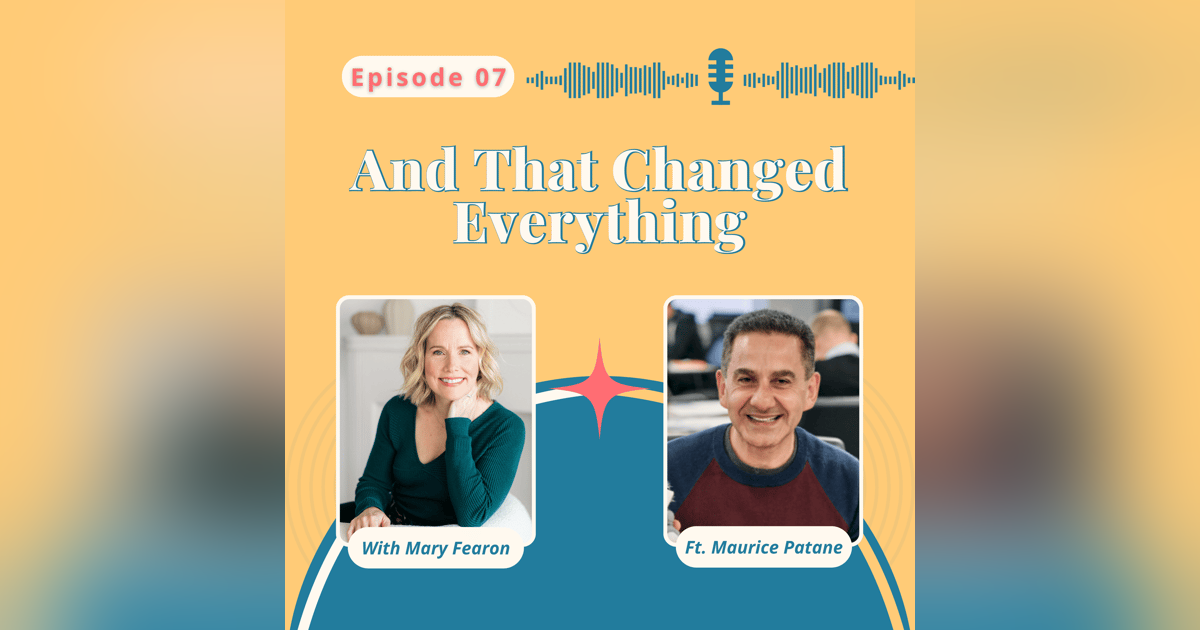
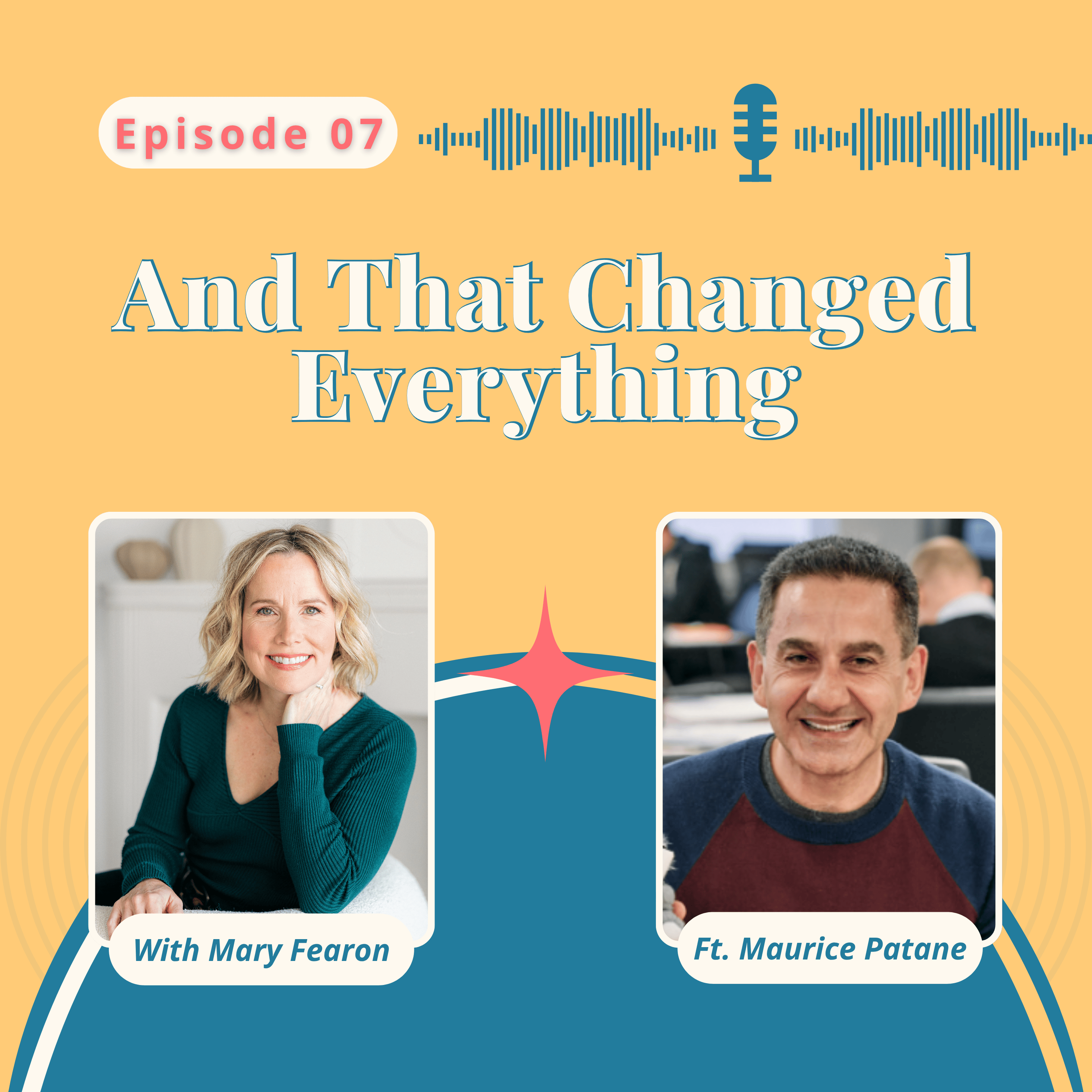


What if happiness was something you could design, moment by moment?
In this episode, Maurice Patane invites us into a life built on reflection, gratitude, and genuine connection. His story is a reminder that the way we think, speak, and show up every day shapes the life we create. From the power of small rituals to the meaning we attach to money, Maurice shares how intention can turn ordinary moments into extraordinary ones.
Maurice Patane is the founder of Access Financial Management in Melbourne, Australia. Known for leading with empathy and purpose, he helps people align their finances with their values so they can live richer, more fulfilled lives. Maurice calls himself the Chief Happiness Officer because his work and life are guided by a single question: How can I help someone live happier today?
In this episode, you’ll hear about:
- The daily question that sets the tone for Maurice’s life and work
- Why moments of challenge can reveal strength and character
- The art of listening for what is not being said
- How aligning money with meaning creates real freedom
- The quiet power of gratitude, journaling, and reflection
Resources:
- The Road Less Stupid by Keith J. Cunningham - Book Link
- Sliding Doors - Movie
- The Five Love Languages by Gary Chapman - Book Link
If this conversation inspires you, follow And That Changed Everything wherever you get your podcasts.
Share it with someone who’s building a life that feels as good as it looks.
Follow Us:
Listen on:
[00:00:00] Mary: Hello everyone. Thanks for tuning in this conversation with Maurice Patane of Access Financial Management. A native of Melbourne, Australia and Chief Happiness Officer in his business is a story about those moments in life that show you who you are and they show up all over the place. If you're lucky enough to notice 'em.
[00:00:21] Mary: What do you do with that? How does it shape who you are and how you show up in the world, the business you build, the people you serve, the family around you and all of that. It's an awesome conversation with a fascinating individual who has insights all the way through. I hope you enjoy it as much as I did.
[00:00:38] Mary: Have a good one.
Intro:
Welcome to and that changed everything. I'm your host, Mary Fearon, and this is a show where some of the world's most interesting and successful people unpack three pivotal moments that shaped who they are and how they show up. I've been working with business leaders for decades, and it's clear, it's the stories, not the titles that shape us.
These moments change how we lead, how we live, and what we make possible. I learned so much from each of these conversations, and I hope you do too. Let's jump in.
Podcast
[00:01:09] Mary: Okay. Why don't we start with you sharing something that's bringing you joy right now?
[00:01:16] Maurice: What's bringing me joy right now?
[00:01:18] Maurice: I guess the, for me, the coming together of the, the small but intentional things that I do and not do. So creating, I guess, the environment for these things to come together is really important.
[00:01:33] Maurice: And I enjoy right now watching my children go through adversities and out of, I suppose what comes outta that at the end is the learning moments that they gain and grow because of the stories that we've shared together and how they've taken some of those lessons on board and of what we've spoken about and what they've learned through time.
[00:01:57] Maurice: I enjoy, I guess [00:02:00] watching team members being challenged and having. The, I suppose that same resilience, that, that element of resilience to get through what we would call the messy middle, uh, by reflecting on the stories that we share as a team. And I'm really enjoying seeing our clients living even happier lives because of what we've shared or done with and for them.
[00:02:23] Mary: Wow. I love this. You know, um, there's this whole theory that things have been too easy for people. You know, like my kids are 18 and 20 years old and they grew up in that time of the participation awards where everybody gets a, you know, a medal and there's no losers. Everybody's a winner. And so I've had this like little voice in my head that says, where are they gonna learn some of the tough stuff?
[00:02:49] Mary: Where are they gonna learn that? Things like life isn't fair and things aren't always gonna happen, you know, because you think they should or whatever. And of course, they've had their own. [00:03:00] Bumps in the road. Truly. I mean, it's life. It's not, you know, yeah. It has its own things. But I love that you're enjoying adversity and seeing what happens to people as a result of going through something.
[00:03:12] Mary: 'cause that's how you grow.
[00:03:14] Maurice: Very much so. Yeah. It's, it, um, I guess the interesting part is that, uh, and I can't think of the right term right now, but I've heard this comment being said, uh, and I think it's a Japanese word, and I'm gonna, I'm gonna suggest that's called kisuki. I could be wrong, but it's about where the imperfections or cracks are actually highlighted as opposed to covered up, because it's those adversities that, as we just shared a moment ago, that we grow from.
[00:03:43] Maurice: So. Mm-hmm. Uh, you know, I think it's a, it's a, it's a very important part of life. It's the, it's the lessons that move us forward.
[00:03:52] Mary: Oh, I love that. So Tsui, I'm not sure if that's the right term either, but I think I understand what you're talking about. It's when the China, the like the beautiful China breaks and they put it back [00:04:00] together with gold.
[00:04:01] Mary: I think
[00:04:02] Maurice: that's one. Yeah, that's another one. Correct. You are a version of that.
[00:04:04] Mary: Is that
[00:04:05] Mary: yeah, yeah. Oh yeah. It's beautiful.
[00:04:06] Maurice: I can't think what it's called now, but you are right.
[00:04:08] Mary: Well I love it. I love the theme of this resilience or or adversity challenge makes us stronger. So it's almost like someone said, and I don't know who quoted it, but don't ask for the world to get easier or life to get easier.
[00:04:21] Mary: Ask for yourself to get better.
[00:04:24] Maurice: Well I like that.
[00:04:25] Mary: Isn't that
[00:04:25] Mary: good?
[00:04:26] Maurice: I dunno who said it, but I like it.
[00:04:28] Mary: Me either. Someone super smart anyway.
[00:04:30] Maurice: Yeah.
[00:04:31] Mary: Well folks, I'm speaking with Maurice Patane, founder of Access Financial Management. He has also coined himself the Chief Happiness Officer there. He's from Melbourne, Australia. I met him about a year ago. And other than that, we've had some conversations around, we have great alignment around the world of storytelling and I think what motivates people and drives people.
[00:04:54] Mary: So we've connected on that level, but I know very little of your story, so I'm very excited to have [00:05:00] you on the show and, uh, to hear some of the moments that have changed everything for you. So thank you for joining,
[00:05:07] Maurice: Mary. Thank you. I'm, I'm really, uh, quite grateful and I appreciate the opportunity to be with you.
[00:05:12] Maurice: I. Love, love, love what you are doing, and the concept of this podcast and challenging our thoughts and trialing new ideas and, uh, and I guess being here in this learning environment is, uh, is very energizing for me. And I think one of the things that emerges from these sorts of discussions is that you can actually say things that hopefully will have an impact on others.
[00:05:36] Maurice: And you know, I, it's interesting when you, when I saw the term and that changed everything, it reminded me of a movie called Sliding Doors, which would Paltrow. So I don't know if you've seen that one before, but it, it follows the, um. I suppose two parallel versions of the same day. One where she gets on the train [00:06:00] and the other one where she misses it.
[00:06:02] Maurice: And, uh, from that single moment, two completely different lives unfold, each with its own joys heartbreaks and lessons. And I think that life is like that and it's often those unplanned decisions, if you like, that really make a big difference and change everything for us. And it's those little moments where we pause, we say, yes, uh, we offer help, or we take a chance that shapes the entire course of our lives thereafter.
[00:06:33] Maurice: And it's those sliding doors, moments, I guess, that remind us of that. Our path is, is more influenced by how we choose in those tiny moments rather than the, and, and how we challenge ourselves thereafter. So I love what you're doing. Really do.
[00:06:49] Mary: Oh my gosh, I love what I'm doing now. More after you gave me that explanation.
[00:06:54] Mary: That's such a good movie. I hadn't seen it in a long time, but I love the example because it's just, [00:07:00] it's just a little micro moment that changes everything. Like, not everything is monumental. You know, we all have hundreds of stories in our lives and it's, there's, you know, there are, of course, we're gonna go over three specific moments in your life, but, you know, you have thousands probably, depending on which story comes up for you at any given time that have shaped who you are.
[00:07:20] Mary: And we all have that. Um, yeah, I also love what you say.
[00:07:24] Maurice: No, they're very, very true. Very true
[00:07:26] Mary: about
[00:07:27] Maurice: the
[00:07:27] Mary: response. I was
[00:07:28] Maurice: gonna say, quite often we, we look for the, as you said, those really big, significant moments. And I'm not saying they're not there, but. I think one of the important points is that whether you call it meditation, whether you call it journaling, whether you call it gratitude, there's, or there's many different versions of it, but what it does is it enables you to reflect on those tiny moments.
[00:07:51] Maurice: And when you add up those tiny moments, we call them specks of gold, but when you collect them and put them together, all of a sudden you've got this [00:08:00] nugget that mm-hmm. Um, collectively is, is quite powerful.
[00:08:04] Mary: Mm-hmm.
[00:08:04] Maurice: Makes a significant
[00:08:05] Maurice: difference. Yeah.
[00:08:06] Mary: Do
[00:08:07] Mary: you have a, do you have a gratitude practice that you follow?
[00:08:10] Maurice: I do. I do. Yeah. Uh, and a lot of it came from, um, a common friend that we know. And so I'll start each day with, uh, an empowering question. And my most common question that I'll ask myself is, can I be the answer to somebody's prayer today? So that just, I put that into the subconscious mind and just reflect upon it on a day-to-day basis.
[00:08:33] Maurice: I do journal. I carry a gratitude rock with me, uh, in my pocket. So it just constantly reminds me to be in gratitude or to reflect on moments, uh, that are significant or otherwise. Uh, journaling is, to me, is a deep process of really deep thinking about an event that occurred or didn't occur, or it could just be something I've [00:09:00] read and it just gets me thinking.
[00:09:01] Maurice: So yeah, I do that pretty much every day.
[00:09:05] Mary: May I was was gonna ask you and, and about your process and, uh, consistency around it. So do you do it in the morning at night? Does it, is it hardwired to something so that you never forget?
[00:09:14] Maurice: Not
[00:09:15] Maurice: necessarily.
[00:09:15] Maurice: Uh, I mean, there's, there are it. I guess the main point is that it's generally in the morning, but if I miss it in the morning, there are many moments throughout the day that I'll remind myself to just pause and reflect.
[00:09:30] Maurice: And I know that a lot of people like to take their lunch breaks, go for a walk and, and so on. I do that part of my day, very first thing in the morning. But, um, there's no, I don't have a problem with pausing during lunch breaks and things like that. And just reflecting at those moments and just journaling whatever is on my mind at that point in time.
[00:09:50] Maurice: Uh, but the most significant times, I guess, is when I just get that thinking time and thinking time. I don't, I, yeah, I think it was Keith Cunningham. [00:10:00] Wrote a book, the Road Less Stupid and Oh, yes. Yeah. And he talks about thinking time. And I think we, as a general rule, I don't think we give enough time to thinking time as as, as silly as that may sound.
[00:10:13] Maurice: But um, yeah, just creating that thinking time and just being very purposeful about it, uh, I think for me personally has been insurmountable in my personal growth and development and mm-hmm. So on. So yeah.
[00:10:26] Mary: I love it. That book is a great book. I listened to it on audio and then I bought the book because it's kind of a.
[00:10:32] Mary: It's like a reference. You could open it up at any page and find value in it. You could look up different topics and stuff. But Keith Cunningham is a hoot. Like he, he does the audio for it and it's um, it's like you're having a, I don't know, seven hour long conversation with him. He is just like, shoots from the hip and stuff.
[00:10:49] Mary: That's awesome.
[00:10:50] Maurice: Very good.
[00:10:50] Mary: So tell
[00:10:50] Mary: me, I know this probably wasn't one of your things, but I'm curious about when did you start, 'cause it's like, that's a very intentional way of being [00:11:00] and I mean the gratitude rock, I love that idea. 'cause it's so easy to get caught up in all kinds of other things and it brings you back to the things that matter to you.
[00:11:08] Mary: So I'm just curious, when did that type of practice start for you and why?
[00:11:13] Maurice: Yeah, I think the, um, the process probably started very early in my, my life, but I just, I wasn't conscious of it is probably the main point that I'd raise. And I think, excuse me. I think that if I reflect back on. My early days as a child, I was naturally very inquisitive and through, mainly through observation.
[00:11:37] Maurice: And I remember quite often lying on the sand at the beach in the summer days and just observing people and their interaction with other people. And I was kind of, uh, in a trance, if you like, and I would ask myself, why are they doing what they're doing? And eventually, and, and that was an internal question that I would ask myself and as a point of reflection, [00:12:00] but eventually the why became external and I began asking others them, if you want, why they doing what they're doing.
[00:12:08] Maurice: And there's a couple of moments that helped me just to trigger that. And I, I, you know, I had. Two very loving parents and an extended family that treated me as their own son. And when I was, uh, my family background is uh, although I am, I was born in Australia and live in Australia. My family background is a, is a Italian origin.
[00:12:31] Maurice: Ah, okay. Um, when I was five my parents purposely wanted to take, uh, both my brother when he turned five and myself at the same time, to see the extended family in Italy and introduce us to what I found to be an extended version of the unconditional love that, uh, and, and many of, I guess the, and that changed everything.
[00:12:52] Maurice: Moments began from, if you want to call it that. And one of the, it reminded me, I was just recently there, I think [00:13:00] it was a year and a half ago. And there's a daily tradition, and I was reminded of, which helped shape one of my, those moments for me. And it's called ava, which simply means a simple stroll through the village where friends walk, arm in arm connecting in a meaningful way and often without having to say a word.
[00:13:23] Maurice: And over time I found that my observation skills improved. So it started with that internal dialogue with myself. It then moved towards a more vulnerable process of doing things that were not normal, if you want to call it that. And then in my schooling years, what I found was that, my best friend at the time would call me on the home.
[00:13:50] Maurice: Back then, we had home phones, so we plane lines, and he would call me on the home phone after dinner on a weeknight and we would spend hours pontificating [00:14:00] about life. And what we didn't know or really understand at the time is that he was suffering from a mental health illness and neither of us had the words for it at that point in time.
[00:14:14] Maurice: And I so wanted to help him, that he, he actually helped me to gain the skills to continue my strong interest and desire to dig deeper and want to know more. And I would ask, I suppose I would ask questions. Listen, ask more questions and listen more, but never realizing that later in life, uh, those discussions and those stories and hearing and feeling his pain that I would actually become, it would become so valuable in my life and in my career, if I want to call it.
[00:14:47] Maurice: So I cared enough to want to make a difference and grew my listening capabilities, uh, to hear what was not being said if you want. And so I gained the ability to, I suppose, read between the [00:15:00] lines and gain a, a deeper understanding of the underlying issues that people were working through. And as a result, I learned over time about people's dreams, their goals, their motivations, their fears and losses, and many other issues along the way.
[00:15:18] Maurice: And. It was, I suppose at that time that I realized I had two ears in one mouth, and so I wanted to make sure that I used them in that proportion and listened accordingly, and I love it. I just wanted to, yeah, I, I guess the underlying issue, which and at the end of the day, this was a play on words with respect to the Chief Happiness Officer, but I wanted people to be happy and I saw the good in people that they didn't yet see in themselves.
[00:15:46] Maurice: And friends, interestingly friends, would look forward to their birthday or other significant events so that they would receive my greeting card, which was filled with, um, writing on both sides of the, uh, [00:16:00] of the card with an honest reflection of how good they were and how even better their future was.
[00:16:07] Maurice: And it was just for me, I just got. I guess going back to that point of gratitude, I just felt very gracious in being able to support people through those. Mm-hmm. Otherwise tougher times or seeing the better in themselves that they couldn't yet see at that moment.
[00:16:24] Mary: Oh my gosh,
[00:16:25] Mary: there's so much here.
[00:16:26] Mary: Going all the way back to, how old were you when you were on the beach and observing people? 'cause it is, it's like a, it's like an evolution. Yeah. So you started there watching and noticing and then you go and meet this family. In Italy and there's a practice around just being with people and not necessarily saying anything.
[00:16:46] Mary: So I'm thinking you're like, you're learning about how to be present in that case perhaps.
[00:16:51] Maurice: Yeah. That that's a good way of putting it. Yeah. And it's being comfortable in your own skin. I guess. It's the, uh, look, look at one, one thing I will share is [00:17:00] that the, that stroll that you would take through the village is, when I say Armin arm, it's Armin arm locked.
[00:17:07] Maurice: And it's male, male, female. Female. Or male female. And I know that in other cultures that could be seen as very different and challenging. And it was from where I came from at the time, but that helped me to be more vulnerable, if you wanna call it that. And uh, and I got a lot of comfort out of that. And, uh, it just helped me to open up and be more of who I really wanted to be without the barriers that stopped me from being that that person.
[00:17:36] Mary: Right. So how old were you when that you
[00:17:38] Mary: had that experience?
[00:17:39] Maurice: Well, it's uh, the first time I went I was five, but probably the more significant moment was when I was 16. Okay. Yeah, because And 16 is that awkward age.
[00:17:49] Mary: Yeah. Like you don't wanna be arm in arm with a girl. That would be weird or whatever your, your particular awkwardness would be, but it would be, it would be awkward.[00:18:00]
[00:18:00] Mary: Um, yeah. And then I also think the barriers that we put up socially we learned them in school. I'm now realizing why we may have connected so well, because I moved so many times when I was young. I mean, maybe I've told you this, but 14 times before, I was 21 between two countries, several US states, two provinces.
[00:18:21] Mary: So I almost became a professional outsider. And so I like, because, and, and just by virtue of the context I was in, 'cause I just would arrive at a new school and nobody knew me and nobody cared. Like Nick, I had to work to make friends and understand the environment. And so that was my own version of observing others.
[00:18:41] Mary: Um, But you create
[00:18:43] Maurice: wow! 14 times.
[00:18:44] Mary: Yes, yes. Absolutely. And I mean, I think it was, you know, the way I, the story I tell myself around it now is, um, that it's such a gift, such a gift to be able to be in different groups, in different communities, to know that you're not the most important center of the [00:19:00] universe.
[00:19:00] Mary: That you, you know, you have to learn cultures and ways of being and all those things, you know, so, so, but I think about those times when you're young and you wanna be an image of what. You know, everybody sort of puts out there as fitting in, and so to have a transformational moment where it's like, no, I'm, you know, to learn how to be okay with yourself and as a teenager is a pretty big moment that would probably have served you.
[00:19:28] Mary: Mm-hmm. Really well when other people maybe learn that in their forties
[00:19:35] Maurice: and some don't at all.
[00:19:36] Mary: Right? Yeah, yeah, yeah. That's right. That's right, that's right. That's right. Oh, that's so cool. Yeah. Um, and then your friend who suffered, how old were you when you, when you were having that experience and trying to be there for him?
[00:19:47] Maurice: Uh, I would say we were probably in our early teens and, uh, yeah, that would've been early teens through to, and, and mm-hmm. To this day we continue to talk and share and so on. So it's, [00:20:00] um, uh, and, and I can comfortably say that he's in a much, much better place than what he was back then. I think that when you combine just some of the comments you made there, that, that, that age of, in your teens, uh, you're still trying to make sense of the world and where things fit in, and it just, it's hard to put words around certain feelings and what's happening.
[00:20:23] Maurice: Of me at that point in time, so. Mm-hmm. Whereas as we get older, I think, and we mature and become somewhat wiser, uh, we're able to words around things that didn't make sense beforehand. Yeah.
[00:20:35] Mary: Right.
[00:20:36] Maurice: Yeah.
[00:20:36] Mary: So interesting in the world of the stories we tell ourselves. If we don't have a word for something, then we don't have the experience because we can't make sense of it.
[00:20:45] Mary: And so, you know, we, you hear people that speak a different language, we'll often try to communicate with you in your language. You're like, well, I don't have a word, so I can't tell you what I mean at all. And so think about that as it relates to yourself as you're growing up and you're dealing with complex issues.
[00:20:59] Mary: [00:21:00] And I don't have a name for it. I don't know what to say about it. I don't, nobody can help me 'cause I can't share it.
[00:21:05] Maurice: Yeah. Yeah.
[00:21:06] Mary: Yeah. Wow.
[00:21:07] Maurice: It's actually interesting you say that. It just reminds me of something I heard recently, and I hope I'm gonna share this properly, but about love languages and, uh, it.
[00:21:19] Maurice: With love languages, we tend to give love in the way that we wish to receive love as opposed to giving love in the manner in which the recipient wants to receive the love. And it was probably, which I'll share a bit later, it's one of the, I suppose, insights that helped me, or moments that helped me to become who I'm today.
[00:21:45] Maurice: But it's the, yeah, and, and it's something I'm still practicing and getting better at because the concept of, you know, I suppose the concept of giving love to others in the way that they want [00:22:00] to receive it. So an example might be with your significant other that you might be giving gifts and in return you are not getting the expressions of, we'll call it gratitude for want of a better word.
[00:22:17] Maurice: Yeah, from that individual, from your significant other. And it's quite often because you may be giving gifts because that's how you want to receive the love as opposed to the person you are giving them to. Whereas they might just like, uh, meaningful moments as in a conversation or an interesting conversation or an experience for that matter.
[00:22:40] Maurice: And so it's about understanding from the other person's perspective exactly what it is that they want and then delivering it on that basis alone.
[00:22:50] Mary: Mm-hmm.
[00:22:51] Maurice: Yeah,
[00:22:51] Mary: I love that whole concept. I'm a, uh, words of affirmation, love language, so I would often say [00:23:00] things or write things or for others. Because that's what I want.
[00:23:05] Maurice: Right,
[00:23:06] Maurice: right. Um, so you, so you act almost like an a chat gpt, is that what you're saying?
[00:23:11] Mary: I think so. I think so. And it's also like when I'll do something, I want feedback around it, and then, but other people don't need that feedback and so they don't give it that. I'm like, well, but I really love to hear this.
[00:23:23] Mary: Doesn't have to always be like, you know, praising, but just a conversation. Like, 'cause words are tool like, so I mean, I live in the world of words and communication and storytelling and stuff. So words are my tools for communication, both with myself and then with others. And so the words to me, I think have more importance than they do for many people who would show it differently, whether it's through gifts or time or attention or, but there's touch is one of the love languages, I think. Yep.
[00:23:53] Maurice: Right? Yep.
[00:23:53] Mary: Yeah, yeah,
[00:23:54] Maurice: yeah. No, I, I, I couldn't agree more. I love the concept. I'm very intentional. I think being intentional with words [00:24:00] is very important and there's certain, and yeah, I'm a bit of a stickler with that, even in, um, with the team and the office and just the way that I will write to them or versus even when they're sharing experiences and so on.
[00:24:15] Maurice: I will look to make alterations to some of the words, which will create a more positive impact as opposed to potentially a negative impact. And so a, a common one that I'll use is that I, I'll get them to where they can avoid words such as I need to, or I need, I have to, or I've got to, and instead change it to, I get to, uh, which is a form of gratitude from that perspective.
[00:24:42] Maurice: Hmm. The other one would be, for example. If I said to you Mary, you're gonna come to the party on Saturday night, and you say, I'll try and get there. Quite often what we find is that the people are giving themselves and a method or an excuse to get out of it. [00:25:00] Whereas what we, what I would encourage people to say in that situation is that I will be there, or no, I won't be there.
[00:25:07] Maurice: It's just being a little more direct in, in that situation instead.
[00:25:11] Mary: Oh, I love it. .
[00:25:11] Maurice: So the choice of words is important.
[00:25:13] Mary: I agree. I'm very particular about that, which is, you know, this is total sidetrack, but chatGPT is a great brainstorming partner. I'm a power user of it. 'cause I love, like, it's just like combing the universe for all the ideas and ways of thinking about something or framing something or whatever, but very.
[00:25:33] Mary: In particular about words, and so often it would fall short of meaning. And words are, words are the symbol for meaning, and that's how we navigate the world. It shapes your focus. If you wake up in the morning and you say, I have to go to work, I have to go to five meetings, I have to feed my kids. I have to, like, your entire day is framed through the lens of not gratitude, but [00:26:00] obligation or doing things you don't want to do when really you built the life that you're about to partake in.
[00:26:06] Mary: Mm-hmm. Um, and so it's interesting when as people start to give away their voice to chat GPT, I'm like, don't do it. It's your, it's, it's your model of the world.
[00:26:17] Maurice: Yeah. And, and I couldn't have put it any better than what you just, how you just shared it there was just perfect that it's that element of obligation when we say things like, I have to, as opposed to as you said, being in gratitude of what we get to enjoy by being at work and the purpose of why we are there and, uh, and, and how we can make such a, a, a massive difference to the lives of others, I think is critically important.
[00:26:44] Maurice: Yeah, and I love that.
[00:26:45] Mary: Yeah, me too. Me too. This is why we're kindred spirits. I knew it
[00:26:49] Maurice: very much so, but, uh, okay. But then from there, so I'll share where, where the journey sort of went from there. I, I, I continued through school. I was, um, [00:27:00] I was diligent and as a student, I was an avid learner and I had, uh, a strength towards numbers and maths at the time.
[00:27:09] Maurice: So the natural pathway was. Probably gonna be down the line of accounting or banking or something of that nature. And, uh, I do believe in fate. And as is, as soon as I completed my studies, I was actually fortunate that I was unsuccessful in obtaining a standard job in the financial services industry. And so as a result of that, I immediately commenced working for myself.
[00:27:35] Maurice: And an early question that was posed to me was, uh, in my business career, was to look, I suppose, 10 years in advance and to ask the question, do you have 10 years of experience or are you simply completing your first year 10 times?
[00:27:54] Maurice: Mm. And that
[00:27:54] Maurice: resonated with me is I had high expectations of myself, uh, and being an [00:28:00] avid learner, never satisfied without that continued learning and growth.
[00:28:04] Maurice: And I wanted to be the best version of myself from that perspective. And interestingly. I suppose from that point on, there was a, a couple of moments that stood out for me that helped form what I do today. And an early moment, believe or not, came from watching candid camera. And I'm not sure if you have candid camera in, uh, in Toronto as well, but in Yes, I should say.
[00:28:29] Maurice: But, uh, we were obviously getting us versions back in the
[00:28:32] Mary: Yeah,
[00:28:33] Mary: well I grew up in the US I know a candy camera, you where I got it from.
[00:28:37] Maurice: Yeah, there you
[00:28:37] Maurice: go. But I remember, um, one particular episode and there was unsuspecting member of the public entering a lift an ele, excuse me, an elevator. And then on the next floor there was some actors that were entering and the actors didn't do what most of us would do and face the lift doors.
[00:28:57] Maurice: Instead, they faced the rear of the lift. [00:29:00] And in most cases, the member of the public found it so uncomfortable to do the opposite to what everyone else was doing, that they chose to turn and face the rear as well. And whilst, and I guess what that, what I learned from that, just that that observation on its own was that whilst conforming is useful in many areas of life, I determined that it wasn't going to maximize my potential.
[00:29:26] Maurice: And I, I found that I cannot do what everyone else is doing and achieve better than average results or doing what I suppose everyone else is doing and not knowing where they're going. Was a key moment for me in thinking about. A trigger, if you wanna call it that. And then as I pursued down the line, a second moment and you might be able to relate to this too, was back when photos were not instantaneous or digital like they are today.
[00:29:56] Maurice: And after we would finish a photo reel, [00:30:00] we would run to the photo shop to have the photos developed. And a few days later we would, uh, run back with anticipation and excitement open the envelope. And who was the first person that you would look for me, of course. And I would hear comments and, and I, I tested this because I would hear comments from others as well.
[00:30:21] Maurice: And the comments that would come back would be immediately, oh, that's a horrible photo of me. My hair looks really weird. And, and similar to that. And, um, I guess that's when I learned that it's not about you. It's always about them. And it's about thinking like a customer and what do they want or need.
[00:30:41] Maurice: And I suppose the key to that was to ask the question and find out. And so those were two moments that I suppose I was able to draw upon as I suppose moments that help shape the trajectory of where I was going and [00:31:00] using, I suppose, um, for one better word, strategic coach language that you and I both know so well is that for me, growing two times means it's all about me, whereas 10 times means it's all about others and having that contribution mindset and mm-hmm.
[00:31:17] Maurice: I guess, yeah, that, that was the thinking for me about. Where two, two significant moments. I, I think where I was just using that point of reflection to and observation, if you want to call it that, to actually determine what are some of the, those key moments that change things in my way of thinking or otherwise.
[00:31:39] Mary: Mm-hmm. I love this because I think when we're asked to look back at what are those things that shaped you? Like when I was going through moving a million times, like, you know, every year, sometimes I didn't know what it was doing for me or how it was shaping me and my future, but now I look back, I go, oh, for sure if there's a [00:32:00] reason I'm in this business of communication and I can observe people and all of that.
[00:32:02] Mary: So it's interesting that you started out as somebody noticing at a young age that you were an observer of people. And then you move through life and you have these moments with other people, whether it's your family in Italy or your friend who, you know, at a very fairly young age, you guys were navigating some hard stuff and not really knowing the answer.
[00:32:23] Mary: And so you're witnessing that. And then you have these moments of like watching a TV show and having like a, like a, it turns a switch in your mind. And if you look at all those things, adding up a, the first thing led to the next thing, led to the next thing and made you open to some of these other.
[00:32:41] Mary: Pieces that now you look back and you go, oh, of course I've been an observer. I wanna make people happy. I wanna I wanna serve others. And it's so true about the pictures. I was just away with some girlfriends from high school and now we have much more immediate access to photos.
[00:32:57] Maurice: Yeah. Yep.
[00:32:57] Mary: And so, you know, everybody's taking the [00:33:00] photo and you're spending all these moments trying to debate which photos get posted because you don't look good in any, and it's just the absolute truth.
[00:33:07] Mary: Like, nobody's looking at each other. No one, I don't even know, like no one. And I like, I'll throw myself in that camp because Absolutely.
[00:33:16] Maurice: Yeah. We, we tend to, to look at ourselves and just uh, do I fit the, the profile that I want to, uh. To show the world at that moment. So yeah, that very true indeed.
[00:33:27] Mary: It's a weird thing because it, the human needs, the it, you know, is self-conscious because it's your experience of the world and whatever you, um, prioritize.
[00:33:38] Mary: So it's like, it's, you know, I am impacting my environment. And so you have to be self-aware and there has to be a lens on what are my strengths? Who am I, what can I offer? And then balanced, because you can't give all that over. You have to have a healthy bit of ego in order to have the dent in the universe you wanna have.
[00:33:55] Maurice: Yeah. And then also let go enough to know that it's not all about you. In fact, [00:34:00] it's very little about you in the big wor in the, you know, in the big picture, right? Yeah.
[00:34:04] Maurice: And, and that is, that is key. That to me was probably one of the key elements where yeah, I, I, I'm just gonna repeat myself, but realizing that it was never about me.
[00:34:13] Maurice: That it was always about others. And I think that comes from that, uh, servant leadership. Element. Mm-hmm. And it's about contributing to others and so on. And I think that was the point where I was able to I suppose, begin putting various pieces of the puzzle together. And, um, I linked, I guess different paths or worlds, uh, between money, happiness, psychology, and I guess the love of people.
[00:34:45] Maurice: And what became more and more apparent to me was that most people were tiptoeing through life, hoping to, hoping to make it to death safely. And, um, they would say that in many different ways, such as, [00:35:00] I've only got three years until retirement, and then I'll start living life. Mm-hmm. And yet when I spoke to people that were close to the end of their life, the most common response was, I wish I'd lived more of life along the way.
[00:35:15] Maurice: So there was this disparity between the two components, and I thought, there's gotta be more to this than meets the eye. And what I realized is that when people are managing their money, they almost never seek the highest possible return. What they're seeking, I guess, from money is not how many notes can they stack in a pile, but how do those notes make them feel?
[00:35:40] Maurice: What are the stories they tell themselves? Mm-hmm. And do they tell their family? And I figured that if I could make someone who was afraid, less afraid, or if I could make someone that was selfish into somebody more generous, or if I could make somebody who's disconnected into someone who's [00:36:00] more connected, then I feel that I've done a good day's work in that situation.
[00:36:06] Mary: So it's as if you are interested, invested, and intentional about helping people, and the money management is a vehicle for you to do that. You could do that in many different ways, but because you have this skillset and ability and it's a way that you can serve and help alleviate, it's so true with money.
[00:36:30] Mary: It's such a emotional topic, emotional, and there's also like, you know, people have their own psychology around it, the pros and cons, the baggage, et cetera. So, um,
[00:36:42] Maurice: yeah, and I, and and I, I, I appreciate you putting the words to that because that you articulated that so well. But yeah, it's, I suppose it was just having that creativity of being comfortable or I guess it goes back to that point of being [00:37:00] contrarian in my views.
[00:37:03] Maurice: By allowing myself to be contrarian, I was able to link those different by having the creativity to link the two com or many different components to create something totally different. And it was interesting because I, I learned that one of the, I suppose early statistics, if you wanna call it, or data that was provided to me in my early days in, in the industry was that if you took a hundred young people now age 25 and looked at them 40 years later, at age 65, of those a hundred people, 49 of them will be dependent on some form of social security or charity.
[00:37:43] Maurice: Wow. 29 of them would be dead, 12 will be broke, five will still be working because they have to, and only five will be financially independent.
[00:37:59] Mary: Holy [00:38:00] smokes.
[00:38:00] Maurice: Yeah. So that's where my curiosity took over and I really wanted to understand what made those five financially independent. What was it about them?
[00:38:11] Maurice: What were the, I suppose the key characteristics of those people? And there are many things, but what I learned some was something so simple. It really was that the key characteristics of those five that were financially independent were, firstly, they all had a goal or purpose. Secondly, it was written down on paper.
[00:38:35] Maurice: And thirdly, they all had a mentor or coach that would hold them accountable to what was required to achieve that goal or outcome or milestone. Wow. And that's what, I guess when I understood that, that's what I became, the essence of what we do today. Okay. I was able to take that component of [00:39:00] understanding where people wanted to be, where people wanted that freedom, that ability to be financially independent and financial independence is just one element of that happiness quotient for in of better word.
[00:39:14] Maurice: But it became, yeah, I, I, I guess that's what we modeled ourselves on. And in order to use some of the skill sets that I'd gained what I found was that for us, it was all about aligning people's capital with their values so that they could maximize their return on life as opposed to just their return on investment.
[00:39:38] Maurice: Right. So in our industry, the most common a, a common discussion point is the return on investment, but the real investment is in your own life. Mm-hmm. As a result of that what I find now is that it's I see my role as assisting people in navigating through the surface based questions [00:40:00] no different to what you do and what you are doing to dig deeper and help 'em understand the underlying question.
[00:40:06] Maurice: Because they, they often disguise their questions without knowing about what they're asking. But what I've found is that the underlying question in all cases consists of three words. And it's as simple as, am I okay? Mm. It's all people want to know, am I okay? And so to understand that a little better, I often ask, uh, I I begin by asking whether the person has been to a funeral and all will answer yes.
[00:40:40] Maurice: I then ask if they had the ever had the opportunity to deliver a eulogy. And, um, some will say yes, some will say no. And then I ask, have you ever written your own eulogy? And that's when I get all sorts of strange looks and I ask,
[00:40:55] Mary: I just
[00:40:55] Mary: gave you a strange look.
[00:40:56] Maurice: Yeah, you did actually. But I [00:41:00] asked 'em to complete their own eulogy.
[00:41:02] Maurice: And when completed, to alter it from the past tense to the present tense. And if that's the sort of life that they want to live and wanna be remembered for, then let's go and create it. And as a result, their life becomes the center of the conversation, not their money. The money is just the enabler to get them to where they wanna get to.
[00:41:24] Maurice: And more often than not, it's their ignorance. Um. On what their money can or cannot do is what stops 'em from going ahead to live the life that they want. And so what we're able to do in that situation is just lift the veil and it's almost like the weight of the world has been lifted off their shoulders, and they can start to do things that they never thought they could do.
[00:41:48] Maurice: And it, it's really just about helping people remember why they're working so hard and find some of that much needed balance. But it [00:42:00] requires that we learn how to, I suppose, how to help people navigate, understand why they're spending, what they're spending, why they're saving, what they're saving, and why in general they're doing what they're doing.
[00:42:12] Maurice: And that only just, that only comes after we're able to understand their true values and what they're actually attempting to do.
[00:42:21] Mary: So I love this for a lot of reasons. The, um, people don't a achieve goals when they're unclear about why they're doing them. And so it, and it, what's interesting is how much of life we spend looking at sort of extrinsic things.
[00:42:38] Mary: Like, all of my friends have a house, or everybody's having kids or, and so you look at that model and you're like, well, that's what I should do, but you're not really doing the internal work of what matters to you. And so, no kidding people don't reach their financial goals because they don't really, there's not a lot of, um, there's not a lot of [00:43:00] coaching, teaching, training around some of what intrinsically motivates you.
[00:43:05] Mary: Where do you find. A sense of mission and purpose in life. Yeah. And today in the world, there seems to be a letting go of, you know, organized religion for a lot of people. And that would give people a sense of, this is the mission that I'm on and this is how, you know, this is the roadmap to get there. So, and then we also have like an abundance of external information through social media and other things to tell us that whatever's going on inside is wrong.
[00:43:31] Mary: It's actually this thing out there. And so we're in a bit of a, it's a quandary for people. And so to help people reconnect with the things that matter to them, I love the eulogy mechanism for that. Because if you ask people point blank. So what's, what's your purpose? What's your mission? What's your, they're like, uh,
[00:43:51] Mary: yeah, I don't know.
[00:43:51] Mary: Make enough money and, you know, to put, you know, a roof over my, my family and food in their mouths kind of thing. Like they, it, they, it's, uh, [00:44:00] it's surface, right?
[00:44:01] Maurice: Yeah. And it's, it's helping them. I mean, we've gotta give them the tools to help them. Yeah. And I think one of the simplest and greatest tools that we can offer is the quality of the questions that we ask.
[00:44:15] Maurice: And it's, the quality of those questions can help people just dig a bit deeper and it's not an easy process, you know, um, when we go through that process and, and one of the questions I'll go through what we call a value staircase, and so it, it starts with, so tell me, Mary, what is it that's important about money to you?
[00:44:37] Maurice: What will occur is that essentially you will, you, the person will go through, uh, what you and I know as Maslow's hierarchy of needs. Mm-hmm. And so they'll start with the most common things around security and freedom and things of that nature. And then they'll work towards helping others, which could be their children, family, and so on.
[00:44:57] Maurice: And then eventually they get to that point of [00:45:00] altruism and, and that higher purpose. And so once they go through that journey, it becomes the barometer. And so we create a vision statement as a result of that. And that vision statement appears in every I won't say every, but every, every year we meet with them and it's, sorry, let me rephrase that.
[00:45:20] Maurice: We correspond with them on a le there are multiple touchpoint on each of those touch points that vision statement appears. Mm. As a reminder of, this is my one page plan, this is what my purpose is, this is what I'm aiming towards, and that it becomes our barometer and we measure that. So we wanna measure whether the impact we're having is actually what we, are we having the impact, I suppose, is the major question.
[00:45:47] Maurice: And so we will ask them to write themselves, on a number between one and 10, where 10 is, I feel like I'm right there now, and one is I've got no idea what's going on. I feel so [00:46:00] frustrated and, uh, I don't know where things are at. And then the next question becomes, what would need to occur between now and the ne and the end of this meeting for you to feel closer to a 10 if it's not?
[00:46:10] Maurice: And so that helps us to gain a better understanding. And from there, we, we create we created, I should say, a very simple benchmarking process that measures the various components that are gonna guarantee that the individual gets to their chosen destination of whatever success looks like for them.
[00:46:31] Maurice: And what we did to simplify it further, again, again, just using, uh, another concept that I, I, I suppose, or moment that I learned was, uh, uh, a simple observation that we all know the colors green, orange, and red. Very quickly. And so we use those colors to help
[00:46:50] Mary: ah,
[00:46:51] Maurice: individuals to see what areas of their plan are on track or on watch or in caution.
[00:46:58] Maurice: And that's a very quick [00:47:00] reminder. It quite often it becomes a language in itself that I don't need to say a word exactly what's going on.
[00:47:07] Mary: Yeah.
[00:47:08] Maurice: From that perspective. And they can, and, and that becomes the focus of our conversation. And I actually, as silly as it may sound, I, I, I enjoy seeing things that are in red because they're often those adversities that you and I referred to earlier and mm-hmm.
[00:47:24] Maurice: I'd rather know what they are today because it gives us the time to actually work through them and get the outcome. Because more often than not, what we are really managing with our clients is their behaviors. It's the behaviors that get the outcome. So if we can create better behaviors that match the outcome that they're after, which is that vision statement or whatever definition they want to use towards, uh, success or otherwise, be it retirement or a certain level of income or spending or whatever the case may be, then mm-hmm.
[00:47:58] Maurice: That's what we're measuring against and [00:48:00] all we're doing is working backwards from there.
[00:48:02] Mary: So I,
[00:48:03] Mary: this is, so, um, as you're talking about this, it's. Sort of reminding me that we're probably in very similar businesses because of the way that you approach things. Like I work with leaders and businesses on, you know, where are we?
[00:48:18] Mary: What's the dream? Where, you know, where's the vision for what we can do in the world and what's important to us in terms of values? Like how do we need to be, you know, on the path to get there? And that becomes the organizing story for the individual and the team to achieve what they're, what they're after.
[00:48:38] Mary: So as you're saying that, I'm like, oh, that sounds very familiar, this process, and I appreciate now. 'cause I was gonna ask you about the, what is the, um, you, you say you're sort of, take the road less traveled, like, you know, don't do what everybody else is doing. What is that thing? And it's a very different process than.
[00:48:58] Mary: If you want X number of [00:49:00] dollars at the end of this career, and we think you need that because the cost of living is X and you're living this way now, like it, like the math or the equation on what you need to save and the, you know, red, yellow, green is, do you have enough or not? That's a fairly thin proposition.
[00:49:16] Mary: It's just a mathematic equation where, and most of what you just described has nothing to do with the math. I know the math is in the, is in the background 'cause it's enabling all of this, but it's really more about vision. What's the story you tell yourself about what's possible in the future? How do you wanna live?
[00:49:34] Mary: How does it affect the people in your life? What's the, you know, how do you wanna live on, on the path to get there? What are your values? And then because we understand all of that, we know the equation we need to put together in the background and make it happen. A
[00:49:49] Maurice: hundred percent. Yeah. I couldn't have articulated it any better, but yeah.
[00:49:52] Maurice: Look, there are many similarities in what we've shared because I think the platform may be different. [00:50:00] In my case, it's the financial services industry and it's to do with money. And in your case it might be, uh, more about leadership programs and so on. Mm-hmm. But the end result is that we are looking to change lives for the better to, for a cause that's bigger than the individual themselves.
[00:50:16] Maurice: And if I just reflect back on one of the points you raised earlier, and I see, and if I go back to one of the earlier comments I made around questions what I don't enjoy doing is, and what I won't do is come to a client with options about here are the options that you can reflect upon or take.
[00:50:39] Maurice: And I find, and this is, maybe it's me personally, but I found that it's worked with everyone that I meet with, is that. People actually don't enjoy having options because it means I have to make another decision. Yeah. Whereas the power of quality questions becomes the filtering process to eliminate the options that are no [00:51:00] longer viable based upon what it is that the individual wants to do.
[00:51:05] Maurice: I love it. So by asking relevant questions, I know people can't see me, but it's like a filtering process coming down into a short funnel where the end result is that we've eliminated the nine options and we're down to one and that fits perfectly. Um, it's like a hand in a glove, it's a square peg in a square hole, and it just works.
[00:51:30] Maurice: And you follow that path and. If you don't deviate, I can assure you that you'll get to the outcome that you want to get to. But what will look the thing, but why you need someone by your side, that mentor or coach, going back to one of those key characteristics is that inevitably you will fall off track, right?
[00:51:52] Maurice: Mm-hmm. Because there will be comparisons. There's social media, there's the world that sits outside that is [00:52:00] telling you something different, which I think is what you just shared a moment ago as well. What we are here to do is to remind you of what you said was important to you when we first spoke, and I'm gonna constantly remind you that if that's what the, if that's the purpose of life for you, let's, let's create it.
[00:52:19] Maurice: Let's make it happen.
[00:52:20] Mary: You're like the, the angel versus the devil on their shoulder. You're like the conscience of their, of their vision for the world. You're like, do you really need that?
[00:52:30] Maurice: Remember? Yeah. Like, like the Jiminy Cricket is, uh, yes.
[00:52:34] Mary: The Jiminy Cricket. What a good role. I love it. Yeah,
[00:52:36] Maurice: exactly.
[00:52:37] Maurice: But, um, I love it. So I guess what I've come to realize is that with clients, it's not about, in our case, it's not a story of numbers, but it's a number of stories and Ooh, love it. And, and I think about various clients, and so I can think of one who was financially and [00:53:00] emotionally abused by her partner, and another one who shared their journey of walking from what was back then Yugoslavia to Italy.
[00:53:09] Maurice: And another who holds a cinema, a set amount of ca money in cash as it represents his mother who would, who had passed away and another who dreamed of working in a foreign country. And they did it. And came back and were pinching themselves because they'd never thought that they would, would do it.
[00:53:29] Maurice: But I wanna share, if I may, one of my favorite stories, um, yes, please. About a client and her transformational journey. She's now, I'm gonna refer to her as Sam, not her real name, but
[00:53:42] Mary: mm-hmm. Um,
[00:53:42] Maurice: she's now in her early seventies and a few years ago after her mother had passed and she was very close with her mother, she wrote to me and she shared that she's happy, she's doing fine with life because she spent a lot of time with her mother and, and that's a missing [00:54:00] piece.
[00:54:00] Maurice: And so she's doing fine in life and she settled down through, you know, to a different routine and so on. And then she went on to share, in a letter that she'd sent to me many years ago when she said, when my dad retired from work, a financial advisor told him and mom, that if you weren't worth $300,000 by the end of your life, you had not achieved anything.
[00:54:27] Maurice: And it worried them both, but particularly her father. And it must have been as, I suppose, he was retiring or was organizing the little money that he had at the time. And he took this to heart and he felt less in inverted comm. So he was a, he was a hardworking laborer all his life and true of many of that generation.
[00:54:50] Maurice: And at times they struggled to make ends meet on one income. And her mum shared this story and the pain of it many times [00:55:00] with her. And she said to me yesterday. I got the settlement of what was in the bank accounts and what will be distributed in accordance to the will $301,125 and 9 cents. Are you kidding?
[00:55:17] Maurice: And she said, I just had to smile and see their happy faces sharing a laugh with me about that. And she then concluded and saying, I'm glad my team have never made me feel less. Thanks for paying attention to me. And I shared that story more as a reminder to myself that she really transformed her thinking and understood that while many others continually are following that herd mentality in search of success, as measured as, um, I suppose a return on investment, what?
[00:55:53] Maurice: She's shown us is that although there's nothing wrong with pursuing a return on investment on its own, [00:56:00] it's actually not a reliable path to fulfillment, happiness, and wellbeing. And it turns out that true fulfillment comes from a return on life. Mm-hmm. And a return on investment is simply a subset of that.
[00:56:13] Mary: Right. Totally. I wonder if with some people, if they have such a idea that I need to live for the now, that they don't plan for the later at all. And so they're like, it's all about life and I might die and I could be hit by a bus, so why would I save anything? Like, that's sort of the opposite end of the spectrum from this gentleman who made sure that he had the 301.
[00:56:35] Mary: That's crazy. Yeah. Yeah. But there, there is a balance there for people to appreciate that there are, I don't know. River banks, bumper pads on the side of the, of the bowling alley or whatever, the lane in the bull. You can't, I love that. Can't. No, you are right.
[00:56:53] Maurice: And that's true. And I guess the. The financial planner in me will actually stay.
[00:56:59] Maurice: Yeah. Yeah. There is a [00:57:00] balance because it's, again, in, in this situation, it's not just about you. It could also be about your family and it could be about your children and so on. So there are many aspects and everyone's gonna be different. And that this is the point that no one plan is going to be identical.
[00:57:19] Maurice: Now we can have a process that's identical that we take you through. And it is because we always start by understanding well, we always beginning gratitude, but we always start by understanding what it is that's important about money to you. And going through that journey that we then understand what the tangible goals are that require money and planning to achieve.
[00:57:38] Maurice: And then from there we can develop an understanding what's the gap between where you're at now and where it is that you want to be. And through the enhancements that we can make through a. Financial planning strategies or otherwise we can, and, and the behavior, because it's about the behavior is, is all about standing, I suppose being the, the [00:58:00] wall between the individual and the individual making a stupid decision that's gonna impact them greatly.
[00:58:08] Maurice: And so we ask them to obviously contact us on a when something significant is gonna happen in their life. Mm-hmm. And so it's that process that will get the outcome, but it's going to be different from individual to individual. And as I said, right, it's just, it's a number of stories. And once we learn the stories of the individual by asking those questions, and, and I go back to my initial comment where it all started and for me that, you know, one of those changing moments and that changed everything moment was as simple as a, a stroll.
[00:58:41] Maurice: In the, um, the local village, in my father's hometown, uh, Armin arm with friends, cousins or otherwise. And, uh, and being vulnerable to just be in the moment. And that developed into asking questions and through, and, and just with time, I just I'm not gonna say [00:59:00] I'm brilliant at it, but, uh, I've gotten better at it.
[00:59:02] Maurice: It's a capability that mm-hmm. Yeah. I, I always look to improve upon and enhance upon. 'cause it's a, it's an important one,
[00:59:09] Mary: right? And so of the things you've shared with me, it they are, they're like moments that create like a seed of a, a tool, an insight, a perspective that then you build on over time.
[00:59:22] Mary: And so you, today versus when you started your practice, so, you now have a team, you have a way, you have probably codified that way in a unique process that you can teach to others, right? Yeah. So that 'cause that, that's one of the things that I've observed in the world of wealth management, that it's the people like you who can really connect with other human beings.
[00:59:46] Mary: And you also have this skillset, you know, with the maths in the background, but that it's really that human connection. Understanding that part isn't, is, um, a difficult thing. Maybe you don't find it [01:00:00] difficult in your business, you can tell me. But to train that people wanna meet with the people who are good with people.
[01:00:05] Mary: And then maybe many people come into this industry and they're good at maths, but they don't have an appreciation of the human, the empathy, the communication. You mentioned listening. Like all of those, all of those skills probably aren't taught when you're learning how to functionally do the job.
[01:00:23] Maurice: I so love that question, and I really appreciate it because it is, it is so true that I can speak from our industry from where we are, is that it is often the, and you and I have spoken about this before, the left brain, right brain, and it's more often the, the left brain, the logical thinking process that is being taught around the mathematics and, and so on and so forth.
[01:00:46] Maurice: And there's not as much or not enough time given to the right side of the brain to equalize it. And I, I, I think. If I think about myself I was probably too heavy on the left side Once [01:01:00] upon a time. I'm now probably more top heavy on the right hand side. And one of the things that, you know, I, I'm happy to share again, but we, we spoke about once before is the origins of story.
[01:01:12] Maurice: And I remember it came from a, a study that was done decades ago and, um, it was, I can't remember, it was, um, a Doctor Sperry and mm-hmm. He came up with this hypothesis of that he could help people who were having seizures and by severing the corpus and, uh, which is that I suppose, that neural connectivity between the right side and the left side of the brain.
[01:01:42] Maurice: And something unusual happened that they sc they discovered that, the, on the, the, they had the opportunity, I suppose, to study the left side of people's brain operating independently from the right side. And they hooked up the patients to an EEG, and they measured [01:02:00] where the electrical responses were coming in the brain and they were presenting them with the stimuli.
[01:02:05] Maurice: And when they presented them with charts or comparisons, which are the sorts of things that will tend to happen in financial planning or wealth management, the left side of the brain lit up and the right side of the brain went to sleep. Boring. Yeah, exactly. And I suppose the interesting thing is that the decision making triggers for all we know is the right side of the brain.
[01:02:30] Maurice: Mm-hmm. It's, it's connected to story and narrative opinions and emotions and so on. And the thing that really jumped off the page was when they said. Six magic words to the, to the patients. Both sides of the brain lit up and stayed engaged for the entire time and never jumped off. And those six magic words were, let me tell you a story.
[01:02:54] Maurice: And so the brain science is showing us that when you say the words, let me tell you a story. [01:03:00] You have people's whole attention. And so in our industry, when we give presentations that are just charts and numbers and comparisons and facts, it's only half it's a half brain presentation dealing to one side of, of the brain.
[01:03:15] Maurice: And so that's to me what is why it's critical to bring in stories and analogies into the equation because you are balancing things out. And so I go back to your point, yes, there are gonna be people that can it be taught. Absolutely. I do think it can be taught.
[01:03:33] Mary: It's just that are people teaching it and
[01:03:38] Maurice: Correct.
[01:03:38] Maurice: Yeah.
[01:03:38] Mary: Yeah. Well,
[01:03:39] Mary: and it's funny, I mean, what you described, I mean, you just made the case for storytelling and the business that we run in the, like, you know, the companies we work with often we'll have on their website to the point earlier, they'll have a list of things you could buy. We do this service, that service, da, da, da.
[01:03:54] Mary: Here are all of your options. And the person is, you've just made more work for the person [01:04:00] who now needs to rationally and analytically evaluate all of those things and then go look at the very similar website of the other people, the competitors, and evaluate all of those things and make a decision.
[01:04:10] Mary: Yeah. They don't wanna do that. Yeah. And yet most businesses wanna appeal to features and benefits and data points about being 1% better than whatever, or the return on your investment is X, y, z as opposed to the human story of. The problem you have that the way that we can solve it for you, the life you're gonna have after, how we're gonna make it better easier, whatever the case may be.
[01:04:40] Mary: And it's just interesting that here we are, a bunch of, like humans are storytelling creatures. They're actually not logic-based creatures, but when we go to communicate on behalf of a business, we end up going into this other side of things which misses people altogether.
[01:04:57] Maurice: Yeah.
[01:04:57] Mary: And it, it's a, it's a, you [01:05:00] know, it's happening in your business.
[01:05:01] Mary: It's happening in, in the, in your industry. It's happening all over the place. It's, uh, yeah. Yeah. If we could just go back to our roots,
[01:05:07] Maurice: from what I understand, I mean, you, you are using storytelling every day in what you do because you are gathering from your clients the, the. Not just the values, but what are the stories behind those?
[01:05:20] Maurice: Why those values? What are the stories that made up those values? Is that a fair statement
[01:05:25] Mary: or? Oh, a hundred percent. So like this whole podcast emerged out of conversations like some of my favorite conversations with business leaders. When I try to understand what's the driving force behind the business, I need to understand what's the driving force behind the human being, who's leading this charge, and you know, what matters and what what's the fuel or the drive and what are the things that got us there?
[01:05:52] Mary: And those stories are the stories that will rally other people around them. You know, like I've worked with leaders to build the story of [01:06:00] you know, who they are and what they're doing, and trying to, with the effort to bring the team closer to them. And they will inevitably start with the, I was the soccer star.
[01:06:10] Mary: And I'm like, Hmm, that's not necessarily the story people wanna hear. Like, how about, you know, when some, you know, like the trials and tribulations. What, what about when you, I don't know, got kicked off the soccer team or you didn't graduate from high school? Or the things that make you human and flawed and the lessons and the learnings and stuff like that.
[01:06:30] Mary: So, yeah. Um, this whole thing emerged by people want. To work with people. They wanna understand people and relate to them. And like, you know, you and I are having this conversation and I'm just seeing so many relatable points and I'm having fun because I'm like, oh, the way that you see this and how you got there is different than I did.
[01:06:48] Mary: But we have the same sort of philosophy. And that's like, to me, that's the, I don't know, the, the interesting part about life or these connections. And so that's where this podcast came from, [01:07:00] was because you can't tell the story of a business if you're not gonna tell the story of people.
[01:07:04] Maurice: Yeah. Yeah. Very.
[01:07:05] Maurice: I couldn't agree more. What can, could I ask you, Mary, what, what is it that you it using a, uh, the, I suppose the ractor question, but if we were three years from today, looking back on those three years, what would need, what would you like to see specifically occur as a result of this? Podcast series that you do, what, what's the outcome ideally, that you would like to gain from it?
[01:07:30] Mary: Hmm. What a wonderful question. So, my personal, or I guess I'll say the, the purpose of our business on purpose is to inspire the working world again. 85% of the world's employees are unengaged at work, and that's a Gallup study. They do it every year and it goes up or down a couple points. And I find that people are, if, if you believe that number, that means we're punching a clock, we're doing what we have to do, we're showing up out of all obligation.
[01:07:58] Mary: And I just think that life [01:08:00] is such a gift. And our skills, like what? You know, we were born into the world, we had these experiences, so we have gifts to offer. There's something unique about each of us. And no matter what the job is like, you know, it could be a repetitive task, it could be on an assembly line.
[01:08:15] Mary: It doesn't need, it could be any job that you can bring these gifts to. My mission would be that more leaders. See the power of the human and the human story in the business. 'cause when we do that, and we can bring a lens to that, not just the leader of the company or the leadership team, but to each individual inside an organization, then you can activate that person and imagine what the world would be like if 85% of the world's employees was super engaged in their work.
[01:08:47] Maurice: Wow. Yeah.
[01:08:48] Mary: That's my,
[01:08:50] Maurice: I love that. I know. And yeah, no, I couldn't agree more because it, it, I, I guess what it also does is for the individuals who are [01:09:00] working for that group or that employer, is that they then have a choice themselves. Because if that doesn't resonate with their purpose and what they want to be, then they will self-select.
[01:09:11] Maurice: And, uh, it's an easy process. Whereas those that hearing the story and can connect with that story of what that purpose of that organization is. Will want to join. And yeah, they'll do everything possible to ensure they've got the capabilities to be there to make that difference and that change. And they, they wanna see in the world.
[01:09:32] Mary: You know, I think, I think two things can happen. One is the self-select out because they're like, oh, well I don't really align with the drivers behind this, the values, the outcomes we're after. But I also believe every single time. I wanna make sure that I've got this, like, I, like I'm being unequivocal, but every single time I've met someone and I can understand who they are beyond like the bio or the, um, [01:10:00] the resume and the, you know, one or two or three snap judgments I make about a person based on what they do and whatever.
[01:10:07] Mary: Every single time I go past that layer, I find a connection and appreciation. Like even people I, you know, historically maybe might not like. Yeah,
[01:10:16] Mary: yeah. People who
[01:10:17] Mary: live in a camp of groups of people that believe different things than I believe or whatever. When you get to know that person, then you find relatability and connection.
[01:10:27] Mary: 'cause we all share the human condition and they're a person who wants to feed their family and find meaning in the world, even if they don't know it or whatever. Like, there's always something that connects us. So if that's true, then more often than not that. Brings you closer to a shared mission. 'cause we have shared understanding, we're connected.
[01:10:51] Mary: And so out of this podcast in particular, and the work that I do with leaders, I want them to appreciate the [01:11:00] importance of their story. So many leaders will say, well, it's not about me, it's about the business. Or I don't wanna worry about that. Let someone else tell the stories, let the marketing department, and it's that's just such a big mistake because the minute that person can be real and honest and share, then people know them differently.
[01:11:20] Mary: Like, I don't know if you've ever read any memoirs, but the few memoirs I've read. That are really like in the voice of the person who, you know, wrote them, so call it an autobiography or whatever, like Phil Knight wrote a shoe dog about, you know, building Nike, or I read it, you know, it doesn't have to be even that super famous of a person, but when you read that, you feel like you know them.
[01:11:43] Mary: Like you would meet them on the street and you would be like, oh, I understand you, because I've, I've seen behind all the layers and the way that you think and the things that you struggled with and how you overcame them. You're just automatically bought into their mission. So,
[01:11:57] Maurice: yeah. No, and, and one of the [01:12:00] things you shared just reminded me of something about, uh, in fact, my father, and my father was obviously an Italian immigrant that arrived in Australia in the late fifties.
[01:12:13] Maurice: And, okay, excuse me. He, so his English wasn't great. But what what was a, a common trait of a lot of immigrants at that time is that they would always work on the basis of two degrees of separation as opposed to six degrees of separation. And they would, he would always ask about you, where you were from in order to try and find that connection.
[01:12:39] Mary: Mm-hmm.
[01:12:40] Maurice: What was the story, the connecting story, and now as a separate issue, whether he knew you or not, he would say that he did know you. I just felt comfort in doing that. But it sort of leads me to a, a separate point, which comes to, I suppose one of the the elements of the, the title I give myself as [01:13:00] Chief Happiness Officer, and that is that dad never really had the words to express himself in the way that maybe you and I can today, and what he found as his method.
[01:13:14] Maurice: Expressing himself was much, much stronger than the words that you and I could use. And it was, it was an asset that sat on his balance sheet, and it sits on everyone's balance sheet, and it's as simple as a smile.
[01:13:28] Maurice: And that
[01:13:28] Maurice: smile told such a story and it just, it was welcoming. It, it just it was, there was so many stories within that one smile.
[01:13:39] Maurice: And when he was left, which was more often than not without words because of the language barrier, the smile just said it all. And it was just so powerful because it gave the story that we wanted to hear.
[01:13:50] Mary: I love that so much. I like, I get chills thinking about it, like we don't need. Language necessarily to connect like [01:14:00] there, you know, what does a smile do?
[01:14:01] Mary: It, it, it's welcoming. It creates safety. It, there's warmth in it. It's a, you said earlier with your clients, am I gonna be okay? Like, I think of meeting a stranger or, you know, you know, as a woman, you walk around in the world and you're always looking around corners like, am I in a safe neighborhood?
[01:14:17] Mary: Whatever. When you see a smile, it's like, oh, like things are gonna be okay. There's a calming effect of it. There's a and wouldn't it be nice if I had somebody tell me I smiled too much once you smiled too much. I'm like.
[01:14:34] Maurice: I love that about you. No, no. Please don't stop. Please don't stop. It is just so, it, it's an energy. It really is such a powerful energy and it's part of your charisma and so on and so forth. I, I think it's just so too powerful to let go of from that.
[01:14:48] Mary: Thank
[01:14:48] Mary: you. I ignored him, but it was a little like disruptive.
[01:14:53] Mary: Geez. No one's ever said that. Anyway, so final question for you, 'cause I know I've taken up lots of your time. This has been such [01:15:00] a beautiful conversation and, um, before we wrap, I just need to say like, I learned so much through these conversations, so I really appreciate your time and attention and engagement in this is really beautiful.
[01:15:11] Mary: So my final question is, what is possible now, after all, you know, this life that you've had, this business that you've built, this family, that you've built, this sort of view you have of the world. What is possible now for you and those people around you?
[01:15:29] Maurice: Possibilities. I think that the, that I'll start by saying, the biggest barrier that I'll face is always gonna be me in any decisions I make or otherwise on.
[01:15:41] Maurice: But I think what is possible, the one thing that I do know is possible is that one by one we can make a difference. And I think about probably a comment that I heard and that I live my life by, on a day-to-day basis is about would I [01:16:00] rather be right or why or would I rather be happy? And it reminds me of something that someone shared with me, and that if I know you have children and, and I'm sure many of your listeners have children and you understand that there's a moment in parenting that every parent can relate to and a child.
[01:16:21] Maurice: He's maybe overwhelmed with emotion and looks up and says something like, I hate you Mom, you dad, oh, never happened. And the words can sting. But if you pause and wait, you'll find that in a matter of moments, the same child is snuggling up to you whispering. I love you mom. I love you, dad. And I think to myself, what just happened?
[01:16:46] Maurice: And in the heart of the child, the need for connection and love always outweighs the, that leading impulse to win the moment with hurtful words. And a child that's free from the complexities of what [01:17:00] we as adults go through with ego and pride would rather be loved and happy than be right. Than be right.
[01:17:07] Maurice: And um, I suppose that as we get older, something changes and. Winning becomes more about feeling justified than really fostering relationships. And that focus shifts to being right. And so happiness often takes that backseat with wreckage and broken relationships left behind. And so the challenge that I put to myself every day is that as we, I'm working with adults, and so as we move into adult is learning to rediscover that childlike ability to prioritize love and happiness over the need to have to be right.
[01:17:48] Maurice: And it means asking and reminding yourself in those moments, do I want to be right, or do I want to be happy? And I love it. Yeah. I guess, [01:18:00] you know, I, I often think that if, if you ask a child, we, we are always asked, you know, when we are young, what do you want to be when you grow up? You know, and they. A policeman, but I figured that if you ask a child what do they want to be when they grow up left to their own choice without the societal pressures of the, of the the occupational component that comes out, they will just choose to be happy.
[01:18:25] Mary: Totally.
[01:18:27] Maurice: Yeah,
[01:18:27] Mary: totally. Well, and then, I mean, we could go on for days, which we won't, but when you look at the world, the whole world today the drive to be right. And the echo of anger that comes along with that's pretty prevalent in the world today. You know, like, and then polarizing. And so we've got people living in two different corners or however many corners we wanna create right in their own minds and angry.
[01:18:56] Mary: And unhappy and unjust, like, you know, the world is unjust, [01:19:00] like all the things, and you can see it at a micro level. Like it's a great example with a child who is angry and then, you know, in a split second is safe enough to be angry and feel loved at the same time. But you see it like in, in really small moments when someone cuts you off on the highway or just a very small thing can ruin someone's day by how they choose to respond to it.
[01:19:23] Mary: And meanwhile, does it matter? It doesn't
[01:19:25] Maurice: matter. Yeah. And, and, and just that last point you just raised, it's those moments and just going back to the whole point of what you are doing with this podcast is that, and that changed everything. It can be a tiny moment and it's the collection of those tiny moments.
[01:19:39] Maurice: So in that tiny moment when someone cuts you off, would you rather be right or would you rather be happy? You know, again, it's like I, it was Mary's fault that she cut me off, so I'm going to be. Angry at her, and I'm gonna tell her, or do we just accept? That's just how it, that's just how it is. And I'd rather just be happy in [01:20:00] that moment.
[01:20:00] Maurice: Yeah.
[01:20:01] Mary: Well, like you said, ev how you do anything is how you do everything. Like life is a collection of micro moments, and so there's not like, you know, any, it's not like you still be happy on vacation or when amazing things are happening, it's in the car or in the, in the car, in traffic or at the lineup at the grocery store, or like poor life is happening in all those little moments.
[01:20:20] Mary: So it's great mantra. I love it.
[01:20:23] Maurice: Yeah.
[01:20:25] Mary: Maurice, this has been so fun.
[01:20:27] Maurice: I'm going to conclude by saying a huge, huge thank you to you. I love what you are doing, and most importantly, I hope that as your listeners. Continue to listen to each of your podcasts. There is, there are so many moments and nuances and learning outcomes that they can gather from it.
[01:20:47] Maurice: And what you're doing is you are providing a pot of gold at the end. Because if they just listen to each episode and just pick on those nuances and just, I suppose even trial one or two or [01:21:00] three of them, it will make such an enormous difference. So I thank you for what you are doing. As soon as you shared the title was enough and that just blew me away.
[01:21:08] Maurice: So quite sincerely, I, I thank you so much for what you're doing for, uh, for your listeners in general. Well done.
[01:21:16] Mary: Thank you so much. I so appreciate you being one of my early guests. This is such a delightful conversation and we could talk for days about any number of other things online or off. All right.
[01:21:28] Mary: Thanks everyone. Have a great day.
[01:21:31] Maurice: Thank you.