

From Farmer to Visionary: Dennis Bulani on Ethics, Innovation, and Chaos Theory


What connects a Scrabble game in Kyrgyzstan, a bestselling business book, and the golden ratio?
For Dennis Bulani, the answer is curiosity. It’s what’s guided him from farming in Saskatchewan to building one of Western Canada’s most innovative ag retail companies. It’s what inspired a book that bridges the trust gap between farmers and consumers. And it’s what continues to drive his fascination with science, ethics, and the patterns that link everything together.
This episode explores how one farmer’s search for understanding became a lifelong pursuit of innovation, integrity, and impact.
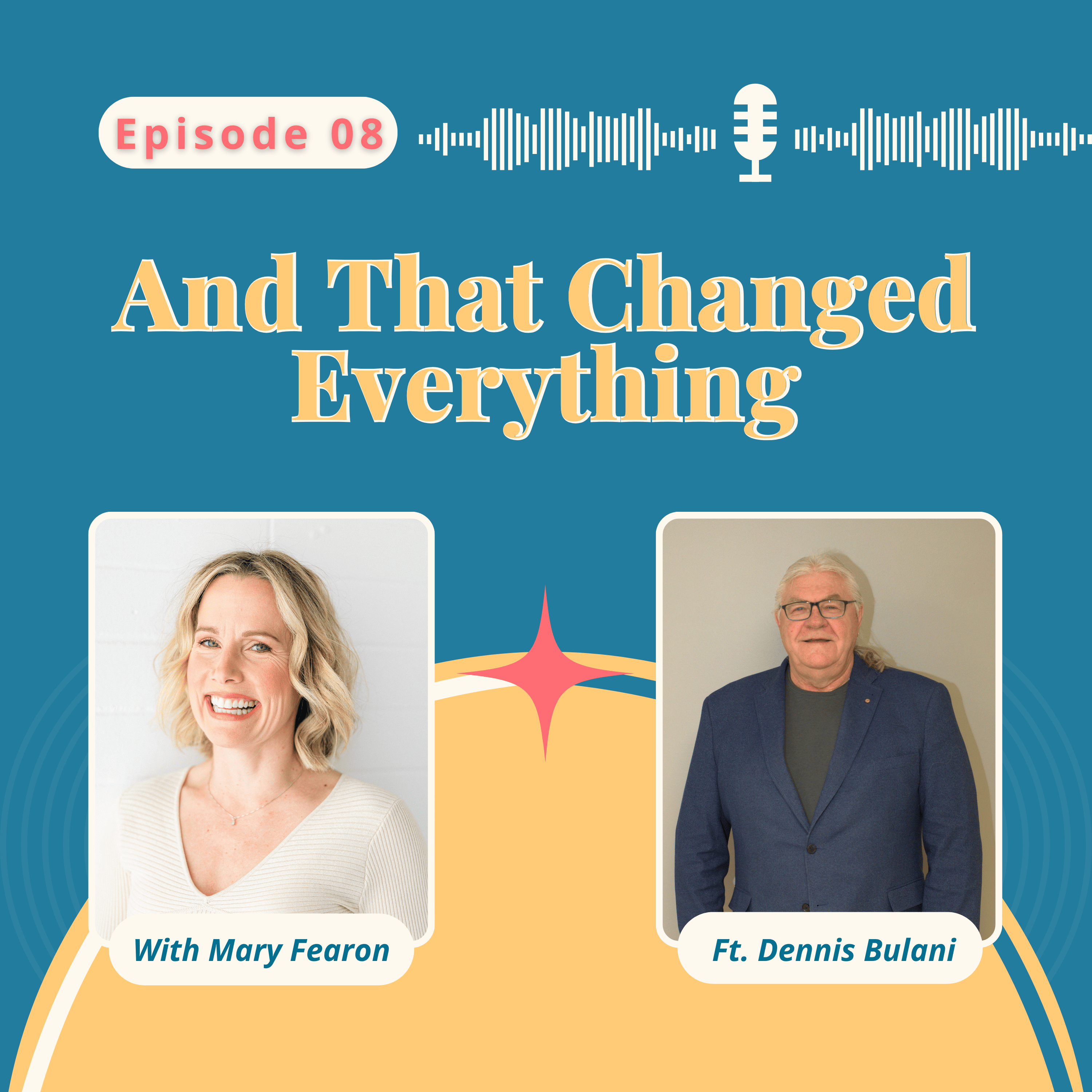
Dennis Bulani is the founder and CEO of The Rack, a leading independent ag retail company in Saskatchewan. A fourth-generation farmer, entrepreneur, and author of What a Farmer Wants You to Know About Food, Dennis has spent his career connecting science and ethics to the real work of growing food. His curiosity has taken him from developing data-driven agronomy tools to writing a science fiction novel inspired by chaos theory and the golden ratio; proof that when you follow what fascinates you, the world opens up.
In this episode, you’ll hear about:
- How Blue Ocean Strategy shaped Dennis’s thinking and transformed how he approaches business and innovation.
- The principles that guided him to build a company grounded in trust, science, and ethics.
- The story of the Scrabble game that changed his life and led to unexpected global impact.
- Why chaos theory and coincidence continue to influence his work and creativity.
- Why curiosity, more than anything else, keeps him moving forward.
Resources:
Books
- Blue Ocean Strategy by W. Chan Kim and Renée Mauborgne
- What a Farmer Wants You to Know About Food by Dennis Bulani
Websites
- trustyourplate.com – connecting farmers and consumers through honest conversation
- therack.ca – The Rack, Dennis’s ag retail business
Referenced Concepts
- Blue Ocean Strategy
- EOS Leadership Workshop
- Data in the Dirt Research Symposium
- Chaos Theory and the Golden Ratio
✨ Loved this conversation? Share this episode with someone who’s endlessly curious.
Follow And That Changed Everything wherever you get your podcasts for more stories of the moments that shape who we become.
Follow Us:
Listen on:
Highlights:
[00:00:00] Mary: Hey everybody. Thanks for tuning in. This week's conversation is with a friend of mine, Dennis Lanni. He is a farmer, he is a visionary. He is the founder and CEO of one of the largest, most innovative ag retail businesses in the prairies in Canada. He is an author and he's just so many other things. He takes this through the journey of his life and some of the major decisions he made and how that shaped who he is and what he's doing today, including some of his next creative adventures.
[00:00:32] Mary: It's a fun conversation. I hope you enjoy it as much as I did.
Podcast Intro:
Welcome to and that changed everything. I'm your host, Mary Fearon, and this is a show where some of the world's most interesting and successful people unpack three pivotal moments that shaped who they are and how they show up. I've been working with business leaders for decades, and it's clear, it's the stories, not the titles that shape us.
These moments change how we lead, how we live, and what we make possible. I learned so much from each of these conversations, and I hope you do too. Let's jump in.
Podcast Starts:
[00:01:07] Mary: Let's get started. Tell me a favorite book of yours.
[00:01:13] Dennis: So, my favorite book would have to be a book called The Blue Ocean Strategy.
[00:01:20] Mary: Tell me more. Why?
[00:01:21] Dennis: So it's my favorite book because it, it it, I read it, probably 50 times, not like I read it and applied it and it changed my world.
[00:01:33] Dennis: It led me to three or four patents.
[00:01:38] Mary: Mm-hmm.
[00:01:39] Dennis: And it was a way, it's a way of thinking. And so that is my favorite book.
[00:01:44] Mary: I love that. I have, it's funny, I know the book well, and I have a, I understand the concept, but I have not read it cover to cover, so you're telling me I probably should.
[00:01:56] Dennis: Well, if it's actually a workshop in itself, so Yeah.
[00:01:59] Dennis: It's so good. I'm actually going to run a Blue Ocean workshop in January at, at our EOS annual meeting.
[00:02:06] Mary: Oh yeah. For your team.
[00:02:06] Dennis: I convinced EOS to let me implement a three hour work session with, uh, using the Blue Ocean strategy windows. How you, how you get there. And the reason why I'm doing it is as I'm trying to train my leadership team to think in a blue ocean and they don't think in a blue ocean.
[00:02:26] Dennis: Yeah. And I, I believe that if they understand how to think in a blue ocean, even though they're not, they're not quick 10, 10 quick starts.
[00:02:35] Dennis: Mm-hmm.
[00:02:35] Dennis: That it'll give them some opportunity to create some of their own visions. And think, think the way I think to That's how you end up coming up with unique ideas.
[00:02:48] Mary: Yeah.
[00:02:48] Dennis: And, and usually those ideas are there, you just have to flesh them out. And the Blue Ocean helped do that.
[00:02:53] Mary: I, I love that idea because Blue Ocean being the, the place where you can take your business where no one else is competing versus the red ocean, which is where all the sharks are swimming and competition is happening and we're just trying to get one leg up on the same people who are doing the same thing.
[00:03:09] Mary: Yeah. Who wanna do it incrementally better. That's kind of a race to the bottom where the blue ocean is. You're at a whole new territory. You're a category of one.
[00:03:17] Dennis: Yeah. And
[00:03:18] Mary: I've seen.
[00:03:18] Dennis: and I, and yeah, and I, and I, I can honestly say that the reason why I'm in business today as an independent ag retailer is because the majority of our bottom line is coming from Blue Ocean, uh, services.
[00:03:31] Dennis: Mm-hmm. You don't, to create a blue ocean is, is really quite a unique thing. And because I was focused on Blue Ocean, we actually are inadvertently, our business evolved around Blue Ocean services and products.
[00:03:46] Mary: Mm-hmm.
[00:03:46] Dennis: And, uh, that makes you so strong that nobody can compete with you.
[00:03:50] Mary: Yeah. I love it. And you're naturally predisposed as a visionary to think that way, but the Blue Ocean strategy, and it sounds like, the structure they give you is an opportunity for everybody to think that way because they give you the tools to walk yourself through that process.
[00:04:09] Mary: Right.
[00:04:09] Dennis: And actually the, the guy who gave me the book was at a Christmas party with International Raw materials. A supplier of ours from Philadelphia sells a sulfur and they brought in a guest speaker and his name was Don Pottinger. And Don Pottinger is an icon in the egg industry. He was the president of Simplot Canada.
[00:04:27] Dennis: Mm-hmm.
[00:04:28] Dennis: And then at that time, he was on the board of directors for agco. Equipment Corporation, but he came and talked to our group and he gave, at that seminar every Christmas we get a book, somebody, they always give out a book. So that book was given out I think, probably 25 years ago at that session.
[00:04:46] Dennis: But, uh, Dawn spoke and I think highly of the guy. And then, uh, so then I took the book home and read it and actually started applying it. And I struggled trying to create a blue ocean. I used Strategic Coach Unique Ability and all the things we learned in Strategic Coach, but what put me over the edge was.
[00:05:05] Dennis: Probably all that thinking, but the blue ocean, uh, put it into context.
[00:05:10] Mary: That's so cool. So folks, I am talking with Dennis Ani. He is a visionary thinker. The CEO of the Rack, a large agri independent agricultural retail in western Canada, has built an amazing business with however many patents. he's my friend and he's also the author of a book called What A Farmer Wants You to Know About Food.
[00:05:34] Mary: And he's taken on some of the big questions that people have, some of the big misconceptions that we as consumers have about the food we eat and all of the information out there that makes us nervous and not trust it. And he's cited something like 200 research papers that support the work that farmers do really as stewards and scientists to preserve the land and make the food the best food, the best quality, safest food we've ever had.
[00:06:03] Mary: So, You gotta read that book. That might be the my favorite book.
[00:06:09] Dennis: Right on. Good. Happy to hear.
[00:06:11] Mary: It's really powerful stuff and he is written it in a way that's super accessible. There's a website called Trust your plate.com. All the information is broken down there, for people who have questions about pesticides, genetically modified foods, organic, all that good stuff.
[00:06:27] Mary: Seed oils. It's a big hot topic these days, so we can talk about that in a little bit, but mm-hmm. Um, Dennis, we're here to talk about your amazing life and the three big things that ha that are decisions you made are events that happened to you that shaped who you are today and all the things that you've done.
[00:06:45] Mary: So thanks for joining me. I can't wait to get into this conversation.
[00:06:49] Dennis: Pleasure to be here.
[00:06:51] Mary: Awesome. Do you, is there anything like, so I just did an intro on you. Is there anything that I left out? You're the father of three beautiful daughters. You are smart and wonderful, all those
[00:07:00] Dennis: things. Oh, entrepreneurs.
[00:07:01] Dennis: Yeah. I also farm, I farm a thousand acres. Right.
[00:07:05] Mary: Yeah.
[00:07:05] Dennis: Which is, which is the book side. I what a farmer wants you to know about food. And, uh, the, the farmer part keeps me grounded in all the struggles that, that our customers go through in our, in our retail business side.
[00:07:18] Mary: Mm-hmm. The other thing about your business I think is fascinating is the research program that you started, that you have independent research happening.
[00:07:28] Mary: So, you know, in the world of farming, not like, you know, on, you know, like other industries, there are all kinds of solutions that come into the market. And are they good? Are they bad? Do they work, do they not? Locations a big part of it too, like what works in Florida is not gonna work in Saskatchewan. So being able to test these products, right,
[00:07:48] Dennis: and actually, actually what's really exciting is we're, we're releasing the 2025.
[00:07:53] Dennis: Research year on December 4th, and the theme that they came up with is data is in the, the data in the dirt. Oh,
[00:08:01] Mary: I love it.
[00:08:02] Dennis: So, so our data in the Dirt Research symposium where our scientists and agronomists released the research we did, it's all replicated research. It could be published in the American Journal of Plant Science.
[00:08:14] Dennis: Mm-hmm. Uh, it's that high that, that it's as high quality of research as you would get anywhere is replicated, statistically analyzed, randomized. So, so we're taking our emotions out of it and letting the research tell us what's working and what's not. And it's, it's become a huge following. I think we'll probably have close to 300 people attending it.
[00:08:33] Dennis: Uh, this is our 10th annual one. And, uh, it's starting to become a kind of an icon in the egg industry that people want to come and see what's the newest research on, uh, plant food and, and, and, uh, and crop protection products and biologicals as well.
[00:08:50] Mary: That's pretty amazing to do as a retailer so that you're, you're not trying as a, as a, as a manufacturer to prove the efficacy of a product you're selling.
[00:09:01] Mary: You're truly saying, okay, I'm a retailer. I have a farm. How do I test America
[00:09:07] Dennis: these products? And actually, actually I have to, I have to be honest. Okay. Some of it stems from my, from some of my ego is when I talk to peers, they say, you know, you have a bucket list, or you have, uh, you know, when you've got your name in the phone book for the first time, it was kind of exciting.
[00:09:23] Dennis: Well,
[00:09:23] Dennis: yeah,
[00:09:23] Dennis: I, we all talk about, well, I have this and I have that. And I say, well, I have my own. PhD scientist on staff? Do you like? So, a actually that ego's driven me this way. So, and, and I do have a great PhD scientist on staff, Dr. Aaron Corey, and, and, uh, the, the, the cool part is you don't have to be a, an, a university or an educational institution to do the quality research that's required.
[00:09:49] Dennis: You need a PhD scientist and some skilled people and, and some equipment and, and modern technologies allowed it to be affordable that a small company like ours can, can implement and do that type of research.
[00:10:01] Mary: Yeah, it's pretty incredible. So let's talk about how you got to all of this. Let's, let's go back to the first moment in life that you think shaped who you are and what you're doing today.
[00:10:13] Dennis: Okay, so a split second in time when I think about to change the direction of life would've been, I graduated from university and got a job with the Farm Credit Corporation of Canada. And once I got the job, they said, okay, you've got a choice to make. You can either go to Yorkton, Saskatchewan, to our office there, or Swift Current.
[00:10:31] Dennis: We'll give you the choice. And I immediately didn't even think about it. I said, I'll take Swift Current. And the only reason I said that was because there's a picture in my family album of my dad at the Sask River Landing, standing on the bridge. And he had worked, uh, or stayed in Swift Current as a young man before he was married.
[00:10:49] Dennis: I thought, well, fate, fate tells me I better pick Swift Current 'cause that picture's in the family album. So it's random, you know, that was the main decision maker to why I picked Swift Current. So as a result, I, I, uh, worked there and met my lovely wife, Linda. And, and, uh, the rest is history. We've been married now, I think 43 years this year.
[00:11:10] Dennis: And, and so I met Linda and, and that led to three great daughters. And, uh, I could have ended up in Yorkton and who knows, it could have been an unhappy, well, I wouldn't have, have had the partner to support me through all these years that, that Linda is. So certainly that was a TSN turning point in life.
[00:11:27] Dennis: And that, and what it did was lead to quite a happy life, I would say.
[00:11:31] Mary: Yeah. Pretty amazing. It's funny, those sliding doors, moments, like had you just, and I mean, if you hadn't seen that picture, it could have been any other, it could have been the other option and then you'd have a whole different person.
[00:11:42] Mary: Yeah. It's not, when you think about it, eh? Yeah. so what was the experience like in Swift Current?
[00:11:49] Dennis: So Swift Current was quite a change 'cause I'm in Northern Saskatchewan where it rains. Swift Current is, is in the southern prairies of the Paler Triangle, so there's much less rainfall there and, uh, less trees.
[00:12:02] Dennis: I, I was raised on a farm that has trees all over the place, you know, around the edge of the fields and so on. Well, swift current, there aren't a lot of trees.
[00:12:10] Dennis: Oh, yeah.
[00:12:13] Dennis: well, actually I always tease the people from Swift Current. I say Swift Current is a living proof that clear cut logging doesn't work.
[00:12:24] Dennis: It's amazing. It's just a joke. But it's always, it is a different culture and a great place to learn. About farms and, and how they thought. And they, of course, in Swift current area, there's a lot of ranchers. So they ranch and they farm. There's a lot of mixed farming there. So, and I, I do love the cattle, uh, business as well.
[00:12:42] Dennis: So, so it was a great place to go. Uh, you know, uh, it's the heart of rodeo and, and all that. And the culture there is probably a little different than where I was raised, but great place to be young and, and at that time, single actually.
[00:12:56] Mary: Yeah. And so that's where you met Linda? Is she from there?
[00:12:59] Dennis: Yeah. Yeah, she's originally from that area, yeah.
[00:13:02] Mary: Ah, okay. Okay. And then just the nerdy farming question from me, 'cause I don't know much about it, but, so not a lot of rain. So what do they, what crops do they grow and I guess it's all under irrigation?
[00:13:16] Dennis: No, there's no irrigation in that area, right?
[00:13:18] Mary: There's like no water to even irrigate with.
[00:13:20] Dennis: No, there's.
[00:13:21] Dennis: There's the Swift Current Creek. Okay. But, so there's the little bit, but primarily there is a rainfall there, but it's probably less, probably six inches or less per annum. Mm-hmm. So it's a traditional area to grow wheat. And when I was there, that's a long time ago. farmers were struggling at that time 'cause they, they, their farming practices were not what they are today.
[00:13:44] Dennis: They, they back then, they were summer following or they didn't even zero till. Okay. So they were struggling. And primarily what they grew was wheat. You know, and, and of course wheat is not the, the most profitable crop to grow, but, but then since then, it's transitioned to become the pulse capital of the world where that type of, of growing environment with, with less moisture and dry humidity is great for growing lentils.
[00:14:08] Dennis: Okay. And peas and, and uh, chickpeas. So, and that became a boom in the ag industry and that actually transitioned those farms from struggling to making some decent, uh, money. They became much more sustainable as a result of, of a new crop rotation really. So it's kind of a, kind of an exciting ag story in itself.
[00:14:31] Mary: Yeah, I love that. And the demand for those types of products now too. Like the world's about chickpeas it seems, right? Yeah. There's lots of demand now. And it's funny how the markets can do that to an area.
[00:14:44] Dennis: Yep.
[00:14:44] Mary: Yeah. Awesome. Alright, so at this time you're not farming, but you are a fourth generation farmer, so your family's running the farm and you've moved on to Agricul Agricul.
[00:14:56] Mary: No,
[00:14:56] Dennis: I'm farming.
[00:14:57] Mary: Oh, you're still farm, you're farming at this point. Oh Interesting.
[00:15:00] Dennis: Yeah. I still farm. Yeah. I've been farming for
[00:15:03] Mary: Well, no, I meant like back then when you were in Swift Current, you couldn't be at your family
[00:15:06] Dennis: farm. Oh no. Oh, right. I had left the farm.
[00:15:08] Mary: Okay.
[00:15:09] Dennis: Yeah. And my, now I was onto my ag professional career, and so that was, at that time, farm credit.
[00:15:15] Dennis: And that was, uh, being the loans officer and the land assessor assessing the value of, of, of farm property. Mm-hmm. Basically is what it was.
[00:15:23] Mary: Mm-hmm.
[00:15:23] Dennis: And, uh,
[00:15:24] Mary: was that that stressful? 'cause assessing land? Like the assessing
[00:15:29] Dennis: the Oh yeah. It, it, it's appraisal. It was land appraisal, so it's pretty, uh
[00:15:34] Mary: mm-hmm.
[00:15:35] Dennis: You know, it's, there's a process.
[00:15:37] Dennis: If, if you did the process and I did the process, we'd probably end up at a very close. Okay. Similar value. It was basically valua, valuing real estate is what it was.
[00:15:46] Dennis: Right.
[00:15:47] Dennis: But then you took the value of the real estate and figured out how much, uh, of a, a mortgage you could give a farmer. So if his real estate was worth a hundred thousand, you could give him, you know, 75,000 of a loan or whatever, and then take the collateral as the land.
[00:16:00] Dennis: So that was, that was part of it.
[00:16:02] Mary: Right. And a pretty common process to fund, like,
[00:16:06] Dennis: well then you had to analyze the farm and see if they were viable and you had to do forecasting and projections and, and figure out what the quality of the land was. How much wheat could they really grow? What were their farming practices?
[00:16:18] Dennis: And that all went into deciding whether or not they should get a loan.
[00:16:22] Mary: Right.
[00:16:22] Dennis: Uh, or, or,
[00:16:23] Mary: that's
[00:16:23] Mary: the part I wondered would be stressful.
[00:16:25] Dennis: Yeah. Like being a banker. It's like being a banker.
[00:16:28] Mary: Yeah. You see these people who are like, I just wanna survive. Help me out. That would be hard. It'd be hard for
[00:16:32] Dennis: me. Yeah.
[00:16:33] Dennis: Please, please give me money.
[00:16:34] Mary: Yeah.
[00:16:35] Dennis: Yeah. I was, I was quite, if I liked the guy, I figured I, I tried to work the numbers. So that he would get the loan.
[00:16:42] Mary: Yeah, I bet you would. I bet you would. But
[00:16:45] Dennis: yeah. Yeah. So, so, But it was, it was, uh, a government job. So the Farm Credit Corporation back then was very bureaucratic owned by the federal government.
[00:16:56] Dennis: Mm-hmm. And once you meet me, you realize that I don't fit into rules. So, actually I got, I got into trouble with them because they called me in and said, you have given out too many loans. You gave out six loans in the month of July, and the average farm credit loans officer gives out two and a half.
[00:17:17] Dennis: So you're not looking at them close enough. You like, you can't do five loans in a month. The average is two and a half. And I said, well, I worked overtime on weekends to get this done. And they said, well, we're not gonna approve any of the loans you did in July because we think you didn't spend enough time on it, 'cause you're above the average.
[00:17:35] Dennis: So then I had to go redo all the loans and, and they all went through. But I got quite frustrated with that kinda crop because
[00:17:42] Dennis: mm-hmm.
[00:17:43] Dennis: You know, it, it was breeding complacency in my mind. Totally. So I tried to give out as much, my goal was to give out as much money to as many good farmers as I could. And at the end of the day, that job lasted only a year because I got frustrated and I actually moved on.
[00:17:59] Dennis: But,
[00:18:00] Mary: well, there something worse than saying be mediocre 'cause that's what everybody else is doing.
[00:18:05] Dennis: Yeah, that's right. Yeah,
[00:18:07] Mary: yeah,
[00:18:07] Dennis: yeah. But they're not like that today. The, I don't wanna give farm Credit corporation back think, 'cause farm Credit corporations today in Canada has transformed into a wonderful organization and plays a really big part of it in agriculture today.
[00:18:20] Dennis: And, and all the politics has gone out of it and the high quality people are, are work at that organization. So I, you know, yeah. So it's, it's, it transitioned, but I think they realized in the end that, that that type of culture is not one that's conducive to, to progress.
[00:18:37] Mary: Yeah. And just like anything, I mean, however many years ago that was, we grow, we evolve, we improve, we learn, right?
[00:18:44] Mary: Yeah.
[00:18:45] Dennis: Yeah. Yeah. That's,
[00:18:45] Mary: I think that's fair.
[00:18:46] Dennis: Yeah.
[00:18:46] Mary: So you left after a year. What happened after that?
[00:18:49] Dennis: So then I, I went and, uh, I did my thesis in university and animal science on a new pro, a feed additive called Rumensin. The chemical name is Menin sodium, which is added to beef cattle rations, and it improves their feed efficiency.
[00:19:08] Dennis: and so I did my thesis on that. And the company that makes the product, Eli Lilly Elanco in the, on the, on the agricultural side, was the name of the company. They, they knew I had written that thesis and they, they had me on their radar when I graduated, but another person got the job that I had applied for that job.
[00:19:28] Dennis: Uh, a job selling that product outta university, and I didn't get it. I got the farm credit one. By the way, the Farm Credit one was the higher paying one at that time. And so, so then they phoned me outta the blue right, in December of that, that year. And I, and I was already frustrated with farm Credit, so they phoned me and said, you can move to Winnipeg and uh, be our rep.
[00:19:51] Dennis: Would you come and meet us? And I did. And then, so then I moved to Winnipeg.
[00:19:55] Mary: Now are you and Linda together at this point?
[00:19:58] Dennis: No, we were just friends.
[00:19:59] Mary: Just Oh, okay, okay. Because I was gonna say like only a year in Swift Current, like, thank goodness you met
[00:20:07] Dennis: then it became, then it became a long distance love affair for quite a few years.
[00:20:10] Mary: Oh, okay.
[00:20:11] Dennis: Yeah.
[00:20:12] Mary: You had some staying power That's good. From a distance that says a lot.
[00:20:16] Dennis: Yeah.
[00:20:17] Mary: All right. What's that second moment in your life that shaped your, so
[00:20:21] Dennis: the second moment was I worked with Eli Lilly and enjoyed the job. That was a transitional, that was a great decision too, that could actually be on this list.
[00:20:29] Dennis: But working for Eli Lilly was one of the most, uh, impressive, moralistic company that I've ever come across. And I think learning proper business, morals and integrity, all those things that are necessary to be a successful business. I learned from Eli Lilly
[00:20:51] Mary: Wow.
[00:20:51] Dennis: For
[00:20:51] Dennis: culture. And, and even today, if some people pick on big drug companies, but I really defend Lilly, their, their, their, uh, vision statement.
[00:21:01] Dennis: Uh. To help human beings, be healthy and, and cure disease. Although they're the ones that came up with, uh, multiplying insulin. Right,
[00:21:12] Mary: right.
[00:21:12] Dennis: Baning and best invented it, but either, and they were with Lily. And so Lily is the transformed diabetics lives with, uh, development of insulin.
[00:21:23] Mary: That's pretty amazing.
[00:21:23] Dennis: So that's just one of the many things they do. They also make Cialis, which, which
[00:21:28] Mary: improves many
[00:21:29] Mary: lives, makes lots of people happy. Yeah.
[00:21:34] Dennis: And they actually now have a new one that's even better than Ozempic. It's actually a transforming drug. We can get on that subject. What's it called? Uh uh,
[00:21:45] Mary: I don't know.
[00:21:45] Mary: But I have a friend who's a doctor. She's in the world of optimizing people's health by helping them understand what's going on inside their bodies. And she's like, this is an amazing. Drugs, he hear
[00:21:55] Dennis: so
[00:21:56] Mary: much.
[00:21:56] Dennis: Yeah. mounjaro it. Yes. mounjaro and Ozempic, you know, people say, oh, big drug companies in invented, they're gonna make a lot of money and people are gonna use 'em for weight loss.
[00:22:05] Dennis: But they actually correct sugar, you know, sugar imbalance in, in a lot of people. And, uh, and they help people lose weight. But the, this new Monro is a double acting one. And a lot of people are projecting that between Ozempic and Monro, people are becoming much healthier if they're using this, these products.
[00:22:25] Dennis: 'cause they're, they're, they're pre-diabetic and then they're, they're usually prescribed one of those two new technologies. Yeah. And amazingly. All their other ailments go away. They're the re risk of cancer drug. Like it is just crazy. Yeah. What's, they're actually saying that these two drugs may kill some of the drug industry because all the other drugs are no longer necessary.
[00:22:47] Dennis: Including like, uh, like, uh, the cholesterol drugs and, uh,
[00:22:51] Mary: oh yeah. And like diabetic ones like met metformin,
[00:22:56] Dennis: ramipril, and Metformin. All Ramipril, which is for high blood pressure. Okay. So I guess I speak from experience 'cause I, I, my, I, I just said to my doctor, I should try that. 'cause I was almost pre-diabetic.
[00:23:08] Dennis: I was a little overweight here about a half a year ago. Yeah. And I started on it in June and, uh, it's already, I've lost I think 30 pounds.
[00:23:16] Mary: So
[00:23:17] Mary: you are on mounjaro!
[00:23:17] Dennis: Also.
[00:23:18] Dennis: Yeah. I also altered my diet.
[00:23:21] Mary: Yeah.
[00:23:22] Dennis: but, uh, I'm in a genetic study and the, and the geneticists said, go take that drug. Your g your, your genetics are predisposed.
[00:23:32] Dennis: That's another whole long story.
[00:23:34] Mary: Oh my gosh. I know the fact that, you know, this mean we could do, we could do five episodes
[00:23:37] Dennis: and stuff and also donate blood. Like they tell me you have to donate blood 'cause I have high iron in my blood.
[00:23:43] Mary: Interesting.
[00:23:43] Dennis: So I, they, they, they, they say to me, do I said, well that's why I always feel so good after I donate blood.
[00:23:48] Dennis: Like I feel as good after donating blood for the week following, at least as I do when I go to the gym and come outta the gym. That's the exact how good I feel. It's just unbelievable. And, and now they genetically found the, the gene in my heritage that predisposes me, that if I give blood I will feel better.
[00:24:10] Dennis: And that goes back to history because you know the old barbershop pole is red and blue, right? Yep. In the old, old days you went to the barbershop to they cut you with a razor and bled you. Right. Well that's why it's amazing.
[00:24:23] Mary: I didn't know that. So. 'cause most people don't have that reaction though.
[00:24:28] Dennis: Yeah, actually, uh,
[00:24:30] Mary: or geeze, I don't
[00:24:31] Dennis: now that it's, now that it's well known, some people are there.
[00:24:34] Dennis: I forget it. There's a, there's a name for it. Some people have, are diagnosed with it and they're told by their doctor, they're prescribed to go do it.
[00:24:43] Mary: Hmm.
[00:24:43] Dennis: Uh, which is maybe, so mine is kind of different, but, uh, mine's a genetic predisposition to have iron, which is rust in your system, right? Yeah.
[00:24:53] Mary: Is it related to the iron?
[00:24:54] Mary: It it
[00:24:55] Mary: specifically why you feel better?
[00:24:56] Dennis: Yeah. It's how much it's related to how much hemoglobin your blood can carry. And so it carries more oxygen after I give blood and I get new blood. Oh. Like, 'cause your body makes new blood, so then I feel better. Yeah. A a lot of people should give blood anyways, but if you ever give blood and feel way better, which, when I was young I gave blood diligently like many times.
[00:25:15] Dennis: Mm-hmm. And uh, I always felt really good after it, so I continued to do it.
[00:25:19] Mary: Yeah. So how often can you go? 'cause I would get addicted to that feeling. It's like having endorphins.
[00:25:24] Dennis: So they've got me, I'm on the regular program where I, where I book the next appointment the day I give blood. I just gave blood here a couple weeks ago.
[00:25:31] Dennis: Yeah. And, uh, I think every two months. Two and a two months and a little bit.
[00:25:36] Mary: Okay. Wow. That's where you should schedule all of your high performance requirements, like your best thinking, your, you know what I mean? That's
[00:25:44] Mary: pretty cool
[00:25:45] Dennis: So I did three things. I changed my diet. I, I went on mounjaro and I donate blood and, and it, I feel.
[00:25:53] Dennis: I thought I felt good before, but now I feel like the energy level's gone way up. Know, so we're, we're not even on the subject. Right.
[00:26:00] Mary: I know. It's okay. 'cause I'm interested in this. So, question. 'cause I know, so I've heard all of those good things about these drugs that it, it changes like so much inside your body, your sugar response, everything else.
[00:26:12] Mary: Yeah. The added, like, the sort of the outcome is that you also lose weight, which is great. People are doing it to lose weight, but the, it's all the changes inside your body that are, you know
[00:26:20] Dennis: Yeah.
[00:26:20] Mary: Helping you. So, yeah. The one downside I've heard about it though is that you lose lean muscle mass. So, and if you're gonna do that, yeah.
[00:26:28] Mary: You have to be,
[00:26:29] Mary: that's, that's working
[00:26:30] Mary: out.
[00:26:30] Dennis: That's something
[00:26:30] Dennis: you'll read on the, that's something you'll read on the internet. That is not true. Okay.
[00:26:34] Mary: It's not true.
[00:26:36] Dennis: No.
[00:26:37] Mary: Oh,
[00:26:37] Dennis: okay. It's one of those urban myths. I, I, you know, you lose weight, but you don't just lose lean muscle. Like that is, that is actually false 'cause I asked
[00:26:48] Mary: right
[00:26:48] Dennis: about it.
[00:26:50] Dennis: And, uh. No,
[00:26:52] Mary: could it be because people are using the drug and not working out and so they don't, it, it costs lean muscle mass and it, and you lose weight too. But in theory, if you're not working out, probably most of the people on this drug are over 40 where you're losing muscle anyway. Anyway. I
[00:27:09] Dennis: suppose you to work out, you lose lean muscle mass anyways, so,
[00:27:12] Mary: yeah.
[00:27:13] Dennis: You know, I don't know. I guess
[00:27:14] Mary: that's true,
[00:27:15] Dennis: right? I suppose it's,
[00:27:17] Mary: yeah,
[00:27:17] Dennis: you know, I'm quite active 'cause I farm and I'm running around all the time. Yeah. So, it's not like I have a regular health exercise program, although I do go to the gym on occasion, but
[00:27:28] Mary: Yeah.
[00:27:29] Dennis: but yeah.
[00:27:29] Mary: So how much
[00:27:30] Mary: weight have you lost?
[00:27:32] Dennis: 30 pounds.
[00:27:34] Mary: That's Amazing.
[00:27:34] Dennis: . Little more. Yeah.
[00:27:36] Mary: You'll be a shadow of yourself.
[00:27:38] Dennis: And now my blood sugar is, and now, now my, uh, now my blood pressure's weigh down so I probably will be able to go off of blood pressure.
[00:27:49] Mary: That's incredible. Do you feel, 'cause I hear that you feel less hungry and stuff. Do you, are you enjoying how you feel on this?
[00:27:59] Dennis: Yeah, I, I suppose my appetite is some, I, I wouldn't say suppressed 'cause I wouldn't say that I just feel fuller sooner.
[00:28:08] Mary: Okay, so you eat less.
[00:28:09] Dennis: Yeah.
[00:28:10] Mary: Which probably
[00:28:10] Dennis: needed. I don't crave as much food as I, as I did before.
[00:28:15] Mary: Mm-hmm. This is great. Well, I'm glad you made that choice, even though it wasn't one.
[00:28:19] Dennis: But here, all the negativity about these, you know, there's so many people talking negative things about these, my doc, my doctors, you know, probably gonna retire in the next five years.
[00:28:30] Dennis: And he says that in his mind, th this is, these, these two new drugs are, are like literally too good to be true.
[00:28:41] Mary: Mm-hmm.
[00:28:42] Dennis: Like as a doctor.
[00:28:44] Mary: Yeah. I've
[00:28:45] Dennis: heard
[00:28:45] Mary: that from my friend who's a doctor too. She's like, it's incredible. I was
[00:28:48] Dennis: like, it's in
[00:28:50] Mary: Yeah.
[00:28:50] Dennis: Incredible technology that they figured out.
[00:28:53] Mary: Yeah.
[00:28:53] Dennis: You know, this, this thing. And I think our, I think a lot of our, you know, we say, well, you're, you're not, you know, I think our society's blaming everything on food. And it's not the food, it's our, it's our lifestyle. We're busy. We don't have time to sit down and eat a we, we don't have time to sit down and cook a nice Turkey and
[00:29:12] Dennis: mm-hmm.
[00:29:13] Dennis: You know, mashed potatoes every Sunday or whatever. So, 'cause we're so busy with our lives, right?
[00:29:18] Dennis: Yeah.
[00:29:18] Dennis: So we want, we want convenient, faster food and, and a convenient, faster food still needs to be safe. So to make it safe, they, they say it's processed. But I mean, you look at, at the constituents that are in a Big Mac, big Mac is beef, lettuce, tomatoes,
[00:29:36] Dennis: yeah.
[00:29:36] Dennis: Special sauce, which some people say is a little too fattening and bread. So what in there is bad for you?
[00:29:45] Mary: Yeah,
[00:29:45] Dennis: well, bad for day.
[00:29:45] Mary: You forgot the
[00:29:46] Mary: lettuce,
[00:29:46] Mary: onions,
[00:29:47] Mary: pickles.
[00:29:48] Dennis: Yeah. All the two 12 beef patty, special sauce, cheese, onions, pickles on a sesame seed bun. Right.
[00:29:53] Mary: Yeah, I know. I was singing it
[00:29:55] Mary: in my head.
[00:29:56] Dennis: So, so,
[00:29:56] Dennis: so it's, you know, people say, well avoid processed foods. Well, I maybe balance how much you take of, of everything. I did a podcast, uh, a week ago with Plateful Parenting, a great dietician from Los Angeles and she, uh, she actually kind of agreed with that.
[00:30:13] Dennis: Mm-hmm.
[00:30:13] Dennis: I said, I'm not an expert, but I think if, you know, when we were, when I was in grade three, I think in health class, we learned that you're supposed to eat fish once a week.
[00:30:23] Dennis: Mm-hmm. Carrots and all that. And, and I, and I think we developed half, I think they don't teach that in school anymore.
[00:30:30] Mary: Yeah.
[00:30:30] Dennis: You know.
[00:30:31] Dennis: Yeah. So,
[00:30:32] Mary: well, and I think it's true that just like everything else in the world, there's so much immediately available to you in a busy life, and then this food tastes good.
[00:30:42] Mary: Like you cannot tell me that McDonald's french fries aren't the best things ever. Like they, so like, you know, you're like, I'm hungry and McDonald's is right there. I don't have to go home and chop potatoes and put them in the oven. All the things, right? So it's so easy to get this food
[00:30:59] Dennis: or, I was, and I was reading an article the other day that said, don't eat a Big Mac.
[00:31:02] Dennis: 'cause they're loaded. The bread is loaded with ascorbic acid. And, uh, ascorbic acid is vitamin C, by the way. Right?
[00:31:14] Mary: But it sounds so dangerous when
[00:31:16] Dennis: you say that, right? So, and, and, and, uh, the, the only way to make sure the bun is fresh and doesn't grow mold is to use an antifungal called ascorbic acid. Now they put a squirt in there and it actually preserves the quality of the bread, so it's safe to eat.
[00:31:34] Dennis: Like, so, so they say, well take ascorbic acid outta my bread. No, thank you. Please keep it in there because I, I know that it's healthy and I'm not gonna die of some food poisoning. Yeah. So, and but yet you read on the internet ascorbic acids and all these foods and that therefore it's processed foods and it's bad for you.
[00:31:51] Dennis: Oh, by the way, it's vitamin C. So, so you're eating bread with ascorbic acid, but you're also taking vitamin C supplement, which if you read the side of the bottle is ascorbic acid.
[00:32:00] Mary: Yeah. That's really funny.
[00:32:02] Dennis: It's actually, actually one of the number one food preservers in the world is ascorbic acid.
[00:32:06] Mary: That makes sense.
[00:32:07] Mary: Like, like the citric part of it, right? Like the,
[00:32:10] Dennis: yeah.
[00:32:10] Mary: Yeah. You know, it's funny, I made bread a few years ago. I was doing the ketogenic diet and I was
[00:32:16] Dennis: making, it's yeast you could do,
[00:32:18] Mary: it's the yeast you could do. I love a good pun. I'm totally gonna steal that from you. But I was making bread, like almond flour bread.
[00:32:27] Mary: 'cause I was trying, I was trying not to have the carbs and stuff. Like there's a whole rabbit hole. We could go down that path. But when I did, like two days later it's moldy and you like, you can't, like, so imagine you go to the trouble of making all of this food without the preservative in it and it's garbage or you eat it.
[00:32:44] Mary: So, I mean, I got quite sick. Well
[00:32:46] Dennis: actually if you eat the bread mold, you're actually getting penicillin in a roundabout ways, so it wouldn't kill you anyways, but unless it was a bad one. Right,
[00:32:55] Mary: right. Well, I, yeah, and so I don't know, but I got kind of sick the, for a couple of weeks, like stomach sick for a couple weeks.
[00:33:00] Mary: So after I had done that and I just, I attributed it to, I made my own bread. It went bad. I ate it and it wasn't good for me. So back to regular bread is what I did anyway. Well, I'm really happy to hear that you're doing that with that, with trying that medication. I've heard really good things too. I'm curious if all people should take it and not just people that like, will it improve the biomarkers for everybody?
[00:33:24] Dennis: Yeah. Well the first thing you should do is make sure your diet's balanced and you're not overweight. And then maybe you don't need, don't need it at all. Yeah. But, but I suppose if you get into my predicament where I was slightly overweight and, and, uh, maybe not eating exactly perfectly mm-hmm. Uh, the way the book would say, then this is a bit of a, a, a, I suppose, a bandaid to it.
[00:33:45] Dennis: And so therefore he said, well, that's bad, but this is, uh, technology that's probably gonna save a lot of lives, including mine,
[00:33:53] Mary: I think. Yeah. Sounds like a good thing. So you have many more years on the planet to make the big, bigger dent than you already have made.
[00:34:02] Dennis: Hopefully. Yeah. Yeah.
[00:34:04] Mary: Okay. Have we made it to your second moment yet?
[00:34:07] Mary: No, I think we were on your second moment. Let's talk about it.
[00:34:11] Dennis: So the second moment was,
[00:34:13] Mary: you're at Eli Lilly
[00:34:14] Dennis: farming
[00:34:16] Mary: at
[00:34:16] Dennis: this point? Yeah. I was a, I, I was working for Eli Lilly and I was traveling the world. I, I was, my job took me to every, uh, to Europe to all over the US Aal, always on a jet.
[00:34:28] Mary: Mm-hmm.
[00:34:28] Dennis: Uh, always taking a customer someplace or going to train someplace or going to a meeting.
[00:34:34] Dennis: And I, and I was, had a young family and, and so I was also farming at the time, so I farmed and I worked for La Lilly
[00:34:42] Mary: back in, at your home farm?
[00:34:44] Dennis: Yeah. Okay. So I worked FLI Lily in Winnipeg, and then I, then I said, well, I, my dad wants to sell the farm. And I said, well, I don't know if I wanna farm, but I, I want the option.
[00:34:54] Dennis: So my dad said, well, if you're gonna farm, then you gotta buy some of it. So then I bought some of the farm and I resigned from Eli Lilly and Eli. Eli, Eli Lilly said, no, don't, don't quit. We'll let you go farming and you work for us from the farm.
[00:35:06] Dennis: Oh,
[00:35:06] Dennis: that's cool. So I was in sales, right?
[00:35:07] Dennis: Yeah.
[00:35:07] Dennis: So that was pretty cool.
[00:35:08] Dennis: So I said, well, I'm honored that you do that. So then I was able to work and subsidize the, the, the farm I was starting. 'cause I bought it for my dad. And of course he needed money, so I had to borrow money and so on and so forth. And that was in the eighties when grain prices were terrible and there were droughts and it was terrible time of farming.
[00:35:27] Dennis: Okay?
[00:35:27] Dennis: There was no money in farming back. Nobody wanted to farm at that time. But I, I wanted the option. I, I knew I wasn't gonna be just a farmer. I'm not the guy that just sits out back and watches the corn grow type guy. But, but I wanted the option. So my decision to say, well no dad, don't sell the farm.
[00:35:43] Dennis: Uh, I want the option to decide in two or three or four years maybe I do wanna farm and I just don't know it yet. So. Mm-hmm. I wanted the best of all worlds. So I made a decision, okay, I'll go farming. And then of course I still stayed working for Lilly, but my job was an animal nutrition. Really?
[00:36:00] Mary: Mm-hmm.
[00:36:01] Dennis: The Lilly drugs we sold were all to do with animal nutrition.
[00:36:05] Mary: Okay. Like all
[00:36:06] Dennis: animals, cattle, poultry,
[00:36:07] Mary: or, okay.
[00:36:07] Dennis: I was an ask guess. Yeah. Beef, cattle, poultry, and hogs. Okay. So any, any poultry producer or hog producer or beef cattle guy could buy a lily product, which would usually be an in feed additive that would help an ailment of an animal.
[00:36:23] Dennis: Mm-hmm. Or in an injectable antibiotic or something like along those lines. So, so I sold that, but then I was on the world on the plane and, and I was also trying to feed my crops and I couldn't actually buy the, I couldn't buy nitrogen, phosphate and sulfur the way I wanted it on my farm. Basically a prescription nutrition program to growing wheat canola and peas and all that.
[00:36:48] Dennis: Right.
[00:36:49] Mary: Okay.
[00:36:49] Dennis: So I couldn't get those services on my farm back in the eighties, that, that wasn't available.
[00:36:54] Mary: Okay.
[00:36:55] Dennis: You know, you could buy fertilizer, plant food in bags. Okay. And I knew that if you wanted to balance the ration of a, of a good wheat crop to make good healthy bread, you needed a certain amount of nitrogen phosphate, potash, sulfur, and, and copper and zinc and all the things that make a perfect crop.
[00:37:14] Dennis: Well, nobody back then, the farming technology was, well, we just farm. We just summer follow. And so, because I couldn't get what I wanted as a farmer, I knew there was a need. And I, and I, so I said to the local fertilizer dealer, if there's ever, if this ever comes up for sale, phone me. So I was in Paris, France with Eli Lilly on a trip, and the phone rang and I was tired of flying around.
[00:37:39] Dennis: And they said, well, that, that local ag uh, retail, fuel and fertilizer is up for sale. Uh, we we're phoning you. 'cause if you're interested, it's for sale. So,
[00:37:50] Mary: okay, so
[00:37:51] Dennis: then the, the decision was to go farming, which led to. Oh, well, uh, they phone at the same time, so, oh, I can do both. I can farm and I know there's a need for better plant health and agronomy, like plant doctors, which I'm an agronomist, so, so I thought, well, this is a fit.
[00:38:08] Dennis: So then away I went. And that decision led to not just watching the corn grow, but the business side, which I could stay, social. I like to be around people all the time and I enjoy selling. So, so then, uh, that led to the uhso business. It was called Back Thenso Agency, and I had fertilizer and crop protection.
[00:38:31] Dennis: I added crop protection to the service of that town. Mm-hmm. And started trying to, to show farmers that, that if they balanced the ration to that they fed their crops with no different than human nutrition, that they could grow healthier crops, more of them and be more, more sustainable. So, so that,
[00:38:50] Mary: can I, I ask a
[00:38:50] Mary: follow up.
[00:38:51] Dennis: Yeah.
[00:38:51] Dennis: Yeah.
[00:38:52] Mary: I'm curious about the, how you said, so fertilizer at the time had just been, this is what you get, whether you need it or not, and then, and you, you couldn't get like that customized ration like you need, you know, this many parts nitrogen, this
[00:39:06] Dennis: Yeah. You needed a blending. You need to, you need to blend.
[00:39:10] Mary: Okay. You
[00:39:10] Dennis: know, this crop needs a little bit of n, PK and S and this one needs just P and K and, okay. So CU custom rations for different soil types. Okay. Back then all they had was nitrogen in a bag or phosphate in a bag, or nitrogen and phosphate in a bag. There were three kinds.
[00:39:30] Mary: Okay.
[00:39:32] Dennis: Back farmers were summer following and they weren't zero tilling and they were beating the shit out of their land.
[00:39:36] Dennis: Yeah. And it was brutal. But the skies that summer followed, basically mined the nitrogen out of the organic matter, which depleted our prairie soils.
[00:39:45] Dennis: The
[00:39:46] Dennis: guys who seeded stubble, which would be, there was wheat last year and they seeded again. Well, that was a no-no. Back when I was there. a, a good, a farmer would say, A good farmer lets his land rest for a year and he works the shit out of it makes it block, which releases nitrogen and then you put a crop in there and it also stores the water for a year.
[00:40:05] Dennis: 'cause you're not growing anything on it.
[00:40:07] Mary: Mm-hmm.
[00:40:08] Dennis: Well, that was thought to be a good farming practice in the seventies and eighties. Well, we then realized that we were mining the shit out of the soil.
[00:40:16] Mary: Right.
[00:40:17] Mary: By
[00:40:17] Mary: hurting the soil. Like for people who
[00:40:19] Dennis: Yeah. Turning the soil, stealing it up and releasing the nitrogen out of the organic matter.
[00:40:23] Dennis: Yeah. And then the following year you got a good crop, but over time you were depleting the soil of all the valid, the viable nutrients and the organic matter. And eventually the land was becoming less and less productive.
[00:40:35] Mary: Right.
[00:40:36] Dennis: Which is the way organic farmers farm, they're not allowed to add fertilizer, so they're actually depleting their soil the way we did in the sixties and seventies and eighties.
[00:40:44] Mary: Right.
[00:40:44] Dennis: Really let,
[00:40:45] Mary: this is such an
[00:40:45] Mary: interesting point. I wanna, let's
[00:40:47] Dennis: think about animal manure. Yeah. Let's add animal.
[00:40:49] Mary: I wanna slow
[00:40:50] Mary: down on it a bit because, because you know, nitrogen's in the soil, you turn it up, nitrogen's a gas, but nitrogen is also the nutrient that fuels growth. In a plant, right? Like, it's critical.
[00:41:05] Mary: So if you're turning the soil, and like, you know, for somebody who doesn't know, and you know, I, I eat fruits and vegetables, but I've never been to a farm, I wouldn't know that, that turning of the soil, I would say, oh, they're turning the soil to make it ready for the seed so that it can grow. Like intuitively you, that's, that's what you do at home, but that's the wrong thing to do.
[00:41:24] Mary: But at the time, that was a common practice. And what happens then, so I've come to learn through you, is that the soil, not only, so when you say you're mining the nutrients, you're taking the nutrients out and they're not available for the plant anymore.
[00:41:37] Dennis: Yeah. You're taking the seeds off the farm, you're putting it, sending it to China or India or whoever's eating the wheat, then you're actually exporting something.
[00:41:45] Dennis: You mine from the soil. Well, it is not sustainable. It's like a bank account. We'll take 10 bucks out a year and if you had a thousand bucks in there. It would take a hundred years, but in a hundred years, you would deplete the soil to nothing. And by the way, if you till the soil, it's exposed to the wind and water, and it gets fluffy and it blows away, which is what happened in the dirty thirties,
[00:42:06] Dennis: right?
[00:42:07] Dennis: So, right. We almost lost our most valuable resource, our top soil. So then, then direct seeding came about, and when direct seeding came about, we also started preserving the water. 'cause when the soil's block, nothing's growing there. So, so nothing's growing there. So it stores some water, but it actually evaporates more water than it stores,
[00:42:27] Dennis: right?
[00:42:28] Dennis: So the water's evaporating, bringing all the salt up, and now the soil's turning saline, non-productive. And, uh, yeah, it was just a, just a, it was a downward spiral. So then we developed direct seeding, which preserves the, there's no exposed soil anymore. You're not tilling the soil, disturbing it. So now the organic matter is allowed to rebuild.
[00:42:50] Dennis: It takes probably
[00:42:51] Mary: years. So I, I drive, so I drive by a field. I drive by a field that where nothing's been disturbed. You see the little, you know, the dead stalks and stuff like that. Yeah. So it looks very messy, but that's actually healthy. That's the organic matter breaking down and it's going into the soil not
[00:43:09] Mary: turning up.
[00:43:10] Dennis: Well, when we rate, when we rate good soil in our agronomy division or research, when we rate healthy soil that's ready for good seed, good for good seed prep, seeded preparation in the spring, the last we, we look down at it and we actually take a picture and, and we say the soil is 80% covered or 70% covered, or 50% covered.
[00:43:35] Dennis: The less block you see, the better, the healthier that soil is. Right? So the more cover the the be, the better.
[00:43:43] Dennis: Totally.
[00:43:43] Dennis: Which is the complete opposite of what we used to do. So. Pretty cool.
[00:43:48] Mary: I think it's amazing, and I think it's super important for all people to understand a little bit of this. I mean, I even think for myself in my own garden, I turn up the soil, it dries out, it gets all cracked, you know?
[00:43:59] Mary: It's not good. Yeah. So intuitively, anyway, okay. So you saw this opportunity before the industry was there?
[00:44:08] Dennis: Yeah.
[00:44:09] Mary: Yeah. And so then you get the opportunity to have the retail.
[00:44:12] Dennis: So I said to asso, I'll take this, I'll, I'll buy this agency and take it over under one condition. You have to build a blending plant for crop nutrients.
[00:44:21] Dennis: Mm-hmm. Because they own the facility that I rented it. And I said, oh, I'll do all this, but you gotta promise to put in a fertilizer blender and I want bulk fertilizer. I'm not gonna handle bags all my life. But
[00:44:32] Mary: no.
[00:44:32] Dennis: So then they put in a blender and I had the first blender in miles.
[00:44:37] Mary: That's amazing.
[00:44:38] Dennis: So that I could, so that I could go do a soil test, which is like a blood test to a human being.
[00:44:42] Dennis: Mm-hmm. Analyze the soil and say, oh, this soil's deficient in copper, zinc, and phosphate. So then I could sell exactly what the farmer needed and not much.
[00:44:52] Mary: How did farmers respond to
[00:44:53] Mary: that?
[00:44:54] Dennis: Oh, the change was hard. Well, no, they had to summer, fall, no, they couldn't. Couldn't consider that. And so then we had to do lots of field demonstrations and research and say, let me do a strip on your farm and show you what can happen if you do use this fertilizer.
[00:45:10] Dennis: And then they would get a big yield increase and make way more money. And money's probably the number one driver. Yeah. As soon as they started making more money, they started doing it more and more and more.
[00:45:20] Mary: The thing that's so interesting about this is that practice is good for the land. It's good for the crop.
[00:45:25] Mary: The crop's thriving, obviously 'cause it's growing more, right? Yeah. And then also good for the bottom line. Oftentimes people make assumptions that. What you do in favor of more money is compromising something else. But in this case, it's like the virtuous cycle. Take care of the soil. The plant does better, the plant yields more, the farm does better.
[00:45:46] Mary: You know?
[00:45:47] Dennis: Yeah. The healthier soil, the the healthier the farm. No question.
[00:45:51] Mary: Yeah. Yeah.
[00:45:51] Dennis: But most, most consumers don't understand that. They think that we're, we're raping the land, but we're actually taking better care of it and making more money by doing that.
[00:46:01] Mary: Well, feeding the world. I think it's, um, the disconcerting
[00:46:05] Dennis: part.
[00:46:05] Dennis: There's a new term being coined. The organic farmers are starting to run outta steam with their story. So because their story is to bad mouth what I do to, to, to, to sell their stuff, which I don't beget them for doing farming the way they do.
[00:46:20] Dennis: Mm-hmm.
[00:46:20] Dennis: But if you have to sell your product by bad mouthing the competition, then to me there's a, there's, that's the first flag.
[00:46:28] Dennis: There's something not right about this, but, so. So it, uh, it has certainly evolved into, uh, into a very complicated subject. And some of the worst enemies of, of commercial farming are the ones that the farmers that are organic, like there are, they're also farmers, right?
[00:46:47] Dennis: Yeah. But
[00:46:47] Dennis: they're using, they're using Fear Monering to sell their, their, their product.
[00:46:52] Dennis: Which which is, is, is, is questionable to me. Yeah. So
[00:46:57] Mary: I've, I share that concern having been around, like I'm a server and kid, so I didn't grow up on a farm, but I've been around agriculture and farmers and farming in parts of my career. And, um, I think it's concerning that people are hearing this stuff and then it's also like they're feeling good about paying a premium for something that was grown and is just as healthy or maybe less than.
[00:47:21] Mary: W the conventional alternative. Like you could take a bag of flour, that's $12, that's organic and it's $3 when it's grown conventionally. But the health and nutrition profile and all of that is virtually the same. So,
[00:47:35] Dennis: well, what do you, but but, but what are they doing to the soil? They're hurting the soil if they, they, they're not, organic growers are not allowed to use commercial fertilizer.
[00:47:41] Mary: Right.
[00:47:41] Dennis: So they're not replacing the nutrients. So Yeah, they, they, they, they say, oh, our food's healthier, but the soil's not, regener not getting regenerated. And the only way you can regenerate if you mine something is to replace it.
[00:47:54] Dennis: Right
[00:47:54] Dennis: Now they use some fertilizers that are rock phosphate and all these other things that, that eventually help.
[00:48:00] Dennis: And, and if they have animal manure, then, then they can replace it. But there's not enough animal manure for all of this, this food. Right. And now they've coined a new term. 'cause organic isn't so sexy anymore. It's becoming less sexy. 'cause there's mm-hmm. There's a lot of negative things coming out of the organic food.
[00:48:18] Dennis: Protein powders, uh, people that go to gyms and buy protein powders. Now there's a huge, uh, thing about heavy metals being in protein powders. And most wellness people believe they have to buy organic protein powder. Well, organic protein powder quite often has more heavy metals than commercially grown.
[00:48:36] Dennis: 'cause we're regulated and they're not when it comes to heavy metals.
[00:48:39] Mary: Okay.
[00:48:40] Dennis: Although the food
[00:48:40] Mary: system, so what are they putting on their crop that is
[00:48:42] Dennis: Well, they might be putting on, uh, well, animal manure can concentrate heavy metals.
[00:48:47] Mary: Mm-hmm.
[00:48:48] Dennis: They might be using animal manure or they might be using rock phosphate.
[00:48:51] Dennis: They'll go to the side of a mountain and dig up some phosphate rock and go spread that. And it's not regulated 'cause it's natural. Right. But you can have soil that has high lead content just naturally.
[00:49:04] Dennis: Right.
[00:49:04] Dennis: And then if you put heavy lead on your soil, that lead ends up in the food, whatever minerals there are in the rock will end up there.
[00:49:12] Dennis: Yeah. But they're not regulated. We are. So when I sell fertilizer, it can't come from a mine that has. A lead content above whatever, five parts per million or something like that. You know, Nutrien, my competition. What a great company, by the way. They, they have a mine in Ontario at Corp Corpus casings, CAPAs casing.
[00:49:32] Dennis: They've closed that mine. It's a phosphate mine where there's phosphate rock because the, he, the, the lead in that rock naturally is too high,
[00:49:42] Mary: right?
[00:49:42] Dennis: To be safe for putting on fields to grow wheat and corn. But the organic guys can still go there and dig up that rock and use it 'cause it's natural, like it's crazy.
[00:49:53] Mary: And they're probably not even measuring for that. Because they don't have to.
[00:49:56] Dennis: Well, but thank goodness our food safety system, even if it's organic in Canada and the USA still tests for heavy metals and does have regulations around that. So, so even if it is, uh, they can be regulated and it can stay off the shelves there, but inadvertently they've found, they have found protein powders, organic ones that, that have, uh, cadmium and lead levels that are almost unacceptable.
[00:50:21] Dennis: So, not to say that there isn't some commercial ones that show up that way too, 'cause it can. Mm-hmm. But by and large, the word organic is getting, you know, a little bit more, well, wait a minute, it's not always perfect. Right. If it's ever perfect. And, and so now the new term is regenerative farming. I've heard this, uh, every they're, they're bring it up.
[00:50:44] Dennis: Well, are you regenerative? Become regenerative. And I just say to the guys on the internet, I have been regenerative farming for 40 years, so don't, don't try and take my term. We taught you guys how to be regenerative because we direct seed, we don't disturb the soil and we replace the nutrients and we make it healthy, and we test the soil and we do all those things.
[00:51:05] Dennis: My soils as healthy, probably healthier now than it was when I took it over, which means my next generation,
[00:51:12] Mary: you could say your, your soil's healthier than a lot of people in their blood tests. Right. Like, because you're,
[00:51:17] Dennis: yeah. It's
[00:51:18] Mary: like when you, when you make that connection between what's in the soil and then what you give it and that like you,
[00:51:24] Dennis: yeah.
[00:51:24] Mary: You can create that perfect balance, right? Yeah. And, and soil doesn't have bad habits like eating too much fat. Or That's right. Whatever. Right. Like you can deliver exactly what it needs. Yeah. I think that's so interesting.
[00:51:35] Dennis: Plants can't move around to, to plants can't go to a drive through at night, at midnight.
[00:51:40] Mary: Yeah, that's right. Doesn't matter if they're craving french fries. They have no choice. Yeah. So tell me then, because this is a pretty fundamental change in your life and career. So this, you have this opportunity. They put, they build the pla uh, the blending facility. You now can serve farmers. So what has that changed about your life?
[00:52:00] Mary: Because now you have one location, you've got this point of view around plant nutrition. You still are running your farm, and so you're using your own thought, your own, your own methodologies in your own farm.
[00:52:13] Dennis: So then you move into the mode of what, how can I help a customer? And a and a good business is always focused on customer needs.
[00:52:21] Dennis: So how can I help a customer be more successful and at the same time. Make myself more successful. So it's all, of course, agriculture is all science based and I'm infatuated with science, so I thought I can apply science and, and it became enjoyable. So doing this was fun.
[00:52:40] Dennis: Yeah.
[00:52:41] Dennis: And it wasn't even a job anymore.
[00:52:42] Dennis: It was just fun to help, you know, go out and, and soil test for a guy and sell him some fertilizer. And then he comes in in the fall and says, oh, wow, did that ever work? Good. I'm gonna do more of that.
[00:52:51] Dennis: That's
[00:52:52] Dennis: fun. And of course then at that same time, we're selling more. So we're growing the business. So it's a three-legged stool.
[00:52:57] Dennis: They're growing healthier food, they're making more money. I'm making money. I'm, I'm increasing sales, all in an ethical manner. I'm not using any, I'm not badmouthing anybody to do what I'm doing. I'm just taking what's there, applying science to it and, and, and, and actually growing. Growing
[00:53:14] Dennis: things
[00:53:14] Dennis: right.
[00:53:14] Dennis: And growing food. But I mean, growing the economy, then we have to hire another guy to handle the fertilizer. 'cause we're handling more fertilizer. And then my small town of bigger that, you know, I started out with three employees and, and to this day that's still our head office. I think I have in the neighborhood of 80 employees that moved to bigger and living bigger that work for the rock that, you know, mechanics and all the people that have to support the infrastructure that, that we've grown.
[00:53:41] Dennis: So we've grown the community, we've grown the, the whole thing.
[00:53:44] Mary: Mm-hmm.
[00:53:46] Dennis: And that's, you know, you know, if the, if Kearney wants some advice on how to grow Canada, that's a perfect example. Just get outta people's way and let them help one another. Yes. And support, support these, the kind of things. And uh, you won't have to have a deficit.
[00:54:03] Mary: I love that. I love that. I love, I love So the essence of that, which is just get outta people's way and let them help each other. I, and I love your, like you're passionate about science, farming, helping people, and it's, it, it, you can do all those things. You don't have to. Winning doesn't mean someone else loses.
[00:54:23] Mary: You win.
[00:54:24] Dennis: And I go say, it goes back to what I learned from Eli Lilly is you have to be ethical in what you do. So if you sell something that, that is not a benefit to the user or only only you gain from it, but the user loses. Mm-hmm. That's unethical. So, uh, even when you graduate from University of Saskatchewan and get your, uh, professional agronomy degree, there's a code of ethics and one of the code of ethics is to benefit society yourself and your, and your community.
[00:54:57] Dennis: Like, and, and so. You got these snake oil salesmen that sell some goofy shit that does nothing, but they're making money from it. And they're, they're saying a story to me. That's unethical sales practice. Right? So the ethical standards that Eli Lilly uses today, I implemented in my business and I said, if we do it, it has to be ethical.
[00:55:19] Dennis: So if I say to a farmer, if you do this, this, and this, you will increase your yield. I have to have science probability, not my opinion. That says, when science does this, there is a positive result. It's not my viewpoint. It's an ethical Yeah. Recommendation. And so, uh, so that ethical, ethical integrity, if you always sell something that benefits other people.
[00:55:48] Dennis: And it doesn't always benefit other people 'cause other things happen. But 95% of the time if you do this, this, and this and you get a benefit and the science says you will and it'll be safe for you, then it's a good thing. Mm-hmm. And if you always follow those guardrails, even products that we put on our shelves at our retails, we sell thousands of products that for like plant food products and, and crop protection chemicals.
[00:56:13] Dennis: If you want to call them that help farmers benefit, then, then we have to say, is it safe? 'cause if it's not safe for humans, I don't wanna sell it either. Why would I do that? Right. It, it breaches my, the, the, the ethics that I, that I guide by, but it can't be my opinion, it has to be science. So anybody that wants to put products on our shelves, we say, well, where's the science?
[00:56:37] Dennis: And if there's no science. They say, oh bud, a lot of guys are getting a benefit from it. It's such new technology. There is no science yet. So now I have my own PhD scientist and I can say, okay, if you're not sure about it and it looks like it might benefit society, then we'll put it through our research protocol.
[00:56:54] Dennis: And if the research, unbiased research statistically says, I bought your product for $2 an acre and it made me $8 an acre. And we find that statistically, then you have something.
[00:57:06] Mary: Yeah.
[00:57:07] Dennis: It won't be me deciding because you got a fancy name.
[00:57:10] Mary: I think it's interesting that you in order, so the intention is there.
[00:57:15] Mary: That's important. Like the intention of I will only do something that is going to help somebody. And then you back it up by being able to prove it. So you know you're, you have your. Research program and you also developed the proven method for like, you can actually say you, you've built an algorithm, you have a program where you can actually say, if you manage your crop this way and you do all of these things and you come out the other end with a number that's gonna be able to, in some ways, not predict, I dunno if it predicts, but you can know pretty close what the outcome would be in terms of yield and performance of that crop, right?
[00:57:57] Dennis: That's right. Um,
[00:57:58] Mary: so you built the, the tools you needed to be able to confidently say to somebody, if you buy this and you do these things this way, it will have a positive result.
[00:58:10] Dennis: That's right. Yeah.
[00:58:11] Mary: Because I think a lot of businesses have a good intention. Yeah. But they don't necessarily have the proof.
[00:58:17] Mary: And you built the mechanism to deliver the proof to your own standards.
[00:58:22] Dennis: Yeah, I would say so.
[00:58:24] Mary: That's a whole other thing.
[00:58:26] Dennis: So then if you have certain, one simple rule is always be ethical in what you sell and what you tell or consult a grower, then how can your business fail? 'cause you like Right, right.
[00:58:42] Dennis: You can't, you, you, you, how are you gonna fail? Well, all you need is that guiding principle through life and in a business. Be ethical, be honest with your banker. Well, I'm not always honest with my banker. No, I'm just kidding. But
[00:58:55] Dennis: yeah,
[00:58:56] Dennis: always, always tell the truth. And then you never have to tell a lie to cover up the lie you told before.
[00:59:00] Dennis: Right. So then it's, it is much, it's a much happier life to be, I call it ethical. And some people might say, organic farmers might say, I'm not ethical 'cause I sell crop protection products and, and some fertilizers that, that they're not allowed to use. But that's a whole nother, that's another. Debate, you know?
[00:59:17] Dennis: Yeah. I think I can prove that I'm ethical based on what I know about science, and maybe science doesn't know everything, but that's the best we have. So what do you want, what do you want to use to guide society when something new and beneficial comes around that will help human beings IE grow more food or healthier food?
[00:59:36] Dennis: What, what do you, what do you want somebody's opinion?
[00:59:39] Mary: No,
[00:59:39] Dennis: I went to the gym and I drank, uh, some snake oil and now I got all these big muscles and therefore you should use it and there's no science behind it. You know? That's, yeah.
[00:59:47] Mary: Or I really have a good, good feeling about that thing I ate. Yeah. And I have a bad feeling about this other thing.
[00:59:52] Mary: Ate well, I don't
[00:59:53] Dennis: Yeah,
[00:59:54] Mary: yeah. Those
[00:59:54] Dennis: things. That's okay. But, but, but when you take it to a commercial scale or commercial level and you're, you're altering things people do in society, right. You're, you're, you're, how do you, how does, how does the society. Decide if something's good or bad for society? Well, it can't be opinion.
[01:00:12] Dennis: It has, there has to be something and, and the, something we have is science, replicated science over and over and over again, and then peer review and all these things. And that should give us confidence that, well, it's the best we have. It's the best way to make a good decision when it comes to new techno.
[01:00:29] Dennis: Even mascara, probably if you wear mascara and, and you put mascara on your eyes, that mascara had to be proven. Oh, is that mascara gonna hurt you or poison you? You're putting it literally on your skin.
[01:00:40] Dennis: Yeah.
[01:00:41] Dennis: Right. So what's, what, how does society make sure that it's safe for you? Well, they had to probably apply it in a, in a lab on a, on a Petri dish or something to prove that it wasn't gonna burn a hole in your eyeball.
[01:00:54] Dennis: Right. Like literally
[01:00:57] Mary: that is the way
[01:00:58] Dennis: so that those are all the, those are all the guards and balances. Society has to progress. And now I, now I see the. Uh, the social media wing nut people, entering with their opinions and skewing the real, you know, trying to make science look bad. But science is all we have.
[01:01:17] Dennis: Opinion, uh, should never be. I don't even trust my own opinion. A lot of times I, I would prefer to go to the science, but,
[01:01:24] Mary: you
[01:01:25] Mary: know,
[01:01:25] Dennis: that's why
[01:01:26] Mary: I think Mo, if most, if people recognize that their opinion is a filter, it's a bias based on your experiences, what you've been exposed to, who you know, how you were raised, all those things.
[01:01:39] Mary: If we recognize that, and that would mean that we, we would recognize that we're never right. We just have a point of view based on a set of experiences. What's great about science in this is that there is an objective way of. You know, proving something is good or bad or right or wrong or whatever. Now science isn't perfect either.
[01:02:03] Mary: There's another study probably down the road proving something else. So it's a matter of who you trust and how much rigor there is behind it and all those things. But, too many people, this is what I like. This is what I believe, and so that means it's right, which is
[01:02:19] Dennis: Yep.
[01:02:20] Mary: Yeah,
[01:02:21] Dennis: yeah,
[01:02:22] Mary: yeah. It's pretty incredible.
[01:02:24] Dennis: Or they don't take the time to research it or they don't have the time to research it. So it's easier to, to make an, an emotional conclusion than it is to actually research it, which is, which gets involved in critical thinking. So people are not practicing critical thinking. And if you wanna practice critical thinking, just to Google it or, or put it on perplexity AI and say, how do I be a better critical thinker?
[01:02:45] Dennis: And the first thing it'll tell you is question everything.
[01:02:48] Dennis: Yeah.
[01:02:48] Dennis: Good to question everything, but research it and, and make, you know, if there's a stack of data this high on one side, that, that, that, that gives you one conclusion and a little pile this high on the other side. The odds are the, the high stack of paper conclusions are probably correct.
[01:03:06] Dennis: Right.
[01:03:07] Mary: Absolutely. Now, here's a challenge. So I think about you and you talk about ethics. There's also your ethics are based on a set of filters too. Your values, like for instance, critical thinking, listening to science and like those things, those are all parts of what goes into what is ethical or unethical to you.
[01:03:26] Mary: And it makes me think about, with all the information out there in the world today, I don't have time or interest in researching everything to the nth degree. And so I, I make choices. I wanna be a healthy person. So I end up nerding out on all things that are related to health and wellness at this age and stage of life.
[01:03:46] Mary: And for my gender and all the things, right? But then there are other topics I'm like, nah, I'll just let that, whatever, and not go into it. And I'll just make the very maybe uninformed
[01:03:59] Dennis: decision or, or what you'll do is you'll find a trusted advisor. Right,
[01:04:04] Mary: that's true.
[01:04:04] Dennis: It's like when you go to your accountant, you say, well, he took accounting so I'm not very good at at accounting, so I'll go hire somebody that I trust.
[01:04:13] Dennis: And that person probably has a professional designation, I-E-A-C-P-A, a charted accountant, which, which means they went through a, a protocol that allows them to be qualified to talk about the subject. Well, I'd sooner trust a professional that also has a code of ethics that he can't, he's not gonna tell me something about accounting that that's wrong.
[01:04:36] Dennis: He's gonna tell me the right way to, to add up numbers and do a balance sheet, right? So I said, well, that's, that's what's great about society is now only 2% of the people are farmers. So we'll grow the food, trust us to do it, ask questions, but we are the professionals at it. And it's no different than your relationship with your accountant.
[01:04:54] Dennis: Why do you trust your lawyer or your accountant? Maybe you don't trust your lawyer, but Right.
[01:04:59] Mary: Well, again, it goes, yeah,
[01:05:00] Mary: it goes
[01:05:00] Mary: back
[01:05:00] Dennis: to, yeah,
[01:05:01] Mary: it goes back to,
[01:05:02] Dennis: so that,
[01:05:03] Dennis: that's why society's progressed so well is because you don't have to worry about scrounging around to find your, find your next meal. I can do that for you.
[01:05:11] Dennis: And that's what society's done, right?
[01:05:13] Mary: Yeah.
[01:05:13] Dennis: You don't even worry about it. You just go to the grocery store and pick it up, but somebody else worried about it.
[01:05:17] Mary: Right.
[01:05:18] Dennis: And so that's my
[01:05:18] Mary: society and I put trust.
[01:05:19] Dennis: Yeah,
[01:05:20] Mary: that's a very good point. I put trust into the system. Like for instance, I trust the Canadian food system.
[01:05:28] Mary: I trust farming. I trust the regulations that are in place. I trust the, so I've chosen to choose the, to trust those things based on my side effects.
[01:05:37] Dennis: At 95% or 99% of the time, it won't let you down. Right. 1% of the time it may let you down. And that's the, that's the ones you see on social media, right?
[01:05:47] Dennis: Yeah. Like I had a question the other day on a blogger. She said, well, if the food system's so safe, how come there's so many recalls on lettuce and carrots and everything lately? From, uh, you know, food, food poisoning on the thing. I said that, that's not bad. That means our system's working. Right. Yeah.
[01:06:05] Dennis: Right.
[01:06:05] Dennis: Totally.
[01:06:05] Dennis: Otherwise, by the, that last, that, by the way, that last recall was organic carrots. I laughed. The last big recall at Sobeys was we have to recall all the organic carrots. 'cause there's, uh, there's, uh, things growing on those carrots. 'cause those, those guys weren't allowed to use, uh, ascorbic acid to inhibit the mold.
[01:06:26] Dennis: Right.
[01:06:28] Mary: Amazing.
[01:06:28] Dennis: Pretty
[01:06:28] Dennis: funny. Vitamin C was ascorbic acid or whatever it was, but, but, uh, so, but, but our system, 99% of the time it's working. So, you know, there's people that always pick the negative and live with the negative and they'll pick the one time that it maybe failed.
[01:06:45] Mary: Mm-hmm.
[01:06:45] Dennis: And, uh, and uh, that's, then they'll blow that up on the internet.
[01:06:50] Dennis: And that's, that's the stories you hear and see.
[01:06:53] Mary: Mm-hmm. I think there's a
[01:06:54] Mary: lot of trouble.
[01:06:55] Dennis: All the negative. All the negative roundup stories come from one research study done in Italy called the Sarah Sini Sini test. The guy took 12 white mice and, and, and, uh, white mice. That, that I have a genetic predisposition to growing skin tumors and then fed some of them, uh, Roundup and some not.
[01:07:18] Dennis: And there was only 12 of 'em. And, and he concluded that it was causing skin tumors. Well, when, when it was peer reviewed, he released the, the, the, the scientific research when it was peer reviewed, they discovered that 12 mice wasn't enough of a sample or
[01:07:32] Dennis: Right.
[01:07:32] Dennis: You know, he had two small of a sample size.
[01:07:34] Dennis: And by the way, you pick mice that already get cancer. If you, if you feed 'em anything, they just get it. They get these tumors. They're a strain of white mice. There's an old saying that what if white mice caused cancer? 'cause white mice are quite often the, the mammal used to, to see if, if you can induce it.
[01:07:53] Dennis: Well,
[01:07:53] Dennis: they, they've actually never induced cancer ever. There's no, there's, there's literally no article in the world that, that has been scientifically accepted that says Roundup causes cancer. There isn't one, which is why they re instigated it in Europe, by the way. It's, it's been reapproved in Europe. Uh, they were all upset about Roundup, and now it's, uh, it's good till 1935, I think, because the, the scientific evidence is irrefutable.
[01:08:19] Dennis: Basically, 99% of all the research done on Carcinogenicity with a product like dish soap, like literally Roundup, is dish soap. Mm-hmm. Uh, it doesn't cause cancer, but yet everybody refers to the one article and they still do, even though it's been debunked. I actually just replied to, to A-A-A-A-A post about that just this morning, and I just replied, you're wrong.
[01:08:44] Dennis: This causes cancer. We found some in our, in our eggs. You can find anything in anything. Actually, if you look for it, you'll find it. If you look for dish, the all the products that are in dish soap, dish detergent, like for washing dishes, you'll find it in every human being on earth. Whatever's in dish soap will be in you.
[01:09:04] Dennis: Yeah. And our ability to find things is just so incredible these
[01:09:08] Dennis: days. Yeah. So we could find stuff so we, well mass spectral photometry can find parts per billion.
[01:09:13] Mary: Yeah.
[01:09:14] Dennis: Well big deal. So you found some there. What does that mean?
[01:09:17] Mary: Totally. I think that Roundup thing is, while we're on the topic, I think we should mention this part of it, that roundup, which you spray.
[01:09:25] Mary: So you have roundup ready crops that are re, that resist that they don't die when you spray Roundup on over top of them. Right.
[01:09:35] Dennis: Yeah.
[01:09:36] Mary: That makes it possible to grow crops without using other chemicals. It also makes it possible. To preserve the soil because we don't have to use other things. We don't have to till and all that stuff.
[01:09:47] Mary: Right.
[01:09:47] Dennis: You not to
[01:09:48] Dennis: use the tillage to kill the weed. Yeah.
[01:09:50] Mary: Right. And so what's interesting to me is we hear about the bad side of Roundup and what it can do. And, and, and again, if you actually dig into it and use critical thinking and go through the science, you'll see there's no causal relationship between Roundup and cancer and all those things.
[01:10:06] Mary: So that's one side, and that's what people are talking about. What people don't talk about, which I find most alarming, is if we didn't have a product like Roundup. Like I was talking to one of the business leaders in the agriculture space and he said, Roundup saved the world. And I'm like, what? But it made it possible not to have to till the soil and which causes soil erosion and like that there's six inches of soil around the earth that we use to feed ourselves.
[01:10:34] Mary: If we lose that six inches of soil, we're sunk. We can't eat, we can't grow crops.
[01:10:39] Dennis: Yeah, there'll be nothing. Yeah.
[01:10:40] Mary: Like that's the story that needs to be told about Roundup, but like, it doesn't, it doesn't
[01:10:44] Mary: make it through.
[01:10:44] Dennis: And all the, all the people will be coming outta the gyms, and when Sobey's, shelves are empty of food, guess what?
[01:10:51] Dennis: They'll come out to my farm and they'll be trying to break into my bins and they won't give a shit if I use Roundup or not. They'll just want the wheat to make bread to eat. Right? Totally. It would be complete math. Well, HG Wells nailed it best with his quote, society is in a race between education and catastrophe.
[01:11:09] Dennis: Yeah,
[01:11:10] Dennis: right. Isn't that nuts? And right now, what's happening with, with all the Maha movement and everything in the US is, is all the wing nut wellness people are, are the non-educated. They might be educated, but they're not critical thinkers. Then if I said to you, let's have a debate, let, before we have a debate about something we disagree upon, let's have a debate, but let's set some ground rules.
[01:11:33] Dennis: The rules are this. If you can give me scientific evidence. There's more of that than the scientific evidence you come up with to argue your side of the debate than when we're done the debate. The one who has the majority of the scientific evidence that backs up my claim will win the debate. That's critical thinking.
[01:11:55] Mary: Yes. With a provision too that says peer reviewed research, because lots of people will cite research opinion and you're like, where'd that come from? Is it some guy in his basement with 12 mice? So it needs to be of that standard. Right?
[01:12:11] Dennis: I was reading a, a post by the non GMO people, a non GMO blog just yesterday.
[01:12:16] Dennis: And, and, uh, the claim was we found Roundup in, uh, in a celery or some one of the foods at the grocery store and Roundup causes cancer, therefore we have to ban it. And I replied. You quoted research, but you never actually state the article. Where's the research that said it caused cancer? Well, we don't have it.
[01:12:40] Dennis: Well then why did you say it?
[01:12:42] Dennis: Mm-hmm.
[01:12:43] Dennis: Right? If you said it and you're well, and sometimes if they're quoting research and you dig way back, you'll find the Sarah Linsky or Sarah Piney, uh, 12 white mice study. That's what they'll bring up. Because there is nothing else.
[01:12:57] Mary: Right.
[01:12:57] Dennis: Really? There is nothing else didn't
[01:12:59] Mary: Yeah.
[01:13:00] Dennis: And
[01:13:00] Mary: it
[01:13:00] Mary: exists somewhere.
[01:13:01] Dennis: Amazing part is, you know, you know, sometimes you can go, uh, on, uh, on Facebook and it says, make your own homemade weed killer. You ever seen that post? And they give you the recipe. Vinegar, vinegar, dish soap, ivory dish soap, and uh, and, and I think vegetable oil or something, right?
[01:13:19] Mary: My
[01:13:19] Mary: husband made it this summer to kill bees.
[01:13:22] Dennis: Okay. And guess what? that, that's actually what glyphosate is. 'cause dish soap has phosphonates in. So glyphosate is phosphate, which is a dish soap, right? So half the time they say, we found phosphates in our food. Well, was it dish soap or was it Roundup? But anyways, that's, it's, it's kind of bizarre, but when you make homemade weed killer, you're actually, you're actually formulating a form of, not glyphosate, but it's, it's got phosphate in it from the dish soap, and we feel fine about it then.
[01:13:54] Dennis: Acetic acid. Yeah. So you're, you're using an acid mixing with a phosphate and that, that plants don't like that mix,
[01:14:01] Dennis: right?
[01:14:02] Dennis: I don't know that it kills weeds. I've never tried it, but, but, but they say, well that's, that's a homegrown organic, you know, well, you're making roundup is like a form of it,
[01:14:11] Mary: right?
[01:14:11] Dennis: And
[01:14:11] Dennis: then they say, well, it, it, how it works in a plant is it interferes with the ate pathway of protein synthesis.
[01:14:20] Mary: That's very specific in detail.
[01:14:21] Dennis: And therefore the, we have it, these wellness people say it interferes with protein synthesis and, uh. And, uh, interferes with that whole process. Therefore, when people eat it, it interferes with their shate pathway and they get leaky gut syndrome. Oh, but guess what? Human beings and mammals do not have the shate pathway anywhere in their bodies.
[01:14:48] Dennis: There is no shate pathway in your body. If you did get exposed to Roundup, that would interfere with that. So, so, but they say, well, it doesn't plant it must do it in humans. Well, by the way, it, that's why it not possible humans, and there's so little, I mean, it's part per billion, or I think they found four parts per billion and some Cheerios one day and said, we found Roundup in our Cheerios, therefore it's bad.
[01:15:12] Dennis: And I said, well, you know what? A part per billion is like that.
[01:15:16] Mary: So this would've been Roundup on the field, sprayed on the field before the oats were grown. Is that what they're
[01:15:21] Dennis: Yeah. Is that, yeah.
[01:15:22] Mary: Okay.
[01:15:23] Dennis: but, or, or round, yeah, whatever. Or Roundup sprayed on the field when the oats were, uh, pre-harvest.
[01:15:30] Mary: Oh, okay.
[01:15:30] Dennis: Which, which they don't do anymore. They actually don't do that. Okay. Simply because of that. But, so if you found one part per billion in your food, you'd say, oh my God, I'm gonna die. But one part per billion is one inch from New York all the way to Sydney, Australia. So is that enough to do anything?
[01:15:47] Mary: No.
[01:15:48] Dennis: And, and then I use the Tylenol analysis. If you take two Tylenol, that's probably four parts per million in your body. If you take a bottle of Tylenol, you'll die. So it's dose related and people, not as all things are understand those. Yeah.
[01:16:03] Mary: No but, it sounds like.
[01:16:03] Dennis: Just
[01:16:03] Dennis: because you found bites something in your food doesn't mean it's going to kill you.
[01:16:07] Mary: I also think, and we have to move on to your third thing, but because you mentioned the trusted advisor, one of the concerns I have in the world, not just about food, and although it's a huge thing, is people trusting famous people who have no scientific background, professional training, et cetera. Yeah. In the topic that they're talking about.
[01:16:28] Mary: Yet they have these platforms where they've got millions of people who listen to them. I mean, there's a few people like that on my list, although I tend to follow like the doctors and the scientists, on topics like this, like Peter Atia and people like that who are referring to research. But, That's a concern because like, oh, well if so and so says it then because I know he's checked out and he's really smart and whatever, I'm gonna listen to him but not checked out and not trained and not a scientist in food or whatever the topic may be. And sometimes it's politics and stuff too. Like there's lots of topics out there where we're swayed by, like Taylor Swift could end a end an industry if she wanted to.
[01:17:10] Dennis: Oh yeah.
[01:17:10] Mary: Remember what Oprah was? Um, sued by the beef industry.
[01:17:15] Dennis: Yeah, yeah, yeah.
[01:17:16] Mary: Wow. That was like 20 years ago. 'cause something she said about eating meat. I don't remember what it was, but yeah. Yeah. Anyhow, okay. Third big decision in your life.
[01:17:28] Dennis: Third big decision was I decided after 12 years of selling fertilizer and crop protection and gasoline and diesel, that I needed something more in my life.
[01:17:39] Dennis: So. I was reading a, the Bigger Independent, that's our local newspaper, and there was a little ad in the back of it and it said, take, take the Foreign Investment and Trade Certification course, uh, night class in the city of Saskatoon, you can become a certified foreign investment and trade consultant.
[01:17:59] Dennis: Well, I'm gonna do that. I've, I'm interested in that. So
[01:18:03] Dennis: what
[01:18:03] Dennis: made you interested for this? I thought, I thought so. My great-grandfather immigrated from Russia, Ukraine, and Russia, right on the border, actually to Canada and started the farm that I now farm. And I thought, now communism has fallen. I'm gonna, I'm gonna go open up a retail over in Russia and repay the debt to my great-grandfather and my relatives over there, that as a result of him coming here, he made my life good.
[01:18:32] Dennis: And now their life's a crumbling 'cause of socialism and communism, which is a whole nother story.
[01:18:37] Dennis: Yeah.
[01:18:38] Dennis: Which is what New York wants to go back to from what I've seen on tv. But, so I thought, well, I know what I'll do. I'll, I'll, uh, I'll go build a retail just like the one I have in Canada back in Russia and help them get back on their feet.
[01:18:52] Mary: Holy smoke.
[01:18:53] Mary: That's a big idea.
[01:18:54] Dennis: That, that, that was my thought.
[01:18:56] Mary: Was this before or after you read Blue Ocean Strategy?
[01:18:59] Dennis: This was before,
[01:19:00] Dennis: yeah. Yeah.
[01:19:01] Dennis: Okay. Well before, so, so then, uh, of course I never had enough money to do it anyways, but, so I signed up for the course and the course is a half class, a night class twice a week or something like that.
[01:19:12] Dennis: Maybe it was more than that. It was, it was quite a heavy course. It was from like October till Christmas.
[01:19:17] Dennis: Okay.
[01:19:18] Dennis: And part of the course was you learned of how to export things. You had, you learned how to become the protocol for exporting anything to any, any other country. How to ensure the shipment, how to get a freight forwarder, how to.
[01:19:31] Dennis: Get it on a ship, how to, how to find a container, how to ensure it, how to get paid in escrow and all like with foreign trade and all that stuff. Quite complicated. It's a really thick book about that thick actually. And, uh, so while you're learning the course material, you had to have a project. That you were going to export something at the same time.
[01:19:58] Dennis: So some of the people, one of the guys in my class was with the Saskatchewan Hog Pork Commission, and he was learning how could we better export ham from Saskatchewan to Mexico. But Mexicans love ham.
[01:20:09] Dennis: Yeah.
[01:20:10] Dennis: So he was trying to figure out how he could do a better job of promoting Saskatchewan pork and exporting it to Mexico.
[01:20:16] Dennis: And then there was a lady in there from Nawa and she was learning how to export pelleted alfalfa or crushed, compressed alfalfa bales to, uh, to Japan 'cause mm-hmm. To feed their cattle over there.
[01:20:30] Mary: That's pretty cool.
[01:20:31] Dennis: Anyways, everybody was exporting something to some country and they all had a project.
[01:20:35] Dennis: My project was to export knowledge, agricultural knowledge, to the former Soviet Union. The, the CIS they called it. Right. The,
[01:20:46] Mary: okay.
[01:20:48] Dennis: The CIS is the. Confederation of independent states. That was after Russia collapsed.
[01:20:55] Mary: Okay.
[01:20:56] Dennis: Okay. Okay. So, so I, I was gonna export knowledge, but I was gonna build a blending plant in Ukraine and, and take our agronomy and soil testing and all the ways the science to there and build a business around it.
[01:21:11] Dennis: So that was my project. So then we take the course, and interestingly enough, in the course we learned about cultures, how to sell to various cultures.
[01:21:20] Mary: Oh, that's cool.
[01:21:20] Dennis: Like, one of the thing, so one of the things you never do when you're selling to the Chinese is some, some guy I know in, in the class, he, the professor used this example.
[01:21:30] Dennis: He said, well, he went to China to try and sell something. And he took a, a jackknife, a, a fancy, uh, what do they call those? Jackknifes in Canada there.
[01:21:39] Mary: Oh, like a Swiss Army knife.
[01:21:41] Dennis: Like a, yeah, like that. Yeah. This would be a good gift. Well, if you give, Chinese a knife as a gift. It's a, it's like, I'll stab you in the back.
[01:21:54] Dennis: It's a, it's a negative. Like you turn, it's like
[01:21:56] Mary: a voodoo doll or something.
[01:21:57] Dennis: It's like a voodoo doll. Yeah. So don't ever give a knife to the Chinese culture. That's so interesting. Yeah. The color, the color green is offensive to some cultures. And we had to learn all about the different countries and what, what's offensive and not, but
[01:22:12] Mary: Oh yeah.
[01:22:14] Dennis: one of the ones with Russia, and to this day this is true, is you never, you know, sometimes you go knock on somebody's door and you don't maybe know them. You're making a sales call and you reach out and shake their hand, never reach out and shake a hand across a doorway
[01:22:28] Mary: for where
[01:22:29] Dennis: it's in Slavic culture in Russia or Ukraine really don't ever do it.
[01:22:34] Dennis: Yeah.
[01:22:34] Mary: I would not know that.
[01:22:35] Dennis: It's a complete insult to shake a hand across a doorway because they'd say the doorway will break the, it won't be a relationship. Uh, so if you ever try to shake somebody's hand, and you were in Russia where I lived there when I did this, but. Uh, and you reach out. 'cause I was just naturally, how Dennis Right.
[01:22:51] Mary: Of
[01:22:51] Mary: course.
[01:22:51] Dennis: I put my hand out soon as the door opened and they'd grab me and drag me into the house and then shake my hand. Huh. And then I learned in that culture, you don't shake hands across the doorway.
[01:23:02] Mary: I was trying to think of like, what do we have in Canada or the US that would offend somebody?
[01:23:06] Dennis: We say a
[01:23:10] Mary: yes, we do.
[01:23:10] Mary: Yes. We, you know, what's annoying to people outside of Canada that we say all the time, and probably you don't do this, but the like over apologizing thing can be a little bit much. It's like, why are we saying sorry all the time?
[01:23:20] Dennis: Yeah. It becomes false after a while anyways, I take the course and uh, and uh, I get a really good mark and I did my, I had to do an oral presentation of my, everybody had to do an oral presentation to the professor and, uh, a committee of people that judged your, your project.
[01:23:41] Dennis: Yeah. He brought in the, the foreign investment and trade minister for the province of Saskatchewan. To help mark the, the final exam. And I presented my course on, on going to Russia and doing stuff there.
[01:23:55] Mary: And,
[01:23:56] Dennis: uh,
[01:23:56] Mary: and you're to backdrop you are still farming and running the business at this point?
[01:24:01] Dennis: Yeah, yeah.
[01:24:02] Mary: How many locations do you have at this point? Like are you in bigger only at this point?
[01:24:07] Dennis: No. that would've been 96. So I had Rose, I had Rosetown, bigger, Herschel, Harris, and Purdue. I had five by then.
[01:24:14] Mary: Yeah. So you're kinda busy
[01:24:15] Dennis: as you're five. Yeah.
[01:24:17] Mary: As you're embarking.
[01:24:18] Dennis: So then I take the course and I present that and, uh, I didn't get my mark.
[01:24:22] Dennis: I went home for Christmas and my daughters were young and for Christmas, this is crazy. I'm not di di diverting, but my wife bought a Scrabble game for Christmas. Well, what the hell does that have to do with this whole story? No, I like it. Let's do it. It's not a Scrabble game. So, in the Scrabble game, she comes up with the word yurt, YURT.
[01:24:41] Dennis: Yep. And I said, and the group, my daughters were playing with us, they were quite young. And I said, that's not a word. You don't get the points. And she said, yeah, that's a word. I'm sure it's a word, but I don't know what it is. I just know it's a word. So we pull up the Webster's dictionary and we look up yurt and yurt specifically in that dictionary said a uh hut made by the nomadic people of Kyrgyzstan, Mongolia, Kyrgyzstan and Mongolia made out of twigs and animal hides.
[01:25:11] Dennis: Basically an igloo, right? Yeah. But made out of hides. And, uh, so she got her points for the word yurt, but then we had to look up where the Hell's Kyrgyzstan, right? Yeah. Where's that automatic? I never heard of that before. I didn't even know it was a country. Yeah. So we look at, oh, Stan is just north of China.
[01:25:31] Dennis: Right. But it was, it's a former Soviet union state. Okay, fine. Okay. She got her points and that was the end of that. Okay. So. January 2nd or third, I'm going about my normal course of day and the phone rings and, and the lady on the end of the line is from Chemical Corporation. Her name is Eileen. I'll never forget her name.
[01:25:54] Dennis: She said, hi, this is Eileen from Chemical Corporation. We just discovered a really rich gold deposit in the country of Kyrgyzstan and we're working with the Ks government to develop, get the agri. We, we want to be a good corporate citizen and build a gold mine there, but we also want to develop, get the people back on their feet.
[01:26:13] Dennis: 'cause communism fell and all the farms are bankrupt and nobody's growing food over here.
[01:26:18] Dennis: Hmm.
[01:26:18] Dennis: So we were given your name by the Foreign Investment and Trade Minister of Saskatchewan as being somebody that would be an expert to help us figure out a way to get communist farmers, ex-communist farmers back on their feet in the country of Kyrgyzstan.
[01:26:33] Mary: That's exactly what
[01:26:34] Mary: you wanted. This is exactly what you wanted.
[01:26:37] Dennis: Yeah. So the phone fell outta my hands because I'd never heard of kyrgyzstan before the Scrabble game. And, and, uh, to me it was, it was basically what I had done during Christmas predicted my future.
[01:26:52] Mary: That's wild.
[01:26:53] Dennis: So, which, which made me become intrigued with chaos theory.
[01:26:57] Mary: Yes. Tell me about that. What is chaos
[01:26:59] Mary: theory, if you had to,
[01:26:59] Dennis: because that's all, that's all part of chaos theory is ca Okay. So chaos theory, the best way I can explain it is, okay if I say to you, draw me a picture of a snowbank.
[01:27:08] Dennis: Mm-hmm.
[01:27:09] Dennis: Okay. And if I said to 20 people in Canada draw me a picture of a snowbank, you'd all probably draw me what a snowbank looks like.
[01:27:16] Dennis: Right. Because as soon as I say the word snowbank, you know what a snowbank look, you know, the wind blows it and it's, you know, whatever. Right. Yeah. Most people would draw a picture of a snowbank. Okay. But get this, every snowflake is a different shape. Right. Every snow, no, no. Two snowflakes are identical.
[01:27:34] Dennis: The wind blows them around randomly.
[01:27:37] Mary: Mm-hmm.
[01:27:38] Dennis: Complete chaos. Right. But yet after all that happens, a snowbank always looks like a snowbank.
[01:27:46] Mary: Right?
[01:27:47] Dennis: So complete chaos can be complete chaos, but it predictably makes the shape of a snowbank every time.
[01:27:56] Mary: Interesting.
[01:27:58] Dennis: That's chaos theory. So, so complete chaos is probably as predictable or more predictable than, than, uh, not chaos.
[01:28:08] Dennis: Right.
[01:28:09] Mary: Right.
[01:28:09] Dennis: And so then, so then I started studying chaos theory.
[01:28:13] Mary: Interesting.
[01:28:13] Dennis: And I said, I think chaos, if I understand chaos theory, I can actually figure out a way to predict the future. So my dad's picture in the Foy album then sends me to Swift Current.
[01:28:27] Dennis: Yep.
[01:28:29] Dennis: The, the Scrabble game literally opened up a portal and, and predicted I would go to Kyrgyzstan.
[01:28:35] Dennis: I mean, what are the odds?
[01:28:38] Mary: That's wild.
[01:28:38] Dennis: Most people would say that was random, but that's, I said, well, that's complete chaos. That's, that's the two snowflakes bouncing. And they actually formed a snowbank. In my case, the snowbank was, we want you to go to Kyrgyzstan.
[01:28:50] Mary: Mm-hmm.
[01:28:51] Dennis: And the snowflake was the Scrabble game.
[01:28:54] Dennis: You see. So,
[01:28:54] Mary: question. I totally do, and I think it's fascinating. There's part of me that's like, is that not just you going and creating meaning after the fact? I, like, I the Kyrgyzstan thing is a bit coincidental. Like it's crazy that yurt turned into
[01:29:10] Dennis: it. It it's purely the Kyrgyzstan. It could have been come with us to China, in which case I never would've thought.
[01:29:18] Dennis: Right? Yeah. I'm saying that the Scrabble game, the word yurt and the, and the Kyrgyzstan, and then it's, I mean there was, there's what. 238 countries in the world or whatever, and it had to be Kyrgyzstan. Like what are the odds?
[01:29:31] Mary: It's wild. That's true..
[01:29:31] Dennis: That's, but I'd never heard . But I'd never heard of the word Kyrgyzstan.
[01:29:35] Dennis: I didn't even know it was a country.
[01:29:36] Mary: Yeah. And like seven days later you're,
[01:29:39] Dennis: yeah. So
[01:29:39] Mary: you're getting a phone call saying, come here. That's true.
[01:29:42] Dennis: Yeah. Okay. So, so anyways, then I said, okay, this could be a good movie. This could be a good book.
[01:29:54] Dennis: Yeah.
[01:29:55] Dennis: This nerdy, this nerdy agronomist from Saskatchewan studies chaos theory studies, the things that have happened to him, um, and tries to understand why did it happen?
[01:30:08] Dennis: Well, maybe you had to be at a certain place, at a certain spot at a certain time. Mm-hmm. For the portal to open up for the word stan to come up into Scrabble game or the word year.
[01:30:17] Mary: Right.
[01:30:18] Dennis: Right. Okay. So then I start studying the space. And actually when I did this, there was a famous asteroid that, that, uh, was overhead when the phone call happened.
[01:30:31] Dennis: So, so I said, okay, the asteroid had to be at a certain spot, at a certain place at a certain time. I had to be at a certain spot on the Earth's surface, which is the portal that allows predictability to happen. Doesn't happen every day. It only happens at a certain time, at a certain place. Anyways, so I, I went on and I started studying, uh, the golden ratio, which, which ties into the perfect ratio of, of all, of, all of space and time,
[01:31:03] Mary: which is
[01:31:04] Dennis: golden ratio
[01:31:05] Mary: is, yeah.
[01:31:05] Dennis: You
[01:31:05] Mary: mentioned from you once.
[01:31:06] Dennis: Okay. The best way to explain the golden ratio is everybody knows about the, the Acropolis, which is actually not the acro, they call it the Acropolis in Greece.
[01:31:14] Mary: Mm-hmm.
[01:31:15] Dennis: But it's actually the Parthenon, like the, those big columns up on the mountain there in Greece and, and, uh. In, uh, what's the city in Greece?
[01:31:26] Mary: Is it
[01:31:26] Mary: Athens?
[01:31:27] Dennis: Yeah, in Athens.
[01:31:28] Mary: Okay.
[01:31:29] Dennis: So that, that, that building is so eye appealing because the ratio of of pillars to the roof
[01:31:37] Dennis: mm-hmm.
[01:31:37] Dennis: Is exactly, I think it's six to one or 6.2 to one or something like that. Well, people have studied that. And then if you're an architect and you take architecture, you will learn The perfect ratio for an eye appealing building is always that six to one ratio.
[01:31:52] Mary: I did not know that. I have an architect. I know an architect. I'm gonna ask about this.
[01:31:56] Dennis: No, you can ask him about this. It's a true story. You learn about it in architecture. Now, if you wanna make a spiral staircase in your house, that is the perfect ratio. That is the golden ratio. The, the a spiral staircase self supports itself.
[01:32:11] Mary: Okay.
[01:32:12] Dennis: It has to be in a spherical, perfect ratio, which is the six to one ratio. You have to read about it to understand.
[01:32:19] Mary: I'm totally gonna read about it. Yeah.
[01:32:20] Dennis: Yeah, so, so, okay. Here's another weird thing. When you look at a rose, take a rose and, and hold it and look at it down.
[01:32:29] Mary: Yep.
[01:32:29] Dennis: The paddle, the pedals are in the perfect spiral.
[01:32:33] Dennis: The golden ratio. Okay. Spiral
[01:32:35] Mary: the six to
[01:32:36] Dennis: one. If you look at, if you look at, yeah, I, I apologize, I don't remember the exact number.
[01:32:41] Mary: No, that's okay. The ratios, I'm gonna look it up.
[01:32:42] Dennis: So if you look at a sunflower seed head, the head of a sunflower seed, right? It has all these seeds in there. So how would mother nature possibly get as many seeds as possible into a circle this big, however big the circle is?
[01:32:55] Dennis: Mm-hmm.
[01:32:56] Dennis: How would she do it?
[01:32:58] Mary: Guessing
[01:32:59] Dennis: the
[01:32:59] Mary: golden
[01:32:59] Dennis: ratio, sunflower seeds. Sunflower seeds are triangular in shape, right? Yeah. You look at 'em from the side, they're in a sunflower head in a, in the exact same spiral as a good spiral staircase.
[01:33:13] Mary: What is that all about?
[01:33:13] Dennis: 8 5% of all, 85% of all sunflower seed heads have the golden ratio.
[01:33:19] Dennis: The seeds are in that spiral. Same as a staircase.
[01:33:23] Dennis: Wow.
[01:33:23] Dennis: Same ratio as the Parthenon. Same ratio as the human face. The distance of your eyes to your nose, to your forehead, to your mouth is the golden ratio.
[01:33:35] Dennis: Really?
[01:33:36] Dennis: Yeah. If you dry lines across the human face,
[01:33:39] Dennis: yeah.
[01:33:39] Dennis: It's in a golden ratio. So it's a universal number and you can read all about it.
[01:33:43] Dennis: This is not, not making this up. This is true. Yeah. So if you're an architect and you wanna design a good looking building, it should have a golden ratio. Uh, the windows to the height and all, all that.
[01:33:54] Mary: Or, and if you want an attractive face.
[01:33:56] Dennis: Yeah.
[01:33:56] Mary: I guess.
[01:33:57] Dennis: And that. Now here's the interesting thing. If you take the golden ratio and spin it out from the pyramid of Giza across the face of the earth.
[01:34:04] Mary: Mm-hmm.
[01:34:04] Dennis: Keep going like a spiral staircase with one line, the line intersects dead center, Bish Ka, lake isi. Cool. Which is in Kyrgyzstan where I went.
[01:34:17] Mary: Question. When did you find that out and how did you find that out?
[01:34:22] Dennis: When I, so I, I'm intrigued with, with chaos theory. Mm-hmm. So I started reading about chaos theory, and if you read about chaos theory, you'll read about, the first example will be how rabbits populate, how can you predict the population of rabbits.
[01:34:34] Mary: Mm-hmm.
[01:34:36] Dennis: You got two and then you've got four and how rabbits multiply.
[01:34:40] Dennis: Yeah.
[01:34:41] Dennis: And it's complete chaos. And then how can you predict what the population of rabbits will be in a perfect, in a, in a normal environment from this year to 20 years out? Well, you'd go one rabbit two and you'd
[01:34:54] Dennis: mm-hmm.
[01:34:55] Dennis: Okay. And then, and then they hit a point and then they decline and, and all this, and it's, that is chaos theory.
[01:35:02] Dennis: Okay. So you're taking random rabbits, they're multiplying it, it's quite in depth and you have to be,
[01:35:09] Mary: no, I
[01:35:09] Mary: think
[01:35:09] Mary: this is fascinating. So this
[01:35:12] Dennis: so long. Yeah, so long story short, I've always been intrigued with chaos theory, even when I was younger, but I never thought much about it. So then, uh, then the yurt happened and I said, one day I'm gonna write a book about this.
[01:35:27] Dennis: And then now I got older and I said, okay, I'm gonna write a book. And that book's gonna be built Chaos Theory, and it's gonna be a, hopefully a movie and it's gonna be science fiction 'cause I can make up whatever I want now. But I'll use science, I will use scientific fact as the predictors of the future.
[01:35:45] Dennis: So basically Deni, this Dennis Guy figures out how to predict the future. He knows if I go to a spot on the triangle, on the earth's surface, on a certain day of the year, what I'm doing that day, and maybe it's playing Scrabble, will predict what's going to happen in the future. And this guy, this character, figures it out when he goes, oh my gosh, goes to Kyrgyzstan.
[01:36:07] Mary: When he goes to Kyrgyzstan,
[01:36:09] Dennis: but he's at leaky cool when he figures it out.
[01:36:12] Mary: So this is cool because your third moment is about going,
[01:36:19] Dennis: oh, I write a book.
[01:36:20] Mary: Right? Right. So you, I you would think, oh, this is about your experience at Kyrgyzstan, and then you're like, oh, isn't that a weird coincidence? We also played the game that had the yurt that told me about Kyrgyzstan.
[01:36:31] Mary: Yeah. But it, it's really the inspiration, like all of what triggered interest for you and exploring chaos theory, which could be called the chaos, the making sense theory, because all chaos makes sense in the end is what you, what I'm hearing from you, right? Yeah.
[01:36:46] Dennis: So chaos predict, complete chaos is predictable.
[01:36:50] Mary: Right? And
[01:36:50] Dennis: the snowbank is the best example. Yeah. But, but long story short, if you, uh, it, so I, so then it, then it's inspired me to think I want to, I wanna write a books one day, but I hate writing. I hate sitting down and doing anything like that. But then all of a sudden I said, well, one of my bucket list items is I have to write this book 'cause I feel like it's kind of interesting.
[01:37:12] Dennis: Yeah.
[01:37:12] Dennis: It would be a good, it'd be a good science fiction novel. So then I said, well, one of these days I'm gonna write a book. I'm gonna write a book, I'm gonna write a book. And then social media hits and starts bad mouthing all the things I believe in, in ethical farming and, and regenerative farming. And I was already geared up to write a book.
[01:37:31] Dennis: And one of my good friends, I think her name was Mary, said, well, why don't you write a book? And I said, well, I'm writing a book. It's a science fiction novel. And she said, no, don't write that book. Write, write a book about about how you farm and how you food. Uh, and all my mind was already 60% of the way. I was already capable of getting the book done.
[01:37:48] Dennis: Mm-hmm. And then I met book experts and, and I wrote the book, what a Farmer Wants you to know about Food.
[01:37:54] Mary: That's amazing actually.
[01:37:55] Dennis: Which probably never would've ha I would never, never would've had the courage to write the book had I not already set my mind on writing a book, which was the Chaos book.
[01:38:04] Dennis: Which is not done. I'm 30% done the Chaos book. But,
[01:38:08] Mary: well, and didn't you say that, okay, I love this because with the book that you've published now you're taking everything that you know of life and believe, and you did an immense amount of research for it. And you, because I think one of the things that's so important to you goes back to ethics and science, is you're like, if I'm gonna put something out in the world, I need to have confidence and check out all of my, like my facts, right?
[01:38:35] Mary: Yeah. So you put an immense amount of work into it. However, it, it's kind of in you and of you because it's from your life. It's like you're living this every day and, and you're naturally like following all the storylines and stuff. Like you're talking about, I saw somebody on social media yesterday and I commented, so you're like, you're super ingrained in it.
[01:38:54] Mary: So in a way, that book was already in you. You just needed to get it out. Whereas this other book that you're a third the way through, you're creating a world. Doesn't exist. Like that's a whole other creative writing exercise. But in both cases you're an author.
[01:39:11] Dennis: Right?
[01:39:12] Mary: That's pretty cool. So how do you think
[01:39:13] Dennis: the whole back, the whole background to Chaos Theory?
[01:39:16] Dennis: Actually now I can tie a political side to it, is my fit program did take me to Kyrgyzstan. I ended up working there for three years. I lived there. I had many experiences that we don't have time to talk about today. But, all of all of that experience led to, led to the, the, the, so the so-called chaos theory.
[01:39:40] Dennis: And, uh, where I was going with that was, uh, it then, it then, uh, it does have some, some, uh, legitimacy to it because a lot of those things, 50% of the book will be true. But then I, the facts that I'm tying to it are facts, the unknown. All the things on the planet earth that, that we, we have trouble explaining today that are factually there, IE the pyramids, IE the fact that they found a, a little gold, uh, man that looks like a spaceman in a, one of the pyramids in Mexico.
[01:40:16] Dennis: Mm-hmm. Like, you can actually look at that artifact and say, well, that's a spa guy in a spacesuit and get a, looks
[01:40:21] Mary: like Neil Armstrong go to the moon.
[01:40:23] Dennis: Right. So,
[01:40:23] Mary: yeah.
[01:40:24] Dennis: So those things are factual in society. They're, they're there. You can look it up and say, well, there is a spaceman artifact, and we just say, oh, well, we don't know why it's there, but it's there.
[01:40:34] Dennis: So there's things in today's society that we know. One thing for sure. The fact is those things exist. Nobody's come up with an explanation as to why they exist.
[01:40:44] Mary: Totally. Mm-hmm.
[01:40:45] Dennis: Right. So, in a roundabout way, it's a science fiction novel, but it's using factual, unexplainable items all across the planet Earth, which I've pulled out many that most people don't even know about.
[01:40:57] Dennis: Weird anomalies on the face of the earth that nobody can explain. So those things are in my book.
[01:41:03] Mary: I think that's the funnest book to read. Like when you read
[01:41:05] Dennis: which makes the book, which should make it fun because you'll, you'll look up Planet Nine and All Planet Nine, nobody knows Exists or doesn't exist.
[01:41:15] Dennis: Yeah. And so in my book, I say Planet Nine was in a certain spot in the solar system the day I found the Yurt.
[01:41:21] Mary: Right.
[01:41:22] Dennis: Okay. So they say, well, what the hell's Planet nine? They'll look it up and they say, well, there is a Planet Nine. There's this very strong theory that there's this mass planet out in our solar system that exists, but we just can't see it.
[01:41:33] Mary: Yeah.
[01:41:34] Dennis: Because
[01:41:34] Dennis: it's in a different orbit. And you'll read about that and say, holy shit. That's true. Yeah. So I'm using, I'm using truth. To tell a science fiction story that could be true. Right? That, so it's much more palatable to have a science fiction thing that has a good storyline to it. And I think this could possibly have a good storyline.
[01:41:51] Mary: I think this is super fun. So question, the book that you've written, how has that changed you? 'cause you, you have this book in you that you have yet to publish. You've partially written, but what about the one that's on shelves today? People can buy, it's an Amazon bestseller.
[01:42:06] Dennis: Yeah. So it's been out for a year now.
[01:42:08] Dennis: And my, and I've been talking, talking about the book on a lot of, on a lot of podcasts and, and TV interviews and all kinds of interviews. And what I've learned was my perception of the average consumer in Canada and the US was wrong. Was incorrect. And what I, what I've learned is the majority of consumers, 99% of the people on the planet are in North America.
[01:42:34] Dennis: 'cause that's my experience. Aren't concerned about all the shit you read on social media, they're too busy to be concerned about it. 99% of the people actually trust farmers.
[01:42:44] Dennis: Yeah.
[01:42:45] Dennis: None of them trust us. If you read Facebook, you might believe that nobody trusts farmer, but everybody trusts farmer. So what I'm finding is that, that people are saying, well, I just didn't know that.
[01:42:55] Dennis: When I tell them that my soil's healthy and I have great DNA in my soil and earthworms and, and all the good things, and I've used glyphosate and chemicals and all this stuff, and then all the, all the stuff that's in my book, they go, I didn't know that. Thank you for telling me that. I feel better now. So what I'm learning is most people are just too busy to pay attention to the details.
[01:43:19] Dennis: Mm-hmm. To form an opinion. And so it's easier to form an opinion if you read a Twitter feed than it is to read my book. Or 98% of the information out there on social media is probably false or fear mongering. From somebody that wants to sell you something, and as a result, you form a perception. Well, if you always get inundated with the same line that's false.
[01:43:42] Dennis: Every day you read, uh, an internet article, you start to believe it. Yeah. And what I've learned is that the voice of the farmer, or the story of the farmer or of agriculture industry is not being told because there's not very many of us.
[01:43:56] Dennis: Yeah.
[01:43:57] Dennis: And so we need to tell our story to the consumers so they have more, so they should have trust in us like they do in their accountant and their lawyer.
[01:44:04] Dennis: Yeah.
[01:44:04] Dennis: So the, the, the bottom line is if you use critical thinking, our food system in North America is in very good hands. And that's a good news story, but people say, well, it can't possibly be, 'cause when I read social media, it's not, but it is. And the right people are are running it. The government has regulation around it.
[01:44:26] Dennis: The farmers don't want to poison their, I didn't want to grow food that poisons my kids or my relatives. Why would I do that? Mm-hmm. And people are, are some somehow losing faith in other people. 98% of all people want good things to happen and they have pride in their work, whether they're doctors, lawyers or, or big pharma, what they call big pharmaceutical companies or drug.
[01:44:46] Dennis: It doesn't matter. The, the actual people that work there are good, honest, hardworking, ethical professionals. And that should give you faith in, in society that it will, it, it will all, we will win. Like the good, good in society will win. Yeah. Because 99% of people are good. There is the 1% shaer out there. And uh, my book's about one of them who is not a critical thinker.
[01:45:12] Dennis: Uh, who, who's, who's selling something that is not true and not ethical. Mm-hmm. And, uh, I think if you question all those things, which is good, that eventually you'll come to a conclusion that we're in pretty good hands.
[01:45:27] Mary: Yeah. I think a couple things. One, one thing that I think is wonderful and heartening is you've been out in the world, you've been interviewed, you've been on podcasts, you've been on tv.
[01:45:38] Mary: You're getting response from people and the to know 'cause to, to watch the media, which we now know today. You know, the algorithms feed you whatever you read more of, right? Yeah. So like we're in these little like echo chambers, not getting other perspective. it could be disheartening for a farmer who's reading all this and being like, oh my God, the world hates me.
[01:45:59] Mary: I'm just gonna stay on my farm and do my job and sell the food that we know everybody needs and I'm not gonna talk about it. What, what, through your experience learning that more people are actually just like, no, I want to trust where food comes from. I want to hear the good story. I appreciate you telling me about it.
[01:46:16] Mary: So that tells me that it's a safer place for farmers to talk about what they do than you might have originally thought because of the, how the media is saying. You know, like, and the other thought I had is just as you talk about your book being about one of these noncritical thinkers, I think weirdly.
[01:46:36] Mary: You had an experience where you felt like people were on stage, really influential people talking about food and how bad it is and process like, you know, seed oils and all this bad stuff and you're like, wait a second, they're not representing me. I'm a farmer in this room. A business person. I'm just like these people, but you're not telling my story.
[01:46:52] Dennis: Yeah.
[01:46:53] Mary: Funny enough, that moment triggered enough emotion and passion in you to write a book, and then the book itself is doing so much good and you're, the reception of the book is now at a point in time where you go, wait a second. I experience what people say and how they respond. Like now you can go back to the farming community and say, we don't need to rely on associations telling our story or whatever.
[01:47:18] Mary: We can tell our story. It's a safe place to do that. So weirdly, the bad guy created a good thing
[01:47:27] Dennis: at the end of the day. You're right. Yeah.
[01:47:29] Mary: Triggered a good thing. He didn't create it, but he sparked a good movement in a way.
[01:47:33] Dennis: Yeah. A competition creates, uh, a good, create critical thinking and critical thinking creates value.
[01:47:41] Dennis: Mm-hmm. So it's good to have, it's good to have a a, an alternate voice that disagrees with
[01:47:49] Mary: Yeah.
[01:47:49] Dennis: With things.
[01:47:51] Mary: Yeah.
[01:47:52] Dennis: So, yeah.
[01:47:53] Mary: That's really cool. Well, Dennis, the move to Swift current, the decision to stay farming and therefore that led to becoming an ag retailer and growing an incredibly successful business and creating all these patents and all those things.
[01:48:11] Mary: And then the shift to being an author in a way, kind of in an indirect way. So if what's funny in your chaos theory world, you never would've known that all of these things would converge into this moment.
[01:48:27] Dennis: Yeah.
[01:48:28] Mary: That's pretty cool. Well, thank you for your time today. This is awesome.
[01:48:33] Dennis: Oh good.
[01:48:33] Mary: What fun. We could talk for seven more hours.
[01:48:36] Mary: Oh, we could. About all these things. I think we did
[01:48:37] Dennis: two. We did two. Are you gonna shorten this podcast up now?
[01:48:41] Mary: No, we're not shortening it. You know what people can do? They can listen to parts that they, they're interested in. Now I like listening to log podcasts 'cause that means people get into topics and they go, that's interesting.
[01:48:51] Mary: As opposed to just staying on, um, the surface of things. So that's where I sit on that. Appreciate your time.
[01:48:59] Dennis: Well, I hope you got value out of it and I enjoyed, uh, visiting with you about, about all that.
[01:49:05] Mary: Yes, absolutely. And I like, I believe that stories change people and people change the world. And so when people share their story, there's so much to learn in it.
[01:49:14] Mary: There's other people are identifying with some of the decisions you made. They're learning from some of the things that you talked about. Just like you said, when you learn from Eli Lilly about being ethical in business, like someone else is gonna hear that and be like, absolutely. I have similar experience.
[01:49:27] Mary: So
[01:49:28] Dennis: yeah,
[01:49:28] Mary: I just think people wanna hear stories about people. And so,
[01:49:32] Dennis: and you know, and you know what the funny part is? The people that are struggling in their professional lives or their lives, period, I've come to a conclusion that a lot of them have picked the wrong heroes. I was lucky. I picked, I think I was lucky I picked the right heroes.
[01:49:50] Mary: Oh,
[01:49:51] Mary: that's a good one.
[01:49:52] Dennis: Like,
[01:49:52] Dennis: because I, I know some people that when I walk away, I think, gee, they just picked the wrong hero. If they'd have picked, like, I, to me, my heroes are Winston Churchill and, and, uh, you, you know, uh, Eli Lilly was a hero to me, uh, the people that worked there because they were very stringent in who worked there and, and what their ethics were.
[01:50:13] Dennis: And so, and, and, and then I, you know, my, my grandfather was a hero and my dad was a hero. And, and, and, you know, I could see how if you picked the wrong heroes, how you could, you could go a completely different direction and live a negative life.
[01:50:28] Dennis: Totally.
[01:50:28] Dennis: Or you know, just by who, who you pick as your heroes.
[01:50:32] Dennis: Mm-hmm. So pick the right heroes, and I think the ones that pick the right heroes will be successful.
[01:50:37] Mary: I love that so much. It's that you're picking a model of the world and a model of what, uh, and how to be in the world.
[01:50:43] Dennis: Yeah.
[01:50:43] Mary: And yeah, it could go, it could go one way or the other. Back to chaos theory.
[01:50:47] Dennis: Yep.
[01:50:48] Mary: Yeah. Right on. Thank you, Dennis.
[01:50:51] Dennis: I can't wait to meet you again and talk about my book when I release the next, this next novel.
[01:50:55] Mary: Well, okay. That's so exciting. So, do we have a goal? Like do we, what do we need to
[01:50:59] Dennis: do to make, are we done? Are we done? Are we done?
[01:51:01] Mary: Well, wait a minute. I, I haven't stopped. I haven't stopped.
[01:51:03] Mary: I was just gonna say, so when can we expect
[01:51:05] Dennis: then we'll start. Well, I, I've been tempted to call him. I stalled out, like, so I started writing this novel two years ago.
[01:51:12] Mary: Yeah.
[01:51:12] Dennis: Before the other book. And it stalled out with this book. But I had to, to write the novel, I have to, I have to go rent a space. Away from everything, away from Linda and everything.
[01:51:24] Dennis: And I have to, I, I don't know why, but I, the most successful writing was I rented a, an apartment, well, I went down to the Genius Network two years ago and, and, and then stayed two weeks long and locked myself in an apartment and stayed away from all society. I just bought a bunch of groceries and literally sat in my house coat for four days writing.
[01:51:45] Dennis: And it got to the point where I, my mind went into a space of the only, this book, I shut off the phone for four days.
[01:51:52] Mary: Amazing.
[01:51:53] Dennis: And I would get up at seven in the morning with a cup of coffee and in my house coat, sit in front of the computer. And I, and I, and before I knew it, it was seven at night and my mind had gone into this other world that I created of this novel.
[01:52:05] Dennis: And, and, and then I would, and they say when you write, just write and don't try and correct and all that. Right? Just write it and don't ever look at it again. Well, so then I wait a year and then I read what I wrote. And I've got probably 50 pages now.
[01:52:21] Mary: Mm-hmm.
[01:52:22] Dennis: Developing the hero and the character and all this and the novel.
[01:52:25] Dennis: Like there's a, there's a protocol to writing a novel, which is, I took, I took the course called Writing mastery.
[01:52:31] Mary: Okay, that's smart. That way you're not tripping over that stuff.
[01:52:34] Dennis: And it's how to write a novel is what it is. Yeah. And there's a, there's a way to do it. And so I'm into the middle of the book. I think I'm on break.
[01:52:42] Dennis: There's 15 breaks in every really good hit story. And I'm on break number eight, which is the body of the book. That's where you bring in all these other characters and other
[01:52:53] Mary: Yeah.
[01:52:53] Dennis: Twists and turns. And I'm stalled there. That's where I've been, have been stalled.
[01:52:57] Mary: So you need to book your next apartment trip.
[01:53:01] Mary: That's what you need,
[01:53:02] Dennis: right? Yeah, I'm going to do it a after, right after crop production show. Okay. My plan after the 20th, it's
[01:53:06] Mary: of February.
[01:53:06] Dennis: Of January.
[01:53:07] Mary: Yeah.
[01:53:08] Dennis: Awesome. 20th of January. I've gotta figure out a place to go that
[01:53:12] Mary: and
[01:53:12] Dennis: finish it. Finish it. Well, I don't know that I can finish it, but I could get good progress.
[01:53:18] Dennis: I'm, I think giving it a rest and taking time is helpful because I'm always thinking about, well, what am I gonna do in the middle of this damn book? Right?
[01:53:25] Mary: Mm-hmm.
[01:53:27] Dennis: So I thought maybe I should phone Michael Levine, and maybe if I, he said, well, send me your, what you got so far, and I can help you. I know it'll help me and it'll cost me an arm and a leg.
[01:53:35] Dennis: But, but
[01:53:37] Mary: sometimes that accountability partner's helpful though, right? Like the person,
[01:53:40] Dennis: if I, if I say stall, if I say stay stalled out, I, I think I might just phone 'em and say, what do I do? Like I don't want, yeah. You know, I, I know where I'm at with this thing.
[01:53:51] Mary: Mm-hmm.
[01:53:52] Dennis: What do I do now?
[01:53:54] Mary: Yeah. I think that's a brilliant idea.
[01:53:56] Mary: Michael's an amazing writer. You know, we know him well. And I also think what you'd said about how you get lost in the world is a really helpful thing too. Like, I don't think you can create a world. In half hour chunks at a time. Like you gotta really go all in.
[01:54:12] Dennis: Yeah. Yeah.
[01:54:12] Mary: So maybe, maybe, I think like, I like the idea of accountability partners.
[01:54:17] Mary: Both you and I are what we call quick starts. We are people who like lots of social interaction, distraction, new ideas and stuff. So almost having like a Michael at the end of every day to debrief what you've achieved would force you and he's such a, he'd be so helpful that he'd be such a good thought partner.
[01:54:37] Dennis: You
[01:54:37] Mary: know? Yeah.
[01:54:37] Dennis: I, I think you're probably right. That that's probably the, and then it might even be a better book.
[01:54:42] Mary: Right? Right. Because like they always say the, you know, book is only as good as the be like your best editor, right?
[01:54:49] Dennis: Yeah.
[01:54:50] Mary: Yeah.
[01:54:50] Dennis: Okay. Yeah, you're right.
[01:54:51] Mary: So anyway,
[01:54:52] Dennis: well probably I'll give him a call.
[01:54:54] Mary: I like it Anyway. And then we'll have you back on the podcast when you launch this book and I cannot
[01:54:58] Dennis: wait to read it. Yeah. My, I pro I promised myself I would get it done. So I grew my hair. I said, I'm not cutting my hair until I'm done. I published this novel. So
[01:55:06] Mary: yeah,
[01:55:07] Dennis: my wife said, damnit, your hair's gonna be down to your butt by, by the time you're done this novel.
[01:55:12] Mary: No, I I I think 2026 is the year for this novel.
[01:55:16] Dennis: Yeah, I think you're right.
[01:55:17] Mary: I love it. Okay, I'm now gonna shut this down and say thank you all for listening. I hope you learned and had a good time with us. 'cause we did.