
 Spotify
 Apple Podcasts
 Amazon Music
 Emily Wight on Joy, Entrepreneurship, and Learning to Pause
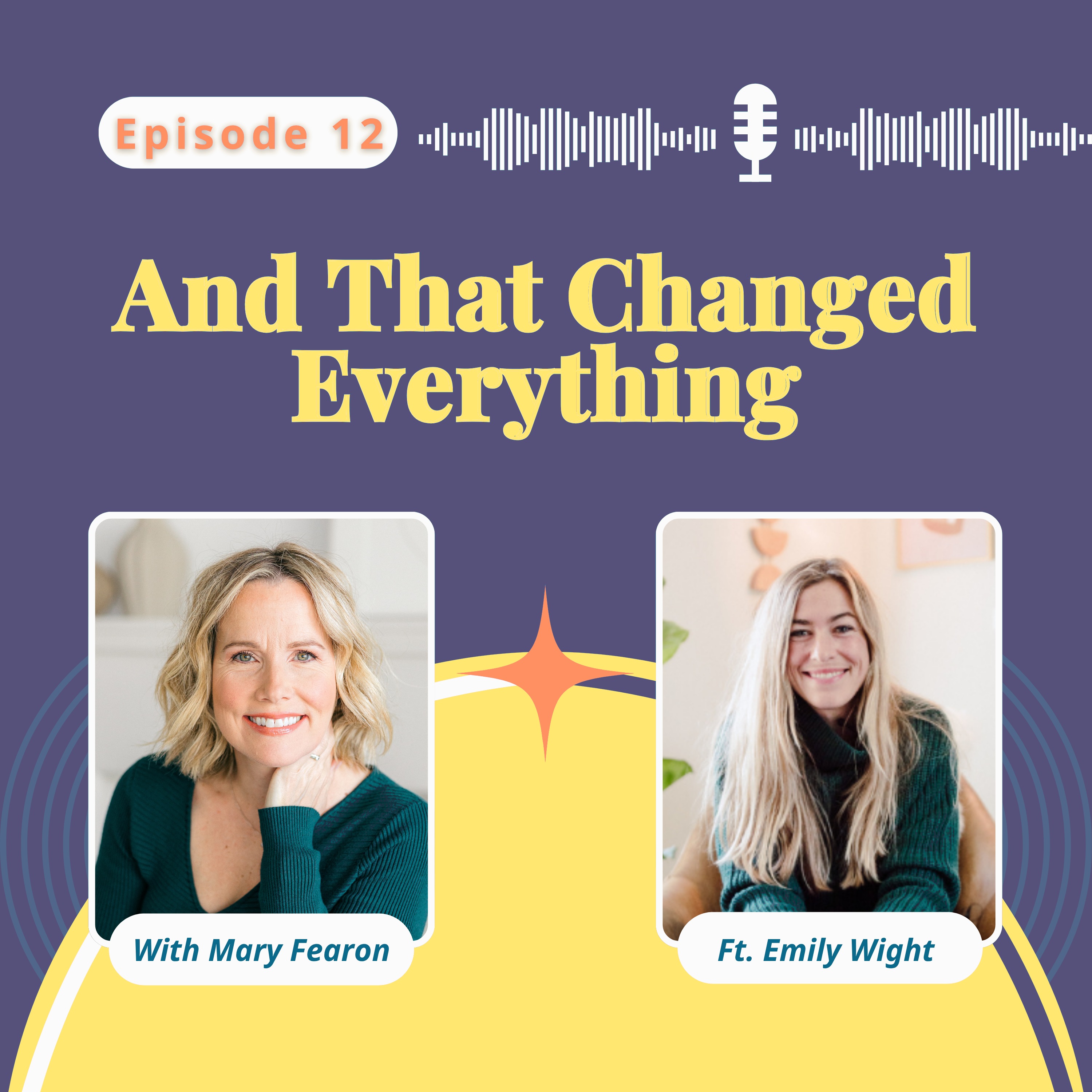
Emily Wight spent years building businesses, raising a family, and moving from one challenge to the next. After selling her business, she expected to slow down. Instead, she discovered that letting go of years of striving would take much longer than she imagined.
In this episode, Emily reflects on the experiences that shaped her, from camp and sports to building a yogurt company and later founding Foli. It's a conversation about identity, resilience, freedom, family, and creating meaningful work.
As you listen, think about the moments that shaped who you are today. Which ones still influence the choices you make?
What You'll Hear About
- Learning to slow down after selling a business
- How camp and sports shaped Emily's outlook
- The story behind her first business
- Building Foli during the pandemic
- Balancing entrepreneurship and family
- Why freedom matters more than career success
- Creating meaningful work
Resources Mentioned
- Foli - Website
- Shopify - E-commerce Platform
- Dragon's Den - TV Show
- The Road Less Traveled by M. Scott Peck - Book
- The Path to Purpose by William Damon - Book
About Emily
Emily Wight is an entrepreneur, business owner, and mother of three. Over the past decade, she has built and sold multiple businesses, including Foli, a plant company that helped bring connection, beauty, and a little more joy into people's homes. Today, she is embracing a season of curiosity, family, and reflection as she explores what comes next.
Where to Find Emily
LinkedIn: Emily Wight
Instagram: @hideandgopeak
If this conversation resonated with you, share it with someone who is navigating a season of change, whether they're building something new, letting something go, or learning how to pause before the next chapter begins.
Follow Us on Instagram and LinkedIn.
Listen to the episode on our Website, Spotify, Apple Podcast and Amazon Music.
Mary Fearon: If you've ever wondered why, after achieving a great goal, that it doesn't feel quite the way you thought it would when you got there, you're gonna love this conversation. Today's guest is Emily White. She's an entrepreneur who started, grew, and successfully exited two businesses, all while starting a young family. Emily's first business was a yogurt shop in the Path in Toronto, and her second business is one of Canada's first online houseplant companies. So we talk about all of that, what got her to those moments. And we talk about what happens after you finish the big thing you strive to do. What's next? It's about giving yourself permission to slow down, to notice what brings you joy, to fight the urge to build when really what you're meant to do is just notice. This is a reminder that some seasons aren't for building. They're actually just for noticing. This is my conversation with Emily White. Okay, let's start by talking about where you are today and something just give me something that you believe about the world, about work, about life, today, right now, and the moment that you're in.
Emily Wight: I'm in a very big moment of pause, which is very foreign or has been foreign to me in the past, and I'm kind of just like taking my hands off the wheel and letting myself just like be and not have a million things on the go. And a million, you know, balls in the air. so that's kind of like the stage I'm in right now. And I'm just whether I'm telling myself to calm down or just it's actually happening inside me, I'm not totally sure yet. But yeah, I'm in a big season of just pausing and and slowing down and enjoying life and feeling my feet on the ground and being with my family and my friends and with with work stress for the first time in a really long time.
Mary Fearon: Yeah, so tell me how does it feel? Does it feel weird?
Emily Wight: It does and it doesn't. I think like I s I had sold and exited a business a a year ago today, actually. Exactly today was like yeah, we signed the deal and it was sold today. and I think I thought I would just like right away be in like chill zone. Like I should be so relaxed and all the stresses are gone. And it's it's pretty much taken like, you know, it took like six to eight months to really shed that constant stress and kind of that constant feeling like I was should be doing something.
Mary Fearon: No way, he said.
Emily Wight: Or I there's something I should be thinking about or figuring out, or if I you know, you wake up or you think like, what have I forgot? so yeah, so I I'm I'm definitely like out of that zone. Which has been really nice. So yeah, it's it's been really nice. It's taken in like an evolution to get here and I think most of it's been pretty uncomfortable. And now I'm kind of as we head into the summer and it's bright and sunny and I just have all this like feeling of like excitement and optimism for what's next, even though I really still don't know what that is. I think it's a good thing. I think it's good for me. I think it's really different from my typical, you know, everyday So I'm I'm living it. Yeah.
Mary Fearon: Mm. Yes. That I love that. I love that. So just twelve months to calm down is basically Yeah. That's kind of interesting because you're not you're not you're so not used to it, right? Like
Emily Wight: Yeah, yeah. Sorry, yeah. I never had a mat leave. I've never like, I've never not had 10 things going on. and I still have sure, I have things in my brain and things I'm working on or projects, but I don't have that, you know, I don't have payroll to be responsible for and you know, lights to keep on in a facility and stakeholders to answer to. I just don't have that right now. And so yeah, I sleep like a baby at night. I'm reading books. I'm like
Mary Fearon: Yeah. Yeah.
Emily Wight: Doing things that I think I always w wanted to do and saved time for, but never quite had the capacity to let myself do. So I mean it can't last forever, but I think it's you know, we're all just so busy. We all move at such a fast pace. It's a good reminder that taking a couple of months off or a weekend off or whatever off looks like to you is like restorative and you come back, you know, more creative. So
Mary Fearon: Yeah. Well, I think about those moments where like and a lot of people can probably identify with this. There's very few moments in life where so you're a business owner and you've sold your business, but other people, if they're between jobs. It's like when you go on vacation, if you've got any sort of responsibility at work, you never fully leave it behind. So the only time that you're truly free and unencumbered is between jobs, which, you know, for some people that's like three days. Some people might take three weeks and they have the comfort and confidence though that they're going into the next job. So there's
Emily Wight: huh. Yeah.
Mary Fearon: they can kind of soak in that, but it's a very unusual thing to go they can to completely unplug from the grid and be just you and be off. Right? So you are likely a striver. Like does does working towards something give you a sense of meaning and when you don't have that, what happens?
Emily Wight: Yeah. Yeah. For sure. yeah, I would say I I frequently have times every month where I'm kind of like wallowing and following my husband around, like, like or or I'm f like fretting about stuff that's not that you know, worrisome. I'm just choosing to put all my stressful energy into some silly, you know, reason. so yeah, it like it is uncomfortable for sure. It's super uncomfortable to not have that thing. It's uncomfortable when you're around people and they're like, What's next? I'm so excited to hear and I'm like, same. Like, I don't know. I'm I'm I'm waiting. I'm gonna figure it out. But like you gotta, you know, I could be depressed and down in the dumps about it. I could be lost. I could be taking anything I think that's gonna work for me to fill that void. But I just I know better and I'm trying to stick to that mentality that the right thing for me is gonna I'm I'm I'm getting there. Like I can tell I'm kind of like percolating the right things right now. so I'm just gonna I'm just gonna keep riding that wave.
Mary Fearon: Yeah. Yeah. Well, no, I think that's a beautiful thing. And also it's its own kind of practice. Like it's its own striving. The Zen practice of of learning how to be to just be. Like that's a really hard thing to do. In fact, like in the world of like meditation and things like that, you know it's like the easiest thing to do, but the hardest thing to like you do nothing is almost the hardest thing to do. So it's like
Emily Wight: Mm-hmm. Mm-hmm. Yeah.
Mary Fearon: It's probably master class level of striving to figure out how to just be in the moment.
Emily Wight: Yeah, I'm I'm still a student of that for sure. Like I have I have good moments where I feel really like in control. And then I have times where I'm just like I'm dying to go all in. But I just I have to it has to be for the right thing. So yeah.
Mary Fearon: You know? Yeah. Yeah. Yeah, I love it. Well, I love it. Okay, let's start let's roll back. Start start at you know, sort of how did you get here? And we can start like in the earliest time. you know, here you are today, embracing all that life is is thrown at you and you've got some choice now. And sometimes that's a gift and sometimes that's a challenge because you know, lots of people don't have choice, so they just, you know, get up every day, put their boots on and go do s do the thing they have to do. But so here you are, but let's map how you got to this moment in time.
Emily Wight: Mm-hmm.
Mary Fearon: Okay.
Emily Wight: Sure. Yeah. yeah, I think like when I'm thinking about kind of like early stage I think about camp. I was a big camper, I was a camp counselor, like very outdoorsy, free, like just playful all the time. I think that like I have a very strong connection to camp and the people I met at camp. and just that like mentality of unplugging and just being in nature and having fun. so I think that, you know, element of you know, that there can be that type of like really fun joy in your life. A lot of it came from like my childhood in camp and and having those really joyful moments at a early age that I think that's kind of continued through my life when I felt like I'm in a rut or I'm doing something I really don't enjoy, you know like fifty percent of the time, I'm like, it is it is possible to have a lot of fun and to do, you know, something that gets you energized and and enthusiastic. And I think some of that comes from that like really playful spirited camp experience I've I had at a young age.
Mary Fearon: Yeah.
Emily Wight: And I try to I don't know, like not take things too seriously. And I think that kind of comes from some of those like playful times at camp. I went there for like eight years, eight or nine years, and then I was a camp counselor for a couple of years. Yeah.
Mary Fearon: Did was it slepaway camp? Yeah, and then how long were you gone from family? And then tell the like first year. How old were you?
Emily Wight: I think the first year I was ten and it was two weeks. I didn't know anybody I knew one person in my cabin. One one girl I'm still really close with that I met that first year. I went all throughout like I think I went till I was sixteen or seventeen and then I ended up being a counselor at a different camp for like the whole summer and I remember I made eight hundred dollars for the whole summer and it was just like
Mary Fearon: Okay. So co Ha ha ha
Emily Wight: The the best. Yeah. I think I owed money because I bought so much candy from the tech shop. but just like, you know, you're out on your own. You like it was a sports camp that I ended up working at and sports was kind of like the next after camp sports became that theme in my life that was like allowed me to just play and be and like really immerse myself in sports experiences. those are kind of like my hand in hand foundation of, you know, outside of my family.
Mary Fearon: that's amazing. Yeah. Yeah.
Emily Wight: those two experiences I draw from like in so many ways all the time. yeah, I mean I would go to adult camp if there was adult camp.
Mary Fearon: That's so I love that though. Like, so when I was growing up, we didn't really do much recreational stuff. Like, we moved a lot, and so like the vacation looked like driving from one state to the next state. And so there wasn't a lot of like, and we played sports and stuff, but it was always just sort of transient. It's like, well, you play football in Florida, or my brother did, or I, you know, or you play volleyball in Minnesota or whatever. so the idea of recreation being its own thing, like its own goal. Like do the thing that you enjoy where you can just find joy and playfulness. That's it's like that's a whole other being to cultivate. Like, you know, I wake up on Saturday mornings, I had to unprogram myself from doing chores like every Saturday morning, because that's just what we did growing up, right? so I think the that emphasis on recreation and finding the joy and the playfulness in life is a big thing.
Emily Wight: Mm-hmm. Yeah. Yeah, for sure. Like you really just like I played university basketball at Guelph, I made lots of great friends, I had lots of challenging moments, you know, you're juggling all the things, you're seeing people go do things that you're not able to do because of your practice schedule or or this and that. my brothers played basketball, like everybody in my life was really, you know, connected around like movement and sport.
Mary Fearon: Yeah.
Emily Wight: But then like later in life now, funny enough, I've started to play I I've for the first time started playing hockey. My kids play hockey. Yeah, my kids play hockey. I had a a bunch of knee surgeries, so I was always like leery of go joining sport again just to be feeling like I couldn't go all out or feeling, you know, pain and knock on wood. Like hockey has just I I my face hurts from smiling. Like by the end of the night, I'm like and we all are the same. Like every shift we come off being like, This is so fun. Can you believe they're letting us play? Like, and we're we're
Mary Fearon: fun. That's so cool.
Emily Wight: And we've it's just such a fun environment and it does give you that experience or me that experience where I'm not aware of the time, I'm not looking at my phone, I'm not I'm just like looking for the puck and looking for my teammate and And it's just such a fun thing to really unplug. I think as a kid, we had lots of opportunities to do that without as much tech as we have now. like doing crafts or doing, you know, all sorts of things I felt like I really could unplug from anything and just zero in. And now I find that harder and harder as, you know, being an adult. But I do find like sports, that experience really makes you feel, you know, like that's the only thing that's going on.
Mary Fearon: Yeah. Yeah. I do think there's a super focus with sports. Like I so I was never a good athlete. I I blame the moving. I'm not gonna say it's just me. I I'm like into like fitness and being strong and being healthy and I run, I do those things, but I was never into organized sports or very good at it. So but late it later in life I love watching sports. I love watching football. Like it does, it takes you out of whatever else is going on, places you in a moment.
Emily Wight: Ha ha. Yeah. Mm-hmm.
Mary Fearon: And then you get to like observe almost life happening in but in an entertainment way. It's like there's there's a goal, there's obstacles, there's emotional strife, there's victory. Like all of those things that happen in life are happening on a field or on the rink or whatever, in the rink, on the on the ice. yeah, it does. It it's it puts you in a s like in a moment in time. You gotta watch. Like you can't drift off. Yeah. Yeah.
Emily Wight: Yeah. Yeah. Well, and it's hard. Like sports is physically really hard, which I also think like innately, like we just shy away from hard things, or you can kind of like, you know, especially as an entrepreneur, like you can choose not to go and present. You can choose not to put your hand up for something or, you know, not put yourself out there. I had experiences like that as an entrepreneur, and then I kind of just started to rip the band-aid and I was like, I can avoid all these things, but I'm gonna feel great on the other side of it in the moment, sure it's gonna be hard. And I feel like that's a sports analogy too. Like, you don't feel great when you're doing all the push-ups or you're doing like sprints or or you're getting up super early to do the thing. And I think it's it just translates into other parts of your life. Like I've definitely had that when I've had a hard work life experience. I really get into going to the gym because I'm like, I am choosing to go here and show up, and I know I will come on the other side. And it kind of just translates into other parts of your life, that confidence that, like, well, I got up and I ran this morning with my friends, and that's
Mary Fearon: Mm.
Emily Wight: That was great. So I'm just gonna bring that energy into the next challenge I have. And you know, my family really instilled that, so it's it's definitely a big part of who I am and how I kind of exist every day.
Mary Fearon: Yeah. So question. So I love that when you say it's hard and sports, you practice doing hard things and then you achieve something, like you get to a next level, you win something with a team or whatever. So it has that effect of like you're productive, you're growing, you're stronger, you're faster, you're more skilled because of taking on the hard thing. Yeah. so I'm curious, because you've now you've now talked about two sort of
Emily Wight: Mm-hmm. Yeah, yeah, for sure.
Mary Fearon: Maybe two sides of the same coin, I don't know, but you've talked about this recreation and being outside and the joy of life, like just finding that joy, and then also the hard things. So how does joy and hard things, how does that go together for you?
Emily Wight: Like guardrail to guardrail.
Mary Fearon: You're just pinging off of pinging off of both, Yeah.
Emily Wight: Yeah. for sure. Yeah. Like I I feel like I'm such a dreamer that I just have given into this I'm like I'm extremes. Like I'm, you know, in the trenches, really working on something all focused, or I'm, you know, like super excited about things. I definitely live in the middle. Sometimes I would love to live in the middle more often, but
Mary Fearon: Yeah.
Emily Wight: Yeah, I I think they kinda coexist when you're an entrepreneur. Like I've I've run my own business or had a you know, a business for like over ten years and I think there's a lot of amazing joy that comes from that from, you know, seeing customers resonate with your product or working really closely with vendors or clients or whatever, you know, your network. And then there's times when you're, you know, you're like, I I don't know if this is gonna go on, or have I chosen the wrong thing, or did I hire the wrong person? Or there's a lot of really big emotions I think in in both of those feelings, like the good and the bad.
Mary Fearon: Mm-hmm.
Emily Wight: And I think they kind of exist with each other. Like I think you have the you know, the joy because you have all those hard moments. I think I'm more aware when things are great or things are moving well or I feel like that momentum, I'm a lot more aware of it and I talk about it. Like I'm very I communicate with, you know, my family and my my close friends who c can relate and it's I'm always like, This is great and I r I really try to be like grateful and and happy for the moment 'cause I know, you know, I've had lots of times when I'm worried, I'm up at night, I'm scared, like I'm stressed. So I think it just yeah, that like you can't always or me anyway, I couldn't always have one without the other. So I just have to kinda learn to to know when I'm in a low it's gonna turn a corner eventually and the high's not gonna last forever either. So
Mary Fearon: Yeah. Well, you what's so cool about that is that so Life is hard. One of my favorite books I've ever read is called The Look Road Less Traveled. I don't know if we've ever talked about that. It's like a book from the 80s. So it was even like pre-my Time. But Scott Peck, who's a psychologist, wrote it. And the first line in the book is life is difficult. And then the rest of the paragraph says that it's like the greatest kind of truth in life, because once you realize life is difficult, then It doesn't have as much power over you anymore because if we're trying to make life less difficult all the time, we're gonna be we're setting ourselves up for disappointment. So life is difficult, but joy is a choice. So life as difficult is going to be like there's going to be challenges and stuff. So I feel like when you're talking about the appreciation and some of the choices you've made in life that put you in that high stakes, high fear moments make you appreciate the joy. But there are lots of people who wouldn't necessarily look for the joy.
Emily Wight: Mm-hmm. Mm-hmm.
Mary Fearon: and be so conscious about it. So where does that come from for you? Like you even mentioned joy in the recreation of camp. So like when did joy become a a thing that you pursue, notice, you know, pr like preserve?
Emily Wight: Yeah. Yeah, it's a good question. I mean my mom and dad have like always been super eternally optimistic. Like we always joke about my mom because it'll be like the cloudiest, stormiest day, and she'll be like, there's a blue patch of sky over there and we're like, Mom, no, like there's not. they never really let us dwell too much in any shortcoming.
Mary Fearon: Ha ha. Yeah.
Emily Wight: Like obviously sometimes when you needed to just like, you know, be taken care of. But my parents and my brothers like really always kind of focused on like, okay, let's keep going, let's move on, like action. so I think that helps kind of, you know, flip the narrative pretty quickly when you're surrounded by people that aren't gonna let you or like, you know, go it go into all the the stuff too much.
Mary Fearon: Mm. Yeah.
Emily Wight: But yeah, the joyful thing too, like even just the word joy, like during my like time with my previous business. I think during COVID and stuff with with plant like I my business is all about plants and we were like plant joy became a big thing and it was like plant joy didn't just mean like a plant brings joy, but just like plant joy in your life, like strategically plant things within your life that you know make you feel that feeling. I just love the word joy too. I I don't know. So I just I think the last couple years, like my kids have come out of the, you know, the little zone. My my business changed and it it exited, my like family's really close.
Mary Fearon: Yeah, let's yeah. Mm-hmm.
Emily Wight: I just I'm more aware of of seeking that and you know letting go of things that don't lead to like joy really. Like just always kind of coming back to that focus. without like avoiding hard, you know, avoiding life things. Obviously you have to work hard to do things, but I do pretty much always think there's a path that you can pick that maybe has more joyful opportunities in it.
Mary Fearon: Yeah. Yeah, and so you would map that all the way back to your upbringing. It's true that like you learn the first sort of models of life you get are inside your family. And so if that that pattern started then, it's totally makes sense that it would follow you through life. But I didn't realize so I know a bit about your business and I want you to tell us about it, but you there's other businesses too, so you have to, you know, decide which how you want to bring us into the entrepreneurial story. But I didn't realize, I don't think I did.
Emily Wight: Yeah.
Mary Fearon: That with plant joy, I'm like, yeah, plants give joy. I didn't think about it as a verb. And absolutely, you know, my mom always used to say bloom where you're planted. That's because we moved all the time. So it was kind of a, you know, wherever you go, bloom where you're planted. She might not be here next year. You have to get good at that. okay, so tell us a bit about because you know, I think there's a stat, and I'm I I've heard this and it might not be totally right, but it's roughly right, that only five percent of the world are entrepreneurs.
Emily Wight: Yeah. Mm. Yeah. Yeah.
Mary Fearon: And so not a lot of people. Yeah. And for somebody who is a natural born entrepreneur or you identify with that, it would be surprising because you'd be like, well, why wouldn't more people do this? But I'd love to hear from you, like how did you end up in the I don't want to be someone's employee, I wanna run a business.
Emily Wight: Yes. yeah, I I worked many corporate like a few corporate jobs out of university. I traveled for a year with my now husband out of university. and I was working like in C PG, so like consumer packaged goods environment and I was enjoying it, but I I was really thinking there was something else out there for me. I wasn't excited by like the security of like profit sharing within the group like the things that people got super excited about. I could just tell I was a little bit different from my colleagues and So I ended up kind of thinking about what what was inspiring to me during traveling. Cause my husband and I traveled for about a year and we had this Greek yogurt shop that we went to in Australia that I we were obsessed with. To the point that like we we took the ferry on our way to tr our next destination traveling and we didn't get to go there one more time to get like the final yogurt portion and I cried.
Mary Fearon: Ha ha. no Haha.
Emily Wight: I'm not a crier. And it was like this beautiful slab of yogurt with like bananas and mango and passion fruit, and it was scooped in this like
Mary Fearon: Ya.
Emily Wight: container kind of like gelato, but it was healthy. And so yeah, I kind of came up with this concept of starting a yogurt shop in Canada. There wasn't really anything like it. It was really stemming from that inspiration in Australia and from my discomfort in my own job. I was kind of like, I'm not gonna, I'm not a lifer here. And I kind of was really feeling that. So I I quit the job without really baking this final plan, which was so disruptive for that the person I quit to, which also just further made me think like this is for me. Like I can't this is the right decision. and I just kind of went to it. I started testing everything on my family. I found a yogurt supplier. I started making these like unique toppings and granola and I kind of like reinvented the parfait, like the yogurt parfait. my my brother Adam
Mary Fearon: Yum.
Emily Wight: Had already been an entrepreneur in a solar business and he worked downtown Toronto. And so he kind of knew the inner workings of the path, which is like connected to Union Station. So he was really helpful in like, okay, let's like let's I'll help you get a good spot in the path that has lots of people walk by it every day and a captive audience for that morning focus. So yeah, we had like lots of early days pitching to different
Mary Fearon: Mm-hmm. Wow, yeah.
Emily Wight: like real estate, you know, development management teams and which was really exciting. And I didn't know any better. Like I was kinda like w I laugh at your stat because I think I remember going into entrepreneurship and meeting someone who owned a restaurant. He was like, don't do it. Don't and I was like, but this is gonna be so great. and I've related to that comment at times been like maybe that guy was right. yeah.
Mary Fearon: Yeah. Well restaurants too. Like you didn't just decide to start a business. You decided like it's like a cost management exercise in restaurants. So it's like really hard to be successful. So
Emily Wight: I I was super lucky in that my space was like 130 square feet. It was tiny. It was Monday to Friday. It was like 7 a.m. to 4 p.m. I could do it on my own. And anyway, it was kind of like I reflect on it often as like my training wheels of entrepreneurship and owning a startup. And it was successful. I loved it. I hired people. I had people every day come and buy yogurts from me. I rebranded halfway through after I learned how to communicate properly what I was selling.
Mary Fearon: sure. Yeah. Yeah.
Emily Wight: And I sold it before COVID.
Mary Fearon: Right.
Emily Wight: So I went through the whole, you know, process. After I'd had a couple of kids, we moved to the suburbs. I was like, I'm not my heart's not in it anymore and it's gotta, you know, it has legs that needs to go. So figured out how to sell the business and sold it. and that was like it's funny, like yog yogurt is such a big part of like my diet and my family. And I've often been like, Do I go back to yogurt? Like, do I start a yogurt thing again? Yeah.
Mary Fearon: yeah, the yogurt could call you again. Yeah, that's right. So now can we let's pause on this one for a minute because I think like, I'd love to know in and I I think you said, you know, you didn't know enough to know how to how scared to be or how tough it could be or whatever, but I'd love to understand what you felt, like what were some of the biggest challenges or fears at that phase. And because like that's not a small thing to just be like, okay, I'm gonna go start a yogurt shop in Toronto.
Emily Wight: yeah. Yeah.
Mary Fearon: I think commuters will come. I think I've got a good formula. But none of that stuff is tested in you know, until you're kind of out there, right? So like tell me about the psychology of it, because that's pretty that's pretty bold.
Emily Wight: Yeah. I I know. And like it was. I remember being beside like a booster juice and like a chicken place. Like I wasn't I wasn't a franchise. I I I think we we pitched well. Like my brother has lots of experience and we and we got people to try the product and like yogurt still is like one of the wide like most widely consumed products in the world.
Mary Fearon: Yeah. Yeah.
Emily Wight: It was right when Greek yogurt became a thing. So people were starting to hear it. So it's trendy. But like no doubt they they took a chance on me. They were like, okay, let's do a five year lease. Like let's what's the worst that can happen? so yeah, I think I got lucky, a little bit. I think we had good, you know, pitching skills. I had a really good product that was was tasty, like it was very, very good.
Mary Fearon: Mm. Yeah, that's amazing. Yeah. Yeah.
Emily Wight: And then yeah, like I we opened the doors, and right before we'd opened, I tore my ACL. So I had this hilarious, yeah, in this brace. And it was really hard. Like, really, really hard. I was taking the subway from my apartment with my husband to open the doors at 7 a.m. Like I'd never worked cash. I'd never served anything. I'd never had any experience. Like I was a counselor. I didn't know what I was doing.
Mary Fearon: no. Mm. that's so funny. So you never serve tables or anything. Amazing.
Emily Wight: No. So I had literally no idea what I was doing. And it was like a bite size opportunity. It wasn't huge, right? So I could manage it. There was no like back room. I had few suppliers. but yeah, like I was terrified. It was it was hard. Really, really hard.
Mary Fearon: Yeah.
Emily Wight: to at the start and hard to get people to kinda take a chance. You know, when everything looks like McDonald's and then there's this like hipster hippie serving yogurt. Like it takes a while for people to think, you know, this is legit. I do remember when I rebranded, we had to take everything down and we're sitting at the chairs in front of the place while we were taking it down. I had to use all these approved contractors and or this man walking by all the suits and he was just like, that poor girl, it didn't it didn't work. And I was like
Mary Fearon: Yeah.
Emily Wight: And meanwhile was just like rebranding the whole thing and I was like, I can't stay here, I can't listen to the this. So I had to leave, and we all like launched kind of that next Monday, and it was like sales were so much better, and everyone was like, I get it. And it it just it it was in a format they could consume and understand, and and I I learned a lot in that process. but yeah, it was it was
Mary Fearon: Interesting. Yeah. Tell me I wanna know what you learned. Tell me about like as a communications sort of nerd and word nerd and how do people like you know, how did how do how do people consume something, especially in the time of day where they've got like a split second to evaluate. So I'm wondering where we're where did you go from and to and what did you learn?
Emily Wight: Yeah. Yeah, like my first the the whole f like look of the place looked like it should be like on Queen Street. Like it was very hipster because that was kind of what I was drawn to. So it was like, you know, the cool lettering that now all the cafes have, like the little tiny letters that fit on the old school little rose. There was no images, there was only like kitschy kind of things in my brand color. it was called a starte, which is like a Greek goddess. We worked with like this marketing company and came up with this name, but I never loved it. Like I remember
Mary Fearon: Yeah. Okay.
Emily Wight: people calling it calling it Ast Tart. And I was like, okay. Yeah. So I we changed it, yeah, to Nosh, Nosh and Go. So like eat, you know, eat and go.
Mary Fearon: Okay. perfect. Yeah, yeah.
Emily Wight: We added all these visuals of like, you know, like really beautiful pictures of like a kind of on top of a yogurt bowl, like styled really nicely with like real blueberries on the side. So people could visually be like, this isn't like, you know, jam. Like it's actually like real blueberries. so a lot more emphasis on images, because I had like 10 seconds to capture someone's attention. and just like cleaned it up. Yeah.
Mary Fearon: Thanks. Yeah. Yeah. Mm. It needed to be appetizing. And the other thing I love about the name, the new name, is that like a name is like you have your name can do a lot of the heavy lifting for you if you make it descriptive. So people don't have to be like, that's the name. They make yogurt or they c other I can eat there. It's more like all embedded in one. And then the visuals, of course, beautiful food photography that get people salivating. That's gonna work. That's really cool.
Emily Wight: Yeah. Yeah. Yeah. Yeah. And I had confidence. I had confidence all of a sudden. I was like, I'm like the business is making money. It makes sense. My cost of goods I figured out. Like these things I didn't I went in not knowing, luckily were ended up being the right like matrix of math. but yeah, so I was in that for six, six or seven years. I sold it in twenty nineteen.
Mary Fearon: So how many years were you in the right, okay yeah.
Emily Wight: Which is like a blessing big time 'cause I think like COVID would have been really challenging for me to manage. the path in itself is still different from when it was those days, you know. Fifty thousand people walked by the store a day. Now I don't I don't would have no idea what the the, you know, metrics are like. Yeah.
Mary Fearon: Yeah. What the numbers are now. Yeah. So and then also tell me where were you from a family standpoint at this point? Did you have kids at this point?
Emily Wight: So when I sold it, I was yeah, I I was I'd already had two babies, so I have two boys at that point.
Mary Fearon: Mm-hmm. Ha wow, okay.
Emily Wight: Yeah. So I had like I had all of it. Like I've dealt with like employees stealing and you know, me be I'm in Burlington and there it was in Toronto. Like it was like it was hard to be disconnected, especially when like the concept was really smart. Like I knew like this could be in airports at like movie theaters, it could be a mobile, like had a lot of potential. I just at that stage of my life I was, you know, really ready to have a family and I was happy to move closer to my own family here and I had fun. Like my dad was still working at that time. So we would commute down to Toronto together at like six in the morning and it was great. So it was a very positive experience, you know, selling it and and also kind of sharing that with my brother and being able to, you know, have a success story in like quick service food was pretty awesome.
Mary Fearon: Mm-hmm. Yeah. how sweet. Yeah. Yeah.
Emily Wight: And it kinda just gave me confidence, me you know, that like, you know, you can do the you can do something different that not a lot of people, you know, around you are doing and and make a life out of it and enjoy it. And you know, I wasn't collecting a huge paycheck from it, but I that it wasn't what was motivating me in that time. Like the the experience I have built there, like during those like yogurt years were really is formative. So it was worth it to me.
Mary Fearon: Yeah. Mm-hmm. How much does freedom play into this for you? Like I think about my own I was an employee for like twenty some odd years and I'm like, I don't think anybody could ever hire me again. I think it like I came to it late, later, but be had the freedom to make your own choices, to carve your own path, to to be to be in a moment where you can be like, I could, I don't know, start the ogre business again or do something completely different off the wall.
Emily Wight: Mm-hmm.
Mary Fearon: So how how important is freedom in the mix of entrepreneurship?
Emily Wight: Ha It's like paramount. Like I think just the question I'm like, yeah, man, like freedom is is king for me. I I think it's like freedom to be like curious and and to take the direction of the businesses going and learn more about that and not have rigid, you know, I there is structure and process that always needs to exist, but I think
Mary Fearon: Yeah. Mm.
Emily Wight: the fluidity of like you know now catering's a big thing let's try that like let's lean into that for a bit and I think having that flexibility maybe it's more like flexibility I don't know and and it's not because I don't want to be told like I I really miss working working with and and you know for someone I'm much of like a pleaser I would love to have someone and I've missed that through the years that I'm you know I choose like my husband and my siblings and my my parents to like please like I want them to be pleased with me. So I think you
Mary Fearon: Yeah. Yeah. Mm-hmm.
Emily Wight: having a boss is not something I don't want either. It's just my personality has lent itself more to these, you know, fluid kind of startup world where you're you're gritty and hustling and thinking about things differently and making changes and decisions and you know doing a million things at a at a time. Like I'm very, very good at that.
Mary Fearon: Yeah. Mm.
Emily Wight: And I think that's why this stage of my life I'm in now, I have to be careful because I think there's a lot of things I could do because I have lots of interest. I have lots of things I'm like excited by or could dive into. I just you know, I and I'm not gonna hold all this weight like this next decision has to be like massive, but I just wanna make sure I'm not, you know, there's lots of things I could do. So gotta pick it wisely.
Mary Fearon: Mm. Yeah. It's interesting, like you've you've accumulated over a lifetime and over all the business, you know, experiences that you've had, you've accumulated a pretty strong skill set to be competent and probably excellent at a lot of things. But that doesn't mean you love all those things. But to somebody who's a pleaser, the dopamine rush of doing the thing for the people can be so rewarding that you forget whether you like it or not. Even though you know you can do it and you know you could probably do a lot of things, but it's hard it's hard when the I know people who are driven to you know, be in service of others. And it's hard to then go, what what what's what's serving me in that in that scenario. So it's good that you're thinking about that. And then you've got time, you've got some time to pause and reflect on that. what's the next big passion thing? I that's interesting.
Emily Wight: Yeah. Yeah. Mm-hmm. Yeah. Mm-hmm. Yeah.
Mary Fearon: so tell me, you have a lot of like I love how you how much you mention your family. I think that's a beautiful thing to be so close to your family, like your siblings, your parents, and your own family, your husband, you've mentioned him. So what do you believe about family in your life and in work? Cause cause it's been integrated into your like the contribution you're making to the world, as well as feeding you from a emotional support standpoint too.
Emily Wight: Mm. I mean, like all that really matters is family to me and you know, that's an ex you know, a s a close extension of some of my friends too, right? Like this really close group of of, you know, my family and friends and yeah, I think I don't know if it's age or what or just like being aware of time and
Mary Fearon: Mm-hmm.
Emily Wight: like wanting more of it all the time with with these people. But my mom just had her seventy fifth birthday on Friday. So that was like very awesome. and I think just I don't know, you can get really wound up being busy and all these things that take you away from things. and it's just I kinda always come back to my family. I you know, I spend lots of time with with all of them.
Mary Fearon: Yeah. No.
Emily Wight: And yeah, it's it just it's a it's my number one I think. I have three kids of my own, they're little. I think when I reflect on my time running, you know, the yogurt shop and then my plant business, like there's a lot of time I was in the room with them but not really in the room with them. like I look back at photos and like I don't remember that at all.
Mary Fearon: Mm.
Emily Wight: And I don't think it was all just business. You know, there's like you're getting over the trenches of like, you know, nursing in the night and having no sleep. I think there's lots of reasons for that. But I do think a lot of it was was stress of running running another family of my business at the time as well as my young family. so I I think just like that awareness.
Mary Fearon: Mm. Yeah. Mm.
Emily Wight: as well in the past year and just how fulfilling your own family can be and just the different, you know, your your job doesn't have to define you. Like you can have, I could have another business, I could contribute to another company, I could do something else, and it's not one or the other. So where I think at times it has been just so zoned in on work that I'm just not not available to them. So I think, you know, trying to make sure that I have that available
Mary Fearon: Mm-hmm. Mm.
Emily Wight: And and that I also don't dwell on it for too long. Like, you know, you gotta let yourself off the hook. Like it is what it is, and I'm a r or with my family all the time. I'm volunteering on all the trips and doing all the things I can do now because this season allows that, so I gotta do it. But yeah, like my husband and I have a lot of fun. We enjoy we we take it easy and we we enjoy our life and and it's pretty simple and I don't know, we just we just try to
Mary Fearon: Yeah. Yeah. Mm. Love that.
Emily Wight: set a good example and spend as much time as we could with the kids and yeah.
Mary Fearon: You what, I think so I appreciate that insight because I think a lot of and I'll just say women, just because I'm a woman, you're a woman, we're both professionals, like you know, it can be so easy to sort of label ourselves like, I own a business, or I'm good at this and not good at that, or I'm not here because I'm over there. But the we're complex beings, right? Like simultaneously, you're focused on your business and showing, demonstrating, modeling to your kids what it's like to strive and build something.
Emily Wight: Mm-hmm.
Mary Fearon: No, you're not necessarily like, I don't know, playing Legos, but they're learning something as a result of that inside this giant envelope of love and you know, reward and all that. So like I I love that you said like don't spend too much time dwelling on it because you're all of these things, and all of these things are contributing to who your kids become and who they see you as. So like and I mean, I know for myself, like I've had a busy career.
Emily Wight: Mm.
Mary Fearon: and there are definitely times like my family joke sometimes because they're now my kids are 19 and 21, so they'll joke about some family event. They're like, you were traveling, ha ha ha ha. You know, or whatever. I'm like, I was also around for a lot of it. So let's not just like let that go down in this in the in the history books, but I know for myself that I was always I've always been so grateful for this family that I have and my husband and my kids and the time we have together. And we would go like we spent tons of time camping, and yes.
Emily Wight: Ha ha ha. Yeah.
Mary Fearon: I would travel maybe three weeks of that same month, but I was there when I was, you know what I mean? I don't know. I just think that's an important lens for professional people, not just women, but professional people with families. It's like there's so much other stuff you're teaching your kids by virtue of what you're doing, you know?
Emily Wight: Yeah. For sure. for sure. And I think like it's just easy to be like, I'm not I'm I'm sucking in this part of my life, but I'm doing okay here and I'm doing this. You're like you it's not really possible to have all of them firing at the at the same time. But we just torment ourselves with this expectation that we should be and it's really hard. Like it it's it's hard and I think it's a good reminder of like let yourself off the hook every once in a while. Like we're not
Mary Fearon: No. Yeah. Mm-hmm.
Emily Wight: Dwelling on how you feel or missing times or like that isn't really impacting anybody, your family or whoever it is positively right now. You're just like feeling shameful. And it's just it's easy it's easier said than done. But I think like that awareness is is helpful 'cause just doing the best you can. It's all you can do is do the best you can with what you've got. And sometimes that's gonna be prettier than other times and it is what it is. Like, yeah.
Mary Fearon: Mm-hmm. Yeah, that's not helping. Yeah. Yeah. Yeah. Yeah. And sometimes you'll fail miserably and you just be like, Okay, I'm a human, you know?
Emily Wight: When I sold the business the last business, my I walked to school with my one son, just him and I for some reason. He was like, Mom, like I have your next idea. I was like, Okay, buddy, give it to me. He's like, Momics. You should open a store called Momics, like a comic store for moms.
Mary Fearon: Because all moms like comics just like I do, right, mom?
Emily Wight: I know. I was like, I love that I haven't complained enough or like been so, you know, like worked up in this that you think I'm just gonna go lease a new space and do something new. But yeah.
Mary Fearon: Yes. I think that's so cool. Like that is amazing. I have a friend who's an entrepreneur, like he's a serial entrepreneur. I don't know how many companies he's owned and sold and stuff, but he has this belief that we are all born into the world as entrepreneurs. We are built for collaboration, that we are built to be innovative and solve problems in different ways. And then we go into school and it teaches us how to like what to think. how to perform, what you know, good looks like and what bad looks like and A or an F, right? and so it's sort of like we move away from that natural instinct in ourselves. But how cool is it that your son's like, we're just gonna make something up, you know, like fill a gap in the market. Maybe, maybe it's true. But like the fact that he's even thinking that way as opposed to, you know, think about how many models of the world kids get from the parents who are like,
Emily Wight: Mm-hmm. I know. Yeah.
Mary Fearon: I gotta go to work, or I have to work to pay our bills, or this is just the grind. I can't wait for the weekend or whatever. Like that's a shame, you know? Like I you we all have to be re aware of how that plays out for kids, right? 'Cause then they have a model of the world where like work is kind of the thing you have to do. Which I don't feel that way, you know.
Emily Wight: Yeah. Yeah. Yeah, for sure. I was also like, I love the name. Like it's a great name. Like what we were talking about earlier. I'm like, Momics, like should I buy the domain?
Mary Fearon: It's a ma well, seriously. You should. You should definitely write now before this goes to air because somebody's gonna take it. And even if it's your like own personal blog for a while, that's like all about being a mom and an entrepreneur, you know? that's so cute. I love it. I love it. I have another friend who's also an entrepreneur who talks about he says work is the most honorable act in the universe, and that we are as humans,
Emily Wight: Yeah. Mm-hmm.
Mary Fearon: Built to contribute. I believe that. Like Mark Twain said, you know, two most important days in your life are the day you were born, the day you figure out why. like what are we meant to do in service of the world, whether it's inside our family, in our community, at our baseball team, in our church, whatever it is, right? and in sort of Western culture, we've look we've sort of demonized work. It's like work life balance. What about that integrated, you know, fulfilling work life?
Emily Wight: Mm-hmm.
Mary Fearon: that feeds who you are as a person that helps you contribute to your family and all of that, right? Like, there's a yeah.
Emily Wight: There's a lot there. Yeah. I I've thought about that concept so much lately, actually. I I had a small project where I was helping a business and I like went all all in and I was kinda thinking about how There's so much like the I my I turn my phone off and I'm offline and I'm unreachable and these things that I think are positive in theory, but it's not a bad thing to be so excited or interested or in like a learning phase within your career that you're thinking about your job when you're reading your kids a bedtime story or driving to hockey or you're up in the night or you're working. Like I think about what I'm doing all the time when I'm excited by it. And that's kind of the time when I'm I'm
Mary Fearon: Yeah. Yeah.
Emily Wight: You know, I'm not doing emails, I'm not doing calls or whatever it is, and I'm able to be think more critically about bigger problems or come up with a new idea. And I think sometimes this new wave of people and these young, you know, 20, 30 year olds are have this really structured like my phone goes on airplane mode at five. I'm like, yeah, but like
Mary Fearon: Mm-hmm. Yeah.
Emily Wight: It it doesn't have to. Like there are ways where like I I worked with this company and I was working directly with the owner and I'd be we'd be texting in the morning on Saturday 'cause I'd be relaxed and been like, what about this? I th I've thought about that. What do you think? And and like I I just think we're so boundary focused that it kind of leaves no room for that job to be fulfilling in a in a b it's a job you check in and check out at and I think like I would love to encourage people to, you know, give more, think more, invest
Mary Fearon: Right. Yeah. Mm-hmm.
Emily Wight: More in what you're doing so that you do think about it when you're not there, because I think there's a lot of like enrichment in that.
Mary Fearon: Mm.
Emily Wight: concept and I mean it's easy for me to say if it's like, you know, I've had great, you know, entrepreneurial businesses and I'm really interested in them for the theme and all sorts of stuff. But I think that can exist in lots of conventional work settings and corporate and, you know, anything is that really, you know, the not checking out and thinking about it doesn't mean you're working, you know, you're pen to the paper, but you're thinking about it.
Mary Fearon: Mm. Yeah. Totally. Like, it's interesting. I there's a book I've started to read. I've probably mentioned it like five times in the last week to people, and I have to keep saying I've just started reading it. So but one story, it's called The Path to Purpose. I forget who wrote it. I'll put it in the show notes, but it's about teenagers finding a sense of purpose in what they do. And he talks in the book about a kid working at a burger joint. And once the kid recognized that he could make people smile. That gave him a sense of what he does matters. And then that became the mission is to make people smile every day. So again, it doesn't need to be like we all have mundane tasks and things that we have to do or whatever, like whatever the job is. But what's your way of making meaning in that job? You don't find meaning, you make it. And so we ha you know, it's problematic if we've already set up work as a demon, a thing that's stealing life from you, when if you could look at it like, wait.
Emily Wight: Mm-hmm. Yeah.
Mary Fearon: You're a human, you've been put on the earth to do something in the world and view that as how what's your unique contribution to it? Like that, like if if we could rewire our thinking about it, then people would be like, you know, I don't know, mopping the floors and maybe thinking, well, maybe I'll just make people happy while I mop the floors, or maybe people are happier because the floors are clean, you know, like connecting it to the thing that that matters, the, you know, I don't know.
Emily Wight: Mm-hmm. Yeah. Mm-hmm.
Mary Fearon: I agree with you. I think that's a huge message for people and parents, people in their jobs that are thinking about like that, you know, thinking about their own their own sort of experience and then the halo effect and the impact they're having on their kids or the people around them because of how they're talking about work. Like I have friends who are, you know, thinking about retirement, like literally counting down the days, the months, the years. I'd be like,
Emily Wight: I know
Mary Fearon: That sounds like a lot of waiting
Emily Wight: I know
Mary Fearon: for life to start. But it's happening right now, you know? So
Emily Wight: Yeah. I know. I I know. I totally agree. I I really like it it it makes me sad when I see it in really young people, like just like that firm. I'm like, but maybe you're missing something. Maybe you're in the wrong thing then. You know, like if you really want to leave that on that second of five one, then like maybe you try something else. Yeah.
Mary Fearon: Yeah. Mm-hmm. Try something else. I love it. I love it. Yeah. Okay, so we've talked about camp, recreation, and joy. We talked about sports and the learning. Like it's kind of like the it's like a microcosm of life. We talked about your first business. And then the second business, I think, is really interesting because the way that you've told me about how it like the germinated germination of the idea.
Emily Wight: Mm-hmm. Mm. Ha ha
Mary Fearon: I'd love for you to talk about that before we before we before we move on. Just because I think it's you know, you're coming off the heels of having sold one business and then tell us where you were when this next idea came up.
Emily Wight: Yeah. Yeah I had a a period of where I was doing a whole bunch of things in between selling my yogurt company and then for my last business. I like went and got trained as a Pilates instructor, started t teaching Pilates. I had a market stand at like my local market where I had a yogurt stand before, kind of evolved into like a a different, a whole different kind of concept that my best friend actually runs now called the Bear Home. So it was like a refillable soap company. so I was kind of involved in the start of that.
Mary Fearon: yes. Mm-hmm.
Emily Wight: with her and she's like run with it a million times over in this amazing way. So I was involved kind of in seeing that start and grow and be in a different type of industry, like in consumables and and really connected to the environment. and while I was kind of doing some of those things, so the Plotties and this other helping with this other company, I I somehow landed on yes, I do remember. My my brother and I again we went out for dinner, I remember it was my birthday, the four of us and
Mary Fearon: Mm.
Emily Wight: He was like, what about like outdoor planters? It's like, have you ever, you know, it's a recurring business. People decorate their homes every year. Outdoor planters. I was like, Like a week later, I'm like calling him being like, I'm thinking about that planter thing. Like, I'm gonna look into it. So kind of fast forward, I whip together a website. I find a supplier of outdoor planters. It happens to snow one day in November. I take all these photos of planters with snow in the background. I'm like, let's see if we can sell them. So we sell them all, no problem, have some randoms, lots of family, but like
Mary Fearon: Yeah.
Emily Wight: The randoms are the goal, right? When randoms buy your stuff.
Mary Fearon: It's like my mom always my mom always reads my emails and listens to my stuff. Yeah. You want strangers. Yeah.
Emily Wight: Yeah. Like you want randoms in there with, you know, mom and dad. Yeah. so we kinda got like a green light, let's say that it was, you know, something was there. and this was right when I'd had I forget what baby I was on at this point too, but sitting in my main, you know, living room looking at all my plants, thinking like, maybe indoor plants is actually better than outdoor plants. For lots of reasons. Photography was hard. Like it's hard to get photos of the season before it's happened to sell the season. So lots of little nuances, yeah, when you're when you're starting. So I have a green thumb. I always have had it for some reason. My mom has one and I had lots of plants in my house just as a hobby on my own. And it kind of became like it was looking at me. And I was like, should I like try to sell a ship a plant to somebody? And instead of delivery locally, like, could I ship this and then open up all of Canada instead of just
Mary Fearon: Mm. During the season. Yeah. Mm-hmm.
Emily Wight: like a regional model and yeah I've I have friends that I was like hey you're in BC you're in Winnipeg you're here I'm gonna ship you a plant video how it unboxes and let's see and I I just kind of like snowballed this idea pretty quickly and and networking with greenhouses figuring out you know what plants would work what were hardy figuring out the box like how could I pack a breakable perishable item and have it un arrive you know looking great and just like yeah
Mary Fearon: Mm. Mm. Mm-hmm. Can I ask a follow-up question? Cause I'm now trying to understand. So, so there are greenhouses that have the plants, but then you're curating what that is, and and somebody can like I'm trying to think of like the customer experience there. You're somebody's going online and saying, I don't know, I have this type of space, it's got this type of lighting, whatever. What can I buy that I can have in my house? And then you basically deliver it to them. So they don't have to go to the greenhouse. and buy and look for the thing and talk to the people, you're cur you're making it possible for them to buy it from their living room. Kinda like me buying clothes on Instagram right now. So easy. Okay. Yeah.
Emily Wight: Yeah. Okay. Totally. Yeah. Like I could I could do my Dragon's Den pitch for you if you really want. I pitch I pitched the business on Dragon's Den. We simplified the plant buying experience. So like you go into a green, you know, plants suddenly started to become a thing. COVID really helped. People had a home office. Like you have a plant behind you. I have plants all over my house. kind of that self-care in the same umbrella.
Mary Fearon: yes, yes, I do. Amazing. Yeah. Yeah.
Emily Wight: was all kind of happening at the same time. So yet I still felt like people would go to a greenhouse and and not know what plant to fit for their home. They have a cat, they have dark, you know, afternoons are dark. Like people are so overwhelmed and it's makes it feel so complex when it's really not. It's really not that hard. so I think just simplifying that experience, making it an e-commerce experience, which was really new in that you couldn't touch and feel and see the plant in the same way you could in a physical store.
Mary Fearon: Yeah. Yeah. Mm.
Emily Wight: And then pairing them with like really beautiful pots. So making it more of a statement, it's decor, you know, you're adding it into your home. It's like art, totally. so yeah, just like figuring out all of these different steps and selling this idea and pitching it to, you know, a greenhouse that agreed to let me lease some space from them. And I remember so well at the like company party, they're like, This is Emily, she's she's gonna sell plants online. Like, can you believe it? And
Mary Fearon: Like art. Yeah. Yeah. Isn't that fun? Yeah.
Emily Wight: I and I'm like bright red, like yeah, like little old me and then COVID hit and I was packing plants like six AM to six PM. At this point I was pregnant with my third baby. we were deemed agriculture so we could go to work. It was just absolutely wild. Like it was so, so, so much fun.
Mary Fearon: Holy. gosh.
Emily Wight: Also, just like that joy piece really came in here. Like we're all stranded, we're alone. You know, people are having moments and celebrations and we're not able to be there. And plants was like the conduit for that. It really helped connect people. And I still think it does. Like a plant is just like another level of, you know, it's a living thing. It's it's really. I used to say like the only better thing we could ship was a puppy. Like a plant.
Mary Fearon: Yeah. Mm-hmm. Which also has way more yeah, that's right.
Emily Wight: Yeah, is like a good second to a puppy arriving at your door. I which also has lots of responsibility, but it was just a such an amazing experience and and I I ran the business for about six years, had lots of different, you know, experiences within that. I had the I had two or three facilities while the business grew and changed and
Mary Fearon: Yeah.
Emily Wight: you know, tried corporate out and I tried different like drop shipping for indigo and these different partnerships. So it gave me a lot of experience. and I always kind of ran it as, you know, a shoestring startup. So I really felt like I learned everything myself or I tried my best to be able to, you know, hold my own in a conversation about like Google ads and, you know, Meta and things where some people shy away from and you know, my whole site was built on Shopify and really
Mary Fearon: yeah. Yeah.
Emily Wight: getting invested in that ecosystem and learning, you know, what things can I bring to the experience online that make it feel human? how can we treat people that, you know, yeah, it's some e-commerce experience, but they get to know us and they there's more there. And I think that's also why this year took a long time for me to shed some of those feelings because I was so connected to the business and my team and my customer base and but all for good things, right? It was it was worth it. So
Mary Fearon: Mm. Mm.
Emily Wight: Yeah, I st I still have all plants.
Mary Fearon: That's so interesting. I'm I wonder if there's like it just makes me think about loss, like and grief. Because while this is a decision you made mindfully, and I think like you've told me before, at you know, at s a certain point you're either gonna go big or and what's involved in that, or let someone else take it to that next stage because you know, they're you know scaling is a different skill set than the ideating and the creating of the experience in the moment, all that. But
Emily Wight: Mm-hmm.
Mary Fearon: That even though, even all of that being true, there's loss in it. Because you built this thing and for all those reasons, and then you have to let go of it. So, like that's that's a whole big thing, even aside from then now what? What's next? Like that's a whole different thing, right? Yeah, that's a lot. That's a lot. Yeah. Yeah.
Emily Wight: Mm-hmm. Mm. Yeah. totally. Yeah. Yeah. And then seeing someone else carry your brand, like is always an interesting thing. I was so entrenched in it. But yeah, I mean it was it was the right decision. Like the the the group that we sold to has outdoor plant they say have a outdoor plant website. So they're really we met them really with kind of thinking about fulfillment. So hey, can you you know, the fulfillment trenches and and the nuances of a really steep in like such a manual, you know
Mary Fearon: Right.
Emily Wight: like planting and growing is is a beast. so met them kind of out of those reasons initially and then it kind of evolved into, you know, I think we I think I want to sell the business. And so it was a great kind of match in that way. But yeah, for sure. There's definitely loss in that and you know, just
Mary Fearon: Yeah. Yeah.
Emily Wight: It it yeah, you're you're you're sad to let go of the things you loved about it. Happy to to let go of the things they didn't, but it it was it it took some time. But yeah, I I'm s I'm super proud of of Foley. I think it was such a unique experience at a important time when all of us really needed it. And I still have people send me plant questions all the time and this is my plant at home and help and I enjoy that.
Mary Fearon: Mm-hmm. Yeah. Mm-hmm. Mm-hmm. Yeah, I haven't even considered that, but now now that I know you, I'm gonna do that 'cause I d do not have the green thumb. I'm like, I need the full proof. I actually yeah. I will take pictures with chat and and then put like in chat GPT and be like, How do I prune this? 'Cause I don't wanna like kill it.
Emily Wight: Yeah. Yeah. Yes, like the best like few tidbits if I can offer them is like li lift up your plant f in the pod or whatever it is, and if it feels really light, it's probably wanting some water. If you if you lift it up and it feels like weighty and heavy, it's probably fine. and you're people just over love it, they overcompensate for ignoring it for so long. water it at the sink so that the water drains out so you're not just sitting in water like our
Mary Fearon: Yeah. Okay, I like it. Right. Don't water it 'cause you can kill it by watering it. Yeah.
Emily Wight: our homes aren't humid and warm enough and hot enough to evaporate all that water and for the plant to use it. And then just like put your plants by all of the windows. It's really simple. You can't put like a fig in your den that has no, you know, no windows and is beside the fire. Like no, you're not gonna be able to do that. There are plants that could work there, but it's maybe not a fig. But yeah, just like I think people overcomplicate it. Like, you know, plants just need light. They need to not be over watered and clean up every once in a while and
Mary Fearon: Right. In the basement.
Emily Wight: The you know, the they do add a lot to every space I find. I'm really aware when plants are in a space, it's just that has that different dimension.
Mary Fearon: Yeah. Yeah, I well mean you're inspiring me. I wish I knew a foley back in the COVID world and all like I wish I knew. but I but I probably wasn't the target market because I have very little things growing in my house. But I wish I was that person. Yeah.
Emily Wight: Mm-hmm. Yeah. Yeah, I know. It's a great gift. Again, it's such a special gift, I find. In in like a world where we're so remote, it's a nice like we had a lot of people use it as prospecting gifts for sales and you know, team appreciation and new new employees to get a plant on your desk if you're a remote employee. Like there's a lot of ways that it just it is kind of that conduit. So yeah. Thank you.
Mary Fearon: Yeah. Mm. Mm-hmm. I'm in. Awesome idea. I love it. Okay. So you have done a lot of things. It's funny because when I asked you to be on the podcast, you're like, me? I'm like, holy smokes, you have done a lot of stuff that people don't do every day and could learn from. And you know, being bold enough to try the first thing the first time, and then selling that, and then trying other things and working with friends and then going out on your own and then solving this problem while you're having babies and working twelve hours a day but still loving your babies like all that. Like it's a it's there's so much to learn and for people can probably see themselves in different parts of it. So I so appreciate you coming and sharing your story with us. It's really awesome.
Emily Wight: no problem. It's it's very I'm very flattered that you asked, so
Mary Fearon: Of course. I think you're amazing. So tell me if you now so what has it been like? Cause when I ask you to do the podcast, it's like, okay, well, what are the moments in your life that shaped who you are? So what has it been like to look back and try to collect those moments? What was the process like for you?
Emily Wight: Mm-hmm. Mm-hmm. I feel like I'm almost teary. Like talking today, I've been like, my God, am I gonna cry? Like I think, yeah. I think like reflecting on all the different experiences I've had and you know, that I'm fortunate enough to kind of catch my breath right now and think about what's next and how they all kind of weirdly can intertwine with each other. Like it all kind of makes sense some of the different paths I've taken and
Mary Fearon: I love that. Yeah.
Emily Wight: Yeah, it's made like I'm really excited, you know, I'm I'm forty, I think I said. I I've had these really wonderful experiences to now while my kids were younger and now I'm getting to the second half kind of of chapter I feel like of my career life and I bring a different set of experience than I did at the start. So I'm I'm it's made me excited. I feel like I have momentum.
Mary Fearon: Mm.
Emily Wight: I think when you're asked to think back about moments, you're like, that was cool and yeah, I d I do really love my family and they you know, they are my stakeholder. Like, you know, not like you question that, but you think that yeah, like that that is all that really matters and yeah, I'm I'm just I'm I'm excited to see what's next. I'm excited to like I I had a brief stint working with another company and I was so excited to just like be involved and
Mary Fearon: Yeah. Ha ha ha. Yeah. Yeah.
Emily Wight: it was really fun to kind of be like, Yeah, you know, I think I'm starting to be ready again to to jump into something and and to be with different people and to to grow and change and move the needle on whatever that looks like. So yeah, it it's it's been great to reflect and it's a good you know, you should we should do it more often.
Mary Fearon: Mm-hmm. It's so true. I know. It's like you look back and you're collecting things and reminding yourself. So like when you appreciate something, the value of it appreciates, like it grows. When you shine a light on it and even even some of the what might feel like the difficult stuff of well, a lot of my time and attention was elsewhere, but then you know, the flip side of that is you have kids who see a woman who's tackling challenges and building something and creating value. Like that's so cool, right?
Emily Wight: Mm. Yeah. Mm-hmm.
Mary Fearon: I don't know. I just think so. Even even some of the things that felt maybe hard have those benefits, right? So, so as I sit here and listen to you, I think about you as a person who seeks joy and the playfulness of life, and you found that through in your friends and in your family and at camp and all those things. But then even your businesses, you noticed something in the world that gave you joy or that
Emily Wight: Yeah. Yeah. Yeah.
Mary Fearon: brought something good, like a l a bright light to the world. And then you went it all in on it. And then you also have, like, cause you can't just do that. People can have those ideas. But you have this other side of you that grinds it out and does the hard things. And maybe it's sports and maybe it's like, but like pushing hard isn't isn't foreign to you. So you have this like really cool tension of it's joy and it's light and it's fun. And I'm going to do anything it like I need to do to make it work.
Emily Wight: Mm-hmm. Mm-hmm. Mm-hmm.
Mary Fearon: Right. So the the toughness inside that too, which I think is a really cool quality. But there's there's an agency in New York City that used to test like brand tension. So they used to do it a like an audit every year of which brands had the most tension in them. And those were often the most successful brands because all good stories have tension. And this like joy and toughness in you is a really interesting thing. And as you think about your next thing.
Emily Wight: Mm-hmm. Mm. Mm.
Mary Fearon: Something where you are looking around in your life and seeing a bright light is probably the thing you want to pursue. Just like it was yogurt, it was it was home goods, cleaning supplies, it was plants in the house over COVID or whatever, you know? So yeah. Awesome. I can't wait. I like puppies. That yeah, I like puppies. That would be safe for me, but other people might not like it.
Emily Wight: Yeah. Yeah. We'll see what we'll see what's next. Might have a puppy showing up at your door, Mary.
Mary Fearon: We'll have to do a another episode when the next you know event that changes everything for you happens. Yeah. Right on. Okay. Thank you so much. This has been so fun. Okay.
Emily Wight: okay. Exciting. Thank you for having me.