


Andrew Reichert on Purpose, Resilience, and the Rhythms That Keep You Aligned
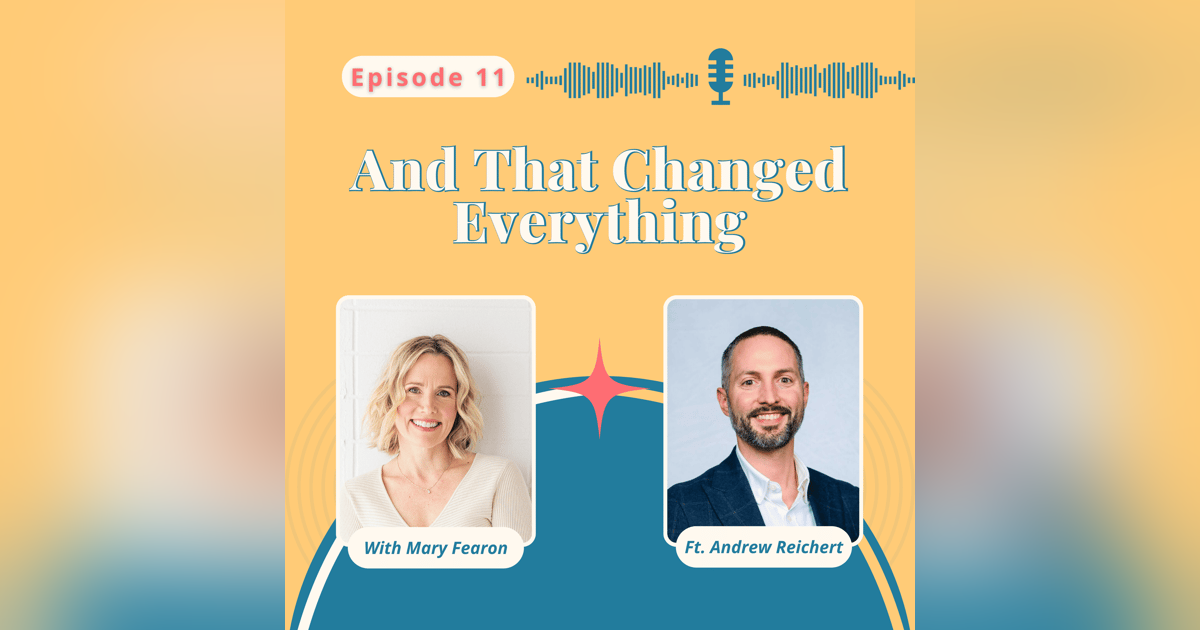


Some turning points don’t just “teach you a lesson.” They redraw the entire map.
In this episode, Andrew Reichert shares three moments that redirected his life: getting expelled from high school, a night that landed him in a jail cell, and a cancer diagnosis in his first year of marriage.
What’s powerful is the clarity that came after: the shift from drifting to designing, from living for himself to living with intention and service.
Andrew’s story is a reminder that alignment isn’t a one-time breakthrough; it’s a practice. We talk about the daily rhythms that help you stay grounded when life gets loud, and why resilience isn’t something you “either have or don’t”… it’s something you build.
What You’ll Hear About
- The “day of reckoning” that came with getting expelled, and what it revealed about identity and approval
- The moment in a New York jail cell that triggered Andrew’s faith journey and a new question: What am I made for?
- Why running “two parallel lives” eventually collapses, even if you’re succeeding on paper
- How cancer reframed time, meaning, and what it really means to “number your days.”
- Andrew’s “Rhino Operating System”: why alignment comes before the charge, and resilience is the skin you build over time
- The morning routine Andrew has practiced for ~10 years, and how keystone habits keep you in the driver’s seat
Resources Mentioned
- Rich Dad Poor Dad - Book
- The Miracle Morning by Hal Elrod - Book
- SAVERS morning routine (Silence, Aation, Exercise, Reading, Scribing) - Video
- Priorities on Purpose by Andrew Reichert - Book
- Enneagram personality test - Link
About Andrew
Andrew Reichert is the founder of Birgo Capital and the author of Priorities on Purpose. He leads with a stewardship mindset, building cultures where people align with purpose and develop resilience to the inevitable adversity life brings.
Where to Find Andrew
Instagram (personal): @rhinoalign
Instagram (Birgo capital): @birgocapital
Birgo capital Website: birgo.com/capital
LinkedIn: Andrew Reichert
If this conversation sparked something for you, share it with someone who’s in a “rebuild” season; the kind where the next right step matters more than the perfect plan.
Follow Us on Instagram and LinkedIn.
Listen to the episode on our Website, Spotify, Apple podcast and Amazon Music.
Mary Fearon (01:16)
Okay, so tell me what is bringing you joy right now?
Andrew Reichert (01:21)
What's bringing me joy right now is honestly my three daughters. They are ages eight, six, and four, and I am just loving every minute of it. We recently celebrated Valentine's Day, and as a girl dad, it's kind of a big thing in our home. I get to spoil my girls, and we just got back from Florida as well, had a nice vacation, and so they're honestly just the highlight of my life, and certainly right now.
Mary Fearon (01:45)
Beautiful, beautiful. So eight, six and four. So my kids are 18 and 20. It's been a long time since I've had the, you know, that age. And it's so fun. Cause they're still at that age, I believe, very into thinking you're like the coolest thing on earth. Like once you get into like middle school, it's a little bit like you don't know anything, you know? Yeah. that's so fun. So what's the best thing about being a dad?
Andrew Reichert (02:03)
Yep. Yep.
⁓ Honestly, just being with a human that I created and getting to get to know them. Like what I really enjoy is learning more about them, being very curious, seeing their curiosity, watching them grow, watching them learn, and just getting to know them. It's the greatest privilege in the world.
Mary Fearon (02:32)
Yeah, I agree with that. I remember when I had my, so my son is the oldest and I think maybe because he was a boy, I realized very quickly I'm not just raising a little mini version of me. Like it was almost like right away I realized, wait, this isn't just me and my own likeness. There's a whole new human here who has hopes, dreams, personality and all of that. And then we have my daughter two years later. And it's so interesting how different they are from each other.
And yet, like, we have a family culture and values and things that bring us together as well, right? That part's pretty cool.
Andrew Reichert (03:10)
Yeah, tell me, can you tell me more
about that? what are the family values and culture that bring you together?
Mary Fearon (03:15)
So it's funny, my husband and I were away for a weekend. We just went to a little town about 90 minutes from here and we were walking around some shops and there was a poster up, like a framed thing that talked about like, I don't know, we laugh, we forgive, we whatever. And it precipitated a conversation about how we are as a family. I'm so grateful that I've got these grownup kids who wanna spend time with us. So we have fun. We are kind. We are...
We are forgiving, like we're, I don't know if forgiving is the first word I would say, but we are, like we take you for what you are. We're engaged in curious people. Like we have really interesting conversations with each other and it all comes from a place of wanting to be together. So maybe that's the engaged piece. Whereas, you know, some people I know, their kids grow up and they have very kind of independent lives.
Andrew Reichert (04:17)
Yeah.
Mary Fearon (04:17)
And our
kids do, I mean, they're off at school now and they're super happy and well adjusted and all of that. But when we come together, there's just a feeling like we fit together, even when they're, you know, spreading their wings and moving on in the world, you know?
Andrew Reichert (04:31)
That's beautiful. And I feel like that's ⁓ such a testament to you as a parent. ⁓ I think there's a lot of similarities in us. I can't remember if we're Enneagram sevens or something, I there's a lot that's similar in terms of how I show up with my kids that I think is similar to how you show up with yours. And ⁓ I love that. I think that ⁓ the groundwork that you laid at a young age is paying dividends as they
Mary Fearon (04:43)
we totally are both Enneagram sevens.
Yeah.
Andrew Reichert (04:59)
get older and you've, know, core values really are just the definition of like kind of who you are, right? Like it's, sets the foundation of your culture and ⁓ having that as a family, I find so few people do. And the fact that you put the time and the intention into that is just such a beautiful thing.
Mary Fearon (05:08)
Hmm.
Mm-hmm.
Thank you, yeah, think, I'm not sure, like we didn't write core values as much as I think we had, and you know, in my relationship with my husband, we are on the same page, we are on the same team, so we came at parenting and family hood very much together, and intentional in a way that like, it naturally came from us and what we think is important. And now I'm seeing it differently because my kids are older.
and I'm seeing them show up independently in the same way. They don't have to, right? So you don't know that that's gonna happen, that they're gonna reflect. And know, like my son the other day, my husband told me that he had texted my mother-in-law, because she's had some health issues, and he said, know, Rosemary, my mother-in-law is just over the moon about it. And nobody asked him to. Like he's 20 years old at university. He could be drinking beers and watching hockey, and he's texting his grandma.
Just showing up that way without, yeah. Anyway, so yeah, I'm just, yeah.
Andrew Reichert (06:19)
So cool.
Yeah,
I love that. actually think ⁓ something you said there is really important. know, core values are not ⁓ like created, they're really discovered. Like they already exist in your family. You're just naming them.
And so we have actually a similarity. Now our family actually does have them like on a wall because I'm crazy like that. ⁓ But ours spell out the acronym PILLAR. We call them our family pillars and the P is actually for playfulness. And it was one of those things where not every family has that, but it's so true of our family. Like we just have a spirit of playfulness and we smile, we have fun, we genuinely like play all the time.
Mary Fearon (06:45)
I love it. Yeah.
love it.
Andrew Reichert (07:08)
We do a family meeting on Sundays, but we wrap up our family meeting with a family fun activity, and our kids get to pick the family fun activity, and it's just so much fun to just play together. I feel like it keeps me young, it keeps us all young and really united.
Mary Fearon (07:13)
Yeah.
What a cool intention to have. So give me some examples of the things you've done that are playful and then what the kids come up with.
Andrew Reichert (07:32)
Yeah, mean, it's, ⁓ well, we take a lot of vacations together, a lot of trips. I mean, we go to Disney and just act like kids. And my wife and I are just that way as well. really our culture is an extension of who we are, especially with how young our kids are. Like they're not impacting the culture as much as they're a part of it. But I think as they get older, they'll impact it they might even change our core values in some way, which will be fine. ⁓
Mary Fearon (07:48)
Yeah.
Andrew Reichert (07:58)
But I think just having a spirit of play, particularly on vacations together is a lot of fun.
Mary Fearon (08:04)
I need to hear your remaining LLAR or in the pillar, in the pillar of values. But first, let me just introduce you to all these people who've been hearing us talk for however long we've been talking.
Andrew Reichert (08:02)
Yeah.
You got it.
Mary Fearon (08:18)
I am speaking with my friend, Andrew Reichert. He is the founder of Birgo Capital, ⁓ I guess, headquartered in Pennsylvania in the real estate investment game. ⁓ But you already heard him say he's, what do you call yourself? You are a family person who has a business?
Andrew Reichert (08:35)
Yeah.
Exactly, not a businessman with a family, I'm a family man with a business.
Mary Fearon (08:42)
I love it. I love it. So thank you for joining us. And now everybody's on the edge of their seat waiting to hear what the remaining values are in your acronym.
Andrew Reichert (08:52)
Love, loyalty, authenticity, respect.
Mary Fearon (08:56)
Beautiful. How did you, when did you go through that process?
Andrew Reichert (09:01)
A few years back, we were kind of setting our parenting philosophy and ⁓ it really, again, I think they'll probably change at some point because the kids were so young that they didn't really get to speak into it. It was more, what is the culture that we want to create? How do we want our kids to feel honored and important and ⁓ part of our family that they have their own significance and belonging? And so it's really out of that.
Mary Fearon (09:17)
Mm-hmm.
Yeah,
that's cool. I I hear from you there that there's intention in that and I love that you're open to it changing as new voices come to the table on it, right? Like that they, and then it is true. And I mean, I don't know if I was intentional about this as I don't know if I was as intentional or consciously intentional about it as you are at this stage of your kids' lives. But ⁓ I love that
you recognize that the kids, like every time you bring a new personality into a dynamic, it shifts the culture. And so as your kids grow up and find their own voice and their own priorities, it might shift. And then some things will stay the same, which I've been so grateful for with my kids.
Andrew Reichert (10:09)
Yeah.
Totally, what are
some things that have stayed the same for you?
Mary Fearon (10:16)
Well, you know, some people will ask me, I remember I bumped into some people on train into the city and it was their anniversary. was their, they were booking their wedding and I was my anniversary and we were just like standing on the train platform, this young couple that was getting married and then I was like, oh my gosh, it's my anniversary today. And they asked me, what is the secret? And I just automatically said kindness. Like we don't want to hurt each other ever.
We disagree, we get frustrated and all the things that you would imagine in a family, right? Like, why don't you do this or whatever? Feelings can get hurt and stuff like that. But there's always this center, ⁓ like I guess guiding principle of like, don't hurt the other. Like we don't want the other person to hurt. And so similarly with our kids, even though they bicker and they all have the kid things, they're still.
kind people first. And even when they're mad at each other or frustrated, it's still in the envelope of respect. Like I respect you, you should respect me. Like there's just this... And that to me hasn't changed. It's like part of their character, which I just think is so beautiful. I love it.
Andrew Reichert (11:34)
It really is beautiful and unique. I think that that is a unique thing and takes a lot of humility because the most natural posture is, well, I'm right and you're wrong. so like, just figure out that you're wrong and then like we can get on with it, right? But I think to actually be able to say, okay, yeah, we can disagree, but I'm going to be kind to you.
Mary Fearon (11:49)
Mm-hmm.
Andrew Reichert (11:55)
It takes a recognition that that person is as important as you and it really takes like kind of a servant's heart actually to be willing to be kind to a person that ⁓ you disagree with.
Mary Fearon (11:59)
Mm-hmm.
Yeah, that's so interesting. ⁓ And beautiful, I never really thought about it that way. ⁓ You know when you bump into people and couples when they don't have that, and it's such an uncomfortable situation for everyone to be in. ⁓ And kids in school, you see it happen and our kids are just never like that. And it's true, the admitting that you're wrong isn't easy, but also you want your kids to learn that.
And you can in the hierarchy of a family, you could totally establish the because I said so and I'm mom and your child and move on. But what are you teaching the human as they grow up in the world if they're gonna model that behavior? I mean, yeah, swallowing pride and saying, you know what? I did not do well there. Anyway.
Andrew Reichert (12:49)
Exactly.
Yeah, it takes
a lot of humility, but I think it's really what helps to raise great kids and live a fulfilled life.
Mary Fearon (13:04)
Mm-hmm.
Yeah, which is beautiful. Okay, so we're here because we want to know how you got to this place with family values on your wall and family fun nights. And I think you even have a weekly family meeting, don't you? Didn't you say that? Yeah, yeah, like this is a very intentional life you're on and I know you've written books about it and you've instilled it in your company. So I want to hear about the few moments in life that you know,
Andrew Reichert (13:19)
Yeah.
Mary Fearon (13:33)
created a pivot or a trajectory in this direction and you now that you're where you are where you are and you're looking back which moments would you pick that created that for you and let's start with one that goes like the furthest back
Andrew Reichert (13:47)
Furthest back. All right, that's a good question. We're gonna go so far back, I'm gonna be a little embarrassed. ⁓ So, you know, I lived a bit of a rebellious childhood. you know, through middle school and high school, I was selling drugs, doing drugs, just kind of running all around doing things I shouldn't have been doing, and ultimately ended up getting expelled from high school.
Mary Fearon (13:53)
I love it.
Andrew Reichert (14:13)
It was really a catalytic moment in my life because everything kind of felt uncertain, uncomfortable. I was really not entirely sure how I had gotten myself into such a bad situation. I wasn't sure about my future. And yeah, really, it was a day of reckoning. My behavior had finally... 2003. My senior year of high school. Yeah.
Mary Fearon (14:30)
Yeah.
What day was, what year was that? What year in high school?
Senior, so grade 12, okay. ⁓
my God, okay. Now, could we back up? Because you had said that you don't know what really got you there, but I mean, obviously the reality of life hits you in the face in a moment like that. when you look back, like how in those middle school years, some kids are doubling down on basketball or whatever, and you're an entrepreneur.
Andrew Reichert (15:03)
Yeah, right. I actually
say, ⁓ while other kids were cutting grass, I was selling grass. I got my starts in entrepreneurship at a very young age. ⁓ Right, exactly. ⁓ No, if I really do a little bit of introspection there, ⁓ I was always trying to seek approval. ⁓
Mary Fearon (15:08)
You
Market opportunity. ⁓
Andrew Reichert (15:32)
And I don't fault my parents. They were divorced when I was three. So it's not really their fault. But I think, ⁓ you know, kind of a bit of a latchkey kid bouncing around between the parents and ⁓ feeling like maybe a bit of a lack of stability ⁓ really ⁓ made me, you know, now I'm the class clown and I'm like seeking approval. I'm seeking attention. I'm trying to get ⁓ what I think.
I need in places that are the wrong places to get it. So suddenly I'm the, again, the cool kid in class, the class clown, and it just leads down a path of ⁓ recklessness really. ⁓ You never really can arrive. You're always trying to do something to get yourself to that next level, and really with very little self-satisfaction and fulfillment.
Mary Fearon (16:03)
Mm-hmm.
Right.
Yeah.
Mm-hmm. Like I can appreciate even in my own life those moments where doing the wrong thing or it's like provocative. It's very compelling to go and you know, take the risky move to you know, to stand out for different things. like and you know, there's some critical moments in kids lives where you make a decision that might feel like 2 % in one direction. But then all of a sudden you're moving down that path and it sounds like
One thing led to another, led to another. It got bigger. You did more of it. And then all of sudden, so how did they find out? Like, how did school find out you were doing this?
Andrew Reichert (17:09)
Yeah, so basically, I mean, we were selling weed, smoking weed, and ⁓ I drove into school one day and smelled like weed and walked through the hallways and ⁓ they basically ⁓ said, hey, we're impounding your car. ⁓ They searched my car, they found all kinds of stuff. And since it was on school's campus, they basically said, we got to expel you.
Mary Fearon (17:35)
Wow, that's crazy. That's like a sting operation. That's like they knew one day we're going to catch him.
Andrew Reichert (17:38)
Yeah.
Honestly, yeah, it was really an interesting dynamic because I was, I'd say like relatively good student. ⁓ I always got good grades. I was actually teaching myself AP calculus, AP statistics, and AP physics in alternative school. So after I got expelled, I ⁓ went to an alternative school. I was there for
Mary Fearon (18:03)
Wow.
Andrew Reichert (18:05)
They were learning ninth grade geometry and I'm in 12th grade teaching myself AP stuff. so I honestly think the school didn't want to expel me, but they were like, we have to expel you. Like, you're an idiot. ⁓ Now, I had actually already gotten accepted to college when I got expelled. And so the college or the high school that expelled me sent my transcripts to the college and I went to college, which is like kind of a crazy thing.
Mary Fearon (18:11)
Wow.
That's wild.
Andrew Reichert (18:33)
I ended up in college. had 10 college credits when I got in there, almost an entire semester of college completed because all that AP stuff. I...
Mary Fearon (18:42)
So getting kicked out of school advanced your...
you got further ahead by learning by yourself? That doesn't say much for school.
Andrew Reichert (18:50)
Right, right, exactly. I mean, honestly, I just, I was always a hustler, you know, I, even in high school, I, the reason I got good grades is because I would find a way to get good grades. I mean, it was just, that's just how I was. I was a hustler. ⁓ So it's really the hustle that, ⁓ you know, got me into college and got me 10 college credits more so than anything else.
Mary Fearon (19:01)
Hmm.
Right.
So when you say hustler, tell me what you mean by that. Because I have like my own vision of it, but I think it can mean a couple of things.
Andrew Reichert (19:20)
Yeah, I think it's like two things when I think of it in that context. One, ⁓ finding ways to make things work. ⁓ like an amount of grit or stick-to-itiveness that is like ⁓ not taking no for an answer. It's like I'm going to make this happen because that's what I do. ⁓ And then two, I honestly just think about like a pace of action and activity. ⁓ This is actually something that I'm pretty
Mary Fearon (19:36)
Mm-hmm.
Yeah.
Andrew Reichert (19:50)
⁓ adverse to these days, which is like, you know, hustle culture. ⁓ Hey, just work, you know, 120 hours a week, it's fine. ⁓ But that is what that is who I was. ⁓ until I actually was on the brink of burnout professionally, that's just who I was. I would hustle, I would get things done, I would move quickly and ⁓ and just get stuff done. So it's kind of this combination of those two things is what I think of.
Mary Fearon (20:04)
Okay.
Okay.
Yeah.
I was, it made me think of, so I thought that too, like the, I'm just going to push through. I'm going to do whatever it takes. But then I also think about the hustler who's like the, ⁓ I'm going to figure out a way. It could mean I know the girl sitting next to me gets good grades. So I'm just going to borrow her, like, like the shortcuts, the, yeah. And I, I, ⁓ Bill Gates, I think once said he loved to hire lazy people because they would find the best route, take like the most efficient way to get something done.
Andrew Reichert (20:36)
Yeah, totally.
Mary Fearon (20:47)
Right? Like, you know, the goal is to get to the other side of the city. You're going to figure out the best way, the fastest way, the least resource intensive way to get there.
Andrew Reichert (20:57)
that. That's really good. I think Bill Gates is totally right on that in terms of how I used to think and operate. It's like, okay, I'll take every shortcut possible to get there. And I do think of that a little bit in terms of the word hustle, even just like drug dealing. I mean, that's like a that's a hustle, right? ⁓
Mary Fearon (21:08)
Yeah.
Andrew Reichert (21:16)
So broadly, I would put that all in that first category of like, I'm gonna find a way to get it done, whether it's legal or not, whether it's ethical or not. And again, I'm actually not proud of that today because that's not at all who I am or how I operate today. But I do think that's, you're just asking about the root cause of expulsion. Like that was definitely it.
Mary Fearon (21:36)
Totally.
Well, and so this brings me out, because I think it's really interesting. You mentioned that you're not proud of it, obviously, but it's part of who you are and your story, like the day of reckoning. It's that like I have moments like that in my past too. Like I barely graduated from high school because I just never showed up. Like I was just like, I like friends better. I instability in school with parents and stuff like that too. So I'm not proud of that. But then I'm like, huh.
At some point in time, I had to realize that if I wanted to do something with my life, I had to figure it out. And I don't know that if I had followed the normal path that everybody had followed, if I would have had that conversation with myself, and then I would not be here.
Andrew Reichert (22:19)
Yeah,
totally. So, by the way, I look back at my past, ⁓ you know, as shaky as it was, with actually a lot of gratitude and ⁓ total acceptance and appreciation for that. you know, had I been able to do things differently and not get expelled, who knows what would happen? Yeah, maybe I wouldn't have. ⁓
been such an entrepreneur and wouldn't have the business that I have today and have the privilege of getting to run this business. And so I definitely come at it with the perspective of everything happens for a reason and nobody needs to go back and change their past. do though, ⁓ specifically on doing things that are not legal and not ethical are just not things that...
Mary Fearon (22:47)
Yeah.
Andrew Reichert (23:10)
even cross my brain today. So there's like a transformation there that I'm really proud of that I just wanted to kind of underscore.
Mary Fearon (23:20)
Yeah, it totally makes sense. And also, perhaps because you have that experience, you're more intentional about that than maybe other people would be because they don't think about it very much, right? So when faced with those things, maybe you're just a little bit more aware and dialed into it because of it, maybe.
Andrew Reichert (23:40)
Yeah, I think that's a great
point. Yeah, I think that's definitely true. you kind of have to have been on both sides to really appreciate both sides. So I think that there's a lot of wisdom there.
Mary Fearon (23:49)
Yeah.
So tell me then when you were selling the drugs and doing the drugs and I mean, in a way, maybe you thought you were gaming the system. Like I'm doing fine in school. I'm making extra cash on the side. I get to do the thing that feels good, whatever. ⁓ So how did you see yourself? Like I think about, ⁓ you said I was a hustler. I'm a hustler. ⁓ What are some of the other, like how would you describe yourself then? Are you the kid? you know, like I was the kid in my head. I was like, you know.
I'm smart, I know I'm smart. I'm gonna go somewhere. gonna like, you know, I've got a future ahead of me. I just did nothing to back it up for chunk of my teenage years, but my identity was very much like, I'm going places. And I think that ultimately that identity carried me through the massive failures and stuff. Like I actually graduated but didn't graduate. Like I still had to do a class in the summer, but I was able to show up at the event. Anyway.
Andrew Reichert (24:46)
Yeah.
Yeah, I think again, there's a lot of parallels. So like we were making a joke about Enneagram 7s, us both being that, you the Enneagram really is developed by some of those childhood experiences and how you viewed yourself and where you find safety and, you know, some of those deeper rooted things. So I would just say very similar to you, honestly. I did always view myself as like an achiever and, you positive influence and visionary and
Some of that is like the non-rule follower in me. And ⁓ that's what's helped me to build my business. It's like, I'm not just going to do the traditional path. I'm going to do something different.
Mary Fearon (25:25)
Mm-hmm.
Andrew Reichert (25:33)
So I would say, that's sort of how I viewed myself. Also, some of the things I mentioned that I do think are a little different today, which are like the class clown, the popular kid or whatever. Like I put that on myself and in some sense that was actually a little bit too much of a weight to carry because I felt like I had to live up to that. that was maybe a little bit of a...
Mary Fearon (25:48)
Mm-hmm.
Yeah.
Andrew Reichert (26:00)
sort of view into myself that wasn't totally an accurate picture.
Mary Fearon (26:04)
That's so interesting. So I studied positive psychology for a period of time. And one of the lessons that stood out for me is when we are born, we are our true selves. Like as babies, they cry one second, they laugh the next second. But very quickly we learn in our family structure what behavior gets rewarded and what doesn't. And then you go into school and it's even more hardcore because kids and social structure can be terrible, right?
So we have this true self we want to protect, but then through our family and through school and cultures and all of that, we get this image of who we should be. And we live into that image because we're protecting the self. We have a fear of being rejected, which I think all of us have. All human beings have a fear of being rejected because we need community. We need connection to survive. And so we live into an image and then we spend our entire adult lives trying to go back to who our true self is, like trying to get to know our true self again. Right?
Andrew Reichert (27:02)
Yeah, it's so true. it's something I'm super conscious of with my children now. I try to... So one of the things we don't do with our children is label them. So like, ⁓ you're so smart. you know, like... Then that kid starts thinking, I'm smart. I need to be smart. ⁓ I need to be smart for my parents' approval, blah, blah.
Mary Fearon (27:04)
Yeah.
Mm-hmm.
Yeah.
Andrew Reichert (27:24)
And that just creates that cycle. And so I think it's exactly what you said ⁓ is something really all of us continue to kind of work through.
Mary Fearon (27:34)
yeah, it's hard. It's hard. Like, you know, when the kids will achieve something, I remember learning once, like, when you say, I'm proud of you, you're taking ownership of that achievement. So I will always say, you must be so proud of yourself for doing the thing, you know, like as opposed to, yeah, it's so interesting how these little things. Yeah.
Andrew Reichert (27:47)
Yep. Yep.
We do that same thing, yeah. Yeah, we do the
same thing. You worked really hard at that instead of awarding the result, you award their hard work and then, you must be proud of yourself instead of I'm proud of you. It's like, same exact thing. We use the same language at our house. It's so good. Yeah.
Mary Fearon (28:04)
Yeah.
Unsurprisingly.
Okay, so you said you had a day of reckoning when you got kicked out of school. Is that when you stopped selling drugs? Is that when like your, your, that like that trajectory was over? What changed in that moment?
Andrew Reichert (28:23)
To be totally honest, no, that is not when the ⁓ full trajectory changed. So just to fast forward a little bit, I go to college. I really...
Instead of applying myself to getting into trouble, I start really applying myself to school, ⁓ read a bunch of books, read books on ⁓ investing in real estate, rich dad, poor dad, and ⁓ say, okay, well, I want to be an entrepreneur. want to invest in real estate. And the year I graduate from college, I buy a duplex with no cash, no credit, no experience. ⁓ I end up getting a really prestigious job. So like I graduate top of my class, really prestigious job. But all of this stuff is really just building the narrative of
⁓ performance, people pleasing, know, some of these things that were really the narrative for my early life as well. ⁓ And I'm just still getting in trouble. Like, I'm still living recklessly, drinking too much. ⁓ The real, real day of reckoning was a few years into work. ⁓
Mary Fearon (29:08)
Mm-hmm.
Andrew Reichert (29:29)
Again, great job, earning a great income. They're like flying me to Bermuda for ⁓ celebrations and stuff. It was amazing. no, was a regional bank. I was at like a regional bank here in Pittsburgh. So I end up going to Manhattan, New York for a weekend ⁓ and actually getting locked up. So...
Mary Fearon (29:38)
Was it in real estate? Like where was this job?
Okay
Okay.
Andrew Reichert (29:57)
I'm facing a, yeah, so I'm in jail in a holding cell with 20 other guys that got locked up that evening and I'm laying on the floor, on the concrete floor, like the toilet is in the holding cell with us, disgusting conditions. And ⁓ that was really where I ⁓ had the wake up moment. It's like, okay, I'm tired of...
Mary Fearon (30:11)
Yeah, gross. Yeah.
Mm-hmm.
Andrew Reichert (30:25)
this lifestyle and I'm ready to, instead of living for myself, live for others. And I had this felony charge that I ended up, know, being, the charges got dropped, you know, it was a non-issue, but that was really my wake-up experience where I said, I'm gonna live a different life from here on out.
Mary Fearon (30:32)
Mm-hmm.
You know what's so interesting is that you get kicked out of school, but you're smart, you do the work, you go to university, you get a good job. Like you're able to up until this point run parallel lives. One is like, nobody would know under the surface I'm doing all this stuff. And you know, I don't know, this hedonistic lifestyle that you're describing. ⁓ So it would be easy to say you could successfully do those two things at the same time forever and ever.
Andrew Reichert (31:17)
And yet you cannot.
Mary Fearon (31:19)
So you just glossed over
how you ended up getting locked up. Was that on purpose? You don't want to tell us what you did?
Andrew Reichert (31:26)
Now
I'm happy to tell the story. I was ⁓ at a club that is now shut down and me and a bunch of my friends and we're drinking and ⁓ there are like these three guys that are ⁓ in this ⁓ nightclub bar that are ⁓
being antagonistic to sort of everybody around and pushing people and they end up pushing some of the folks that we're with. one of these, ⁓ was me and a couple of my guy friends, couple of my girlfriends, one of the girls gets pushed and ⁓ yeah, and so I try to break it up and ⁓ they basically jumped me, these three guys jumped me. And so, ⁓
Mary Fearon (32:09)
Mmm.
Andrew Reichert (32:13)
The bouncers are like not breaking it up. And I find out later that these guys were kind of in cahoots with the bouncers in the club. That's why I got acquitted. The video footage in the nightclub got me out of it, yeah. So it showed that they had jumped me and antagonized me. But what ended up happening is in self-defense.
Mary Fearon (32:21)
⁓
Show that.
Andrew Reichert (32:35)
And I had been in a bunch of fights at this point, maybe 30, 40 fights. Again, I'm not proud of it, but I knew how to defend myself. So I knew that these three guys were much bigger and could take me. And so I grabbed the beer bottle and ⁓ yeah, defending myself with the beer bottle, broke it over the one guy's head, stabbed the other guy with it, blood just everywhere. So one of those guys goes away in an ambulance and I go away in a cop car.
Mary Fearon (32:47)
Wow.
Holy
smokes, I was about to swear, which I think is fine on my podcast, it's my podcast. I was about to say, holy shit, anyway.
Andrew Reichert (33:05)
night.
Now, you know, it wouldn't be the worst thing I've seen. You could swear in front of the guy that's been locked up. So
Mary Fearon (33:11)
No kidding,
yeah, no kidding. ⁓ That's kind of a scene out of a movie though. Like you're like Patrick Swayze in what's that movie he was in with the bar fighting? Roadhouse. That's old. It's probably in the 80s. But anyway, that's a scene out of a movie like cracking the bar, the beer bottle open and then like, yeah.
Andrew Reichert (33:25)
Yeah.
⁓
It definitely was, it
was absolutely crazy.
Mary Fearon (33:33)
Yeah. Okay. So you said something really interesting that you're on the prison floor and there's a recognition moment that this is all very like, it feels like you're like, I know that I'm reckless and selfish and all for me, whatever. And you're saying now I'm not going to do this anymore. What do you think? What was the big intervention there? Cause you didn't actually do anything wrong. Like you, other than you may have brutally.
injured somebody, but in your own defense, right? You know?
Andrew Reichert (34:07)
Yeah. Yeah.
I think I kind of was doing things wrong, honestly. Like, my perspective is that... Well, I guess it depends on your worldview. So, not to say that there are absolute, like, right and wrong things, but at the same time, I... Like, honestly, if I just examined my heart in that time, it was not in a good place. Like, I was very much...
Mary Fearon (34:14)
Okay.
Andrew Reichert (34:37)
selfish, ⁓ very much habit forming, drinking too much, doing all those things. And ⁓ I really was at a place I shouldn't have been doing things I shouldn't have been doing. That's the reality of the situation. ⁓ So yeah, if I look back on that, I did need that wake up call ⁓ to not be at places I shouldn't be.
doing things I shouldn't be doing.
Mary Fearon (35:08)
I got you. And so was the epiphany about being in service to others? Was it like looking around you and being like, this is not what I want for my future. I'm trying to understand. it like an external like, wow, this is how bad it can get? Or is it a moment where like you like, you know, you just said, if I looked, if I looked at my heart in that time, it wasn't in the right place. So I'm just wondering what, what hit you? Cause that's a pretty big moment.
Andrew Reichert (35:37)
Yeah, it's a great question. I mean, for me, this sort of intersects with my faith journey. So, ⁓ you know, not to ⁓ speak too much about my own personal beliefs and my own personal faith, but this was where I became a person of faith. And so, ⁓ on that jail cell floor, you know, at the worst possible conditions, ⁓ I heard this voice inside me, which I would
Mary Fearon (35:55)
Okay.
Andrew Reichert (36:06)
the voice of God, you might say the universe or something else, but I heard this voice inside me say, Andrew, you were made for something more than this. And so, that was really the, okay, I was made for something more than this. What was I made for? Right? Like, I started asking myself that question. And really, that began a journey of me—again, I talked a little bit about ⁓ serving others instead of serving myself, but it began a journey of ⁓
Mary Fearon (36:14)
Okay.
Mm-hmm.
Andrew Reichert (36:36)
thinking more holistically about the meaning of life and my own individual purpose and why I exist and why we're all here. ⁓ And so was really that jail experience was a waking up to asking what I think are the right questions, really the most important questions that helped me to ⁓ be aligned with, you know, my individual purpose.
Mary Fearon (36:43)
you
I can appreciate that in a place and time where everything else is stripped away. What else is there? But for you to ask like, why am I here? What is this life for? What can I do with it? I can totally appreciate that. And I think I'm glad you brought up faith. I know that in the world, like people tend not to talk about it, but it's such a presence when people feel the connection to something greater. is such a presence in their life.
I've been on my own faith journey over years. ⁓ And there was real skeptical times where I was like, come on everybody. We all know we're just a bunch of animals that evolved from whatever. Like I definitely, I've gone there. And in those moments, I've been envious of people who have strong faith. Cause I'm like, man, like wouldn't life be so much better if I had a strong connection to something bigger.
You know, and that's it, you know, in so many ways it's a choice to allow that in or not. So I'm glad you brought it up because ⁓ people, when we're connected to something bigger than ourselves, we have then the ability to channel purpose, service, feel our sense of contribution and all of that, right?
Andrew Reichert (38:24)
Totally, yeah. I you mentioned positive psychology and that you've done ⁓ some education there. And I think that that's just, like, generally a proven fact. Like, when people have that purpose and it's bigger than themselves and they're connected to something bigger than themselves, they're happier and they have a more fulfilled life. It's just straight up statistics. So... ⁓
Mary Fearon (38:28)
Mm-hmm.
Yeah.
Totally. Yeah.
Totally.
then one level below that is happier people perform better. So happier people do better in the world as well. Even if that's not the express reason that they believe in something bigger, it just like the positive spiral of that is seen, know, generationally, know, generations ahead of them too, right? Because then you impart that on your family, like all the things.
Andrew Reichert (38:53)
Yeah.
Yeah.
Totally. Yeah.
Yeah, and look, don't want this to sound like me tooting our own horn, but ⁓ we have a little over 100 employees and our employee engagement is top 1 % in our industry. So we do an employee net promoter score every quarter and we track it and we benchmark against the industry. top 1%. And I truly believe that is because
Mary Fearon (39:30)
Wow.
Andrew Reichert (39:40)
we developed this system, we call it the Rhino Operating System. I talk about my book, I know we're big on the rhino over here, it's kind of silly, but yeah, yeah, I will. But it's really all about helping people live into their purpose. it's who are you, how are you uniquely made?
Mary Fearon (39:47)
No, I think it's amazing. We have to tell us why Rhino, but yes, keep going.
Andrew Reichert (40:00)
What's your unique DNA? Never before been created, never gonna be created. Like what's unique about you? Why are you here? So like what's your purpose? Why do you exist? You know, what's sort of your mission? And then what is really the combination of your purpose, your passions, and your proficiencies? We call that your convergence zone. So we try to get every single one of our employees having at least 50 % of their time in their convergence zone, the combination of those three things.
Mary Fearon (40:04)
Mm-hmm.
Beautiful.
Andrew Reichert (40:28)
And because of that, speaks for our employee engagement speaks for itself. Our people are more engaged, which to your point leads to better performance. And so it's just like, it's a proven thing that anybody can do this. Like anybody else can have engaged, high performing employees just by helping them with this concept of purpose.
Mary Fearon (40:37)
Mm-hmm.
my gosh, we could go down a bunny trail on this because it's so is it the job of the employer to help people find their personal sense of purpose? No. But is it is the is the company going to suffer in the absence of that? Yes. You know, absolutely, absolutely. And it's funny because it feels it can feel like an intangible and, you know,
Andrew Reichert (41:07)
Yeah
Mary Fearon (41:16)
over the last hundred some odd years, we've trained people to think of a job as a job. And if you do a really good job, you get paid well and you get more vacation away from the job. you know, so it's this, it's this thing you have to do to put a roof over your head or whatever it is, but as humans, we're wired for contribution. And so helping people dial into their best way of contributing is the best for the quality of their life and the best for the quality of the things we can do together. Whether, you know, whether it's
in our work or in our communities or in our church or whatever it is, right? It's crazy.
Andrew Reichert (41:50)
Yeah,
totally. And I want to actually dig into something ⁓ that you said there. So you said, it's not our job to help people identify their purpose and live into it. And I think that that is true generically. Interestingly enough, I do think it's my job to help my 100 employees do this. And that's based on my principle of stewardship. Like, I view everybody that works here as a part of my flock.
Mary Fearon (42:16)
Mmm.
Andrew Reichert (42:21)
and I am shepherding that flock and stewarding that flock. so, one of the things that's probably a little bit unique about me is, again, I know what it's like on the other side. So again, if you just look at my first 25 years of life, I tell people I was like a boat without a rudder. I was just going wherever the wind would blow me. And then I look at the last however many years of my life and I'm like, this is what...
Mary Fearon (42:39)
Mmm.
Andrew Reichert (42:47)
alignment looks like. And so, you asked the question about the rhino, why we call it the rhino operating system. It's really a picture of two things. One is alignment. So, the rhino has to align itself before charging, otherwise you get a rhino just like, you know, flopping all around. And two, resilience. So, the rhino has this thick skin to withstand life's adversity. And so,
Mary Fearon (42:53)
Mm-hmm.
Mmm.
Andrew Reichert (43:15)
I view it as my responsibility when I look at all my employees to make sure that they're aligned and resilient, because life's adversity is coming. know, one of the things that happened to me, this was after the jail situations, I actually got diagnosed with cancer. So, this is in my first year of marriage, we're newlyweds.
Mary Fearon (43:32)
my God.
Andrew Reichert (43:37)
and I'm being told I need to have surgery, chemotherapy, I might not make it, and we may never have kids if I do make it. It's like a big deal, right? So, you know, and it's another thing when I... Yeah.
Mary Fearon (43:46)
Wow. Huge.
What are you like 32 or something at this point? 33, like you're young at this point
where this is like, yeah, that is a lot. Yeah.
Andrew Reichert (43:58)
Crazy, yeah, I just turned 30 actually.
So ⁓ it was crazy. I look back now and I say, I never would have asked for cancer, but I'm actually grateful that I had it because it was another one of those things where I learned.
what it meant to be resilient. so with our employees, I think of that all the time. It's like, look, life's adversity is common. There's nothing you can do to stop the adversity. What you can do is build resilience. And so that's what our Rhino operating system is meant to do. It's like we help people build resilience and get aligned to their purpose, passions, and proficiencies.
Mary Fearon (44:37)
Right,
which is beautiful. I love the way you see it. And I think the world desperately needs more leaders to see their responsibility and stewardship in that way. 85 to 87 % of the world's employees are unengaged in work and that's a gallop stat and it hovers plus or minus two points depending on the year. what's the problem with that?
It's because we're not addressing the soul of the human being and tapping into their own sense of who they are, what they're meant to do, how can they channel their unique gifts? And it can be in any job too, like the research still shows as well. It's not just in, some people might say, well, some jobs are more meaningful than others. Or like if you work for a charity that's inherently more meaningful than if you're at a company that makes widgets. The truth is you can make meaning in any role.
You can create, can map the story to why it matters, provided it is ethical. And it's not in the drug cartel or whatever. And you know, you know, you know, there's no, there's no deep, yeah, there's no deep connection to that or commitment. So, okay, that's incredible. So if I, so in this conversation so far, we've talked about getting it spelled from school.
Andrew Reichert (45:45)
Totally.
which I've been there.
Right.
Mary Fearon (46:06)
going to jail, and now cancer.
Now, would you say those are the big three moments of your life? Because I know that there are, I mean, obviously there's many other things. There's the business, there's the family, there's all those things too. But when you think about who you are today and the path you're on and the mission you have personally and professionally, personally with your family and professionally, right? ⁓ Would you pick those three?
Andrew Reichert (46:35)
Those are the three moments that I would say changed everything, kind of to use, you know, the language that you're... ⁓ But I think there were many other moments that defined who I am today. So those are the three that I would say were catalytic in that, like, I was going this way, I'm now going this way. I was thinking this way, I'm now thinking that way. ⁓ But...
Mary Fearon (46:41)
Yeah. Yeah, yeah, yeah.
Mm-hmm.
Andrew Reichert (47:02)
getting married was a huge moment in my life. Having our first daughter named her Ava Victoria because that means like her life is a victory. We didn't know if we'd be able to have children and now I'm holding a human that I created, you know? ⁓ And so there are many other moments in my life that I would say we're defining in a sense, but maybe a little bit less catalytic, you know, direction changing.
Mary Fearon (47:14)
⁓ that's beautiful, yeah.
Mm-hmm.
Yeah, yeah.
So when it comes to the cancer diagnosis and is that you mentioned resilience is that really where because it seems like over the course of your the 10 years from the high school moment to that you're building a philosophy of life you're now uh you've connected to your faith you are wanting to be in service is the cancer moment the test of the challenge
like, challenging the structure, challenging the philosophy, saying, this true? How do I get through this? Like, what's the...
Andrew Reichert (48:06)
you asking like, why did cancer happen or how did I interpret it?
Mary Fearon (48:12)
more about how you interpreted it. Because it sounds like you were, like the other things put you on an intentional path, connected you to your faith, gave you a sense of purpose and service. And then you get this like, wait a minute, life as I know it is completely different. So, and then you come out the other end, you've got the rhino operating system, it's all about resilience. So I'm drawing a map between cancer and resilience, I guess.
Andrew Reichert (48:15)
Yeah.
Hmm.
Yeah.
Yeah.
Yeah, yeah, I'll tell you what, I, in the moment as I was going through it, I was actually very, very positive. So.
I had already had these epiphanies from the jail and know, expelled and all that stuff. like, I would go in to get chemotherapy and we were like baking cookies to give to the nurses and I'm doing push-ups in the, you know, hospital room while I'm connected to the IV to get my chemo. Yeah, like I was just, I was like, this is no big deal. I was like, I'm going to beat this cancer. This cancer's got no chance. ⁓
Mary Fearon (48:59)
⁓
my gosh.
You're hustling your
way through cancer.
Andrew Reichert (49:14)
I'm hustling
my way through cancer, yeah. So I had already built, in my opinion, the muscles of resilience. I think that cancer was actually just, maybe this is what you were kind of getting at, like, I was able to see myself get through that and to prove to myself that I had built those muscles of resilience.
Mary Fearon (49:34)
Right.
Andrew Reichert (49:35)
So I
Mary Fearon (49:36)
Right.
Andrew Reichert (49:36)
viewed cancer at the time as, this is no big deal, I'm gonna get through it. And honestly, my perspective at that point, again, because my life was totally transformed, my perspective at that point was, even if I don't, like even if I die, that's okay too. ⁓ It taught me to number my days, to recognize that every day is important and has weight and is...
Mary Fearon (49:51)
Mm-hmm.
Andrew Reichert (50:00)
valuable and to really think about how I show up day in and day out for today, my wife and my kids and everybody, that wouldn't have happened without cancer. So I have a lot of gratitude actually for cancer as I look back on it.
Mary Fearon (50:13)
Yeah,
that's incredible. Question for you, because now it sounds like you live intentionally and you think about how you show up every day. I mean, I certainly live that way. I created a GPT to remind me of my identity statement, my contribution statement, my guiding principles. And I can ask every day, like, how do I start, how do I, how to start my day on purpose, right? So I'm definitely like in that world of getting it. I don't always.
live up to it. And so I'm curious for you, know, on the days where, you know, things go sideways or maybe you're not feeling your best. How do you, do you have tools or tactics for getting yourself back on the intentional path?
Andrew Reichert (50:57)
I do. ⁓ And again, not to be self-promoting, but I wrote a book about it. ⁓ It's basically like the thing that I talk about. So I talked about the first three components, the who, the why, and the what. The next component is actually the how. So it's like...
Mary Fearon (51:03)
Yeah.
Mm-hmm.
Andrew Reichert (51:17)
you have to recognize that, again, adversity is common. What are you doing day in and day out? And the how component is really all about rhythms of execution. So it's, what am I doing every day, every week, every quarter, every year that's going to align me to get into my purpose, passions, and proficiencies? ⁓ So yes, I have a lot of those. ⁓ I'll just share a couple. I'll share, first of all, the most important.
Mary Fearon (51:26)
Mm.
Yeah.
Andrew Reichert (51:45)
The most important for me is my morning routine. So, I need to anchor myself in the morning in ⁓ what matters most, and that just sets me up for the rest of the day, the rest of the week, so on and so forth. And so, read a book, actually when I had cancer, I read a book called Miracle Morning by Hal Elrod, and he had just come out with it.
Mary Fearon (52:06)
Okay.
Andrew Reichert (52:09)
right when I got cancer, and he talked about ⁓ his morning routine, which spells out the acronym SAVERS. So, it's Silence, Affirmations, Visualization, Exercise, Reading, Scribing, which is journaling.
And I do that every day. And I've done that every day for like 10 years. Now, not every day that, you know, I miss a day here, miss a day there. But that is my practice, my keystone habit that keeps me structured and resilient and able to handle that day in and day out adversity.
Mary Fearon (52:26)
wow.
Yeah.
I love that example. Thank you for sharing it. And I've not read that book I'm going to. But there's, you create, you're creating an envelope for which you will experience every day. And by doing, it's so easy for people to fall into autopilot and let the world happen to them. But to live intentionally, to remind yourself what matters, how you want to show up and all of that, and to do those practices then.
You're experiencing your world the way that you choose to and then you get to show up how you choose to as opposed to, you know, letting the world happen. So it's a beautiful thing.
Andrew Reichert (53:16)
That's a good way to put
it. It puts you in the driver's seat, gives you kind of the steering wheel. ⁓ Same thing like this whole boat without a rudder. Instead of just going wherever the wind blows you, it's like you're now in the driver's seat. You're directing, you're designing instead of drifting, which I think is a big difference.
Mary Fearon (53:22)
Yeah.
Mm-hmm.
Yeah.
Yeah, that's beautiful. And you have this book for everybody if they wanna follow the same ways, which is wonderful. Priorities on purpose. Right, I have one final question for you before we move on with our day. And I go and align myself around my own sense of purpose. ⁓ What do you believe about the world now? Having been through all the things you've been through and in the moment that you're in, what do you believe about the world?
Andrew Reichert (53:42)
Yeah. That's it.
Chip.
You know, I'm in a really contemplative time right now, and I believe that as I look at my life, it is just a blip on the radar of eternity. You know, there's this huge timeline from the beginning of time to the end of time, and we have a tendency to put so much weight on this little dot that we are on that timeline of however many years, you know, 70, 80, 100, maybe 120 years, who knows, but it is still so small. And so,
Mary Fearon (54:30)
Mm-hmm.
Andrew Reichert (54:32)
Really what I believe is ⁓ we are here for a purpose, and that's probably obvious from what I've talked about, and that can only be lived out through the relationships and the connections that we make. And so I think I used to always think, it's really about what have I produced. I no longer think that way. I do want to produce good things. I want to add value to the world.
Mary Fearon (54:41)
Mm-hmm.
Mmm.
Yeah.
Andrew Reichert (55:02)
that's my mission, that's my purpose, but that has to be an output. It really has to be like the end and the means to the end is always now relationships for me, relationships and connection.
Mary Fearon (55:14)
Right.
The quality of the relationships and connections you can have. Yeah. I love it. Well, thank you so much for your time, for sharing your journey with us, for those moments that, the hard ones, where you're not your best self. Not a lot of, you know, a lot of people try to avoid talking about those, but that's where all of the learning is. So appreciate, appreciate you doing that with us.
Andrew Reichert (55:19)
Yeah, exactly.
Mary, thanks so much for having me. It's been a lot of fun.
Mary Fearon (55:41)
Awesome. Okay, thanks everybody. We will see you next time.
Andrew Reichert (55:47)
Thanks.